

The Best Hobbies for Sober Living: Reclaiming Joy and Purpose in 2026
- angie391
- Aug 10
- 12 min read

What if that terrifying "sober void" isn't an empty space you have to endure, but a blank canvas waiting for a version of you that hasn't been met yet? For many Australians, the hardest part of quitting isn't the physical craving; it's the sudden, loud silence of a Saturday night. You might feel like you've lost your social edge or worry that you're destined to be the "boring" one in your friend group. Finding the right hobbies for sober living is the key to filling that gap with something more substantial than a temporary buzz. We've all been there, staring at the clock and wondering how to fill the hours that used to disappear into a bottle.
You're not alone in this transition, and the silence doesn't have to be permanent. This guide will help you transform that emptiness into a vibrant, purpose-driven life. You'll learn how to trigger healthy dopamine releases and find a state of "flow" that makes alcohol feel like a poor substitute. We'll explore how to build a fresh social circle and make the most of the $106 the average Aussie spends monthly on their passions. From science-backed neuro-remodeling to practical lifestyle shifts, here is how you reclaim your joy and purpose in 2026.
Table of Contents
The Science of the Sober Void: Why Hobbies are Non-Negotiable
Finding Your New Identity: A 5-Step Framework for Choosing Hobbies
Building a New Tribe: Social Hobbies That Don’t Involve the Pub
The Australian Sober Lifestyle: Leveraging the Great Outdoors
Integrating Passion into Your Recovery Plan with a Sober Coach
The Science of the Sober Void: Why Hobbies are Non-Negotiable
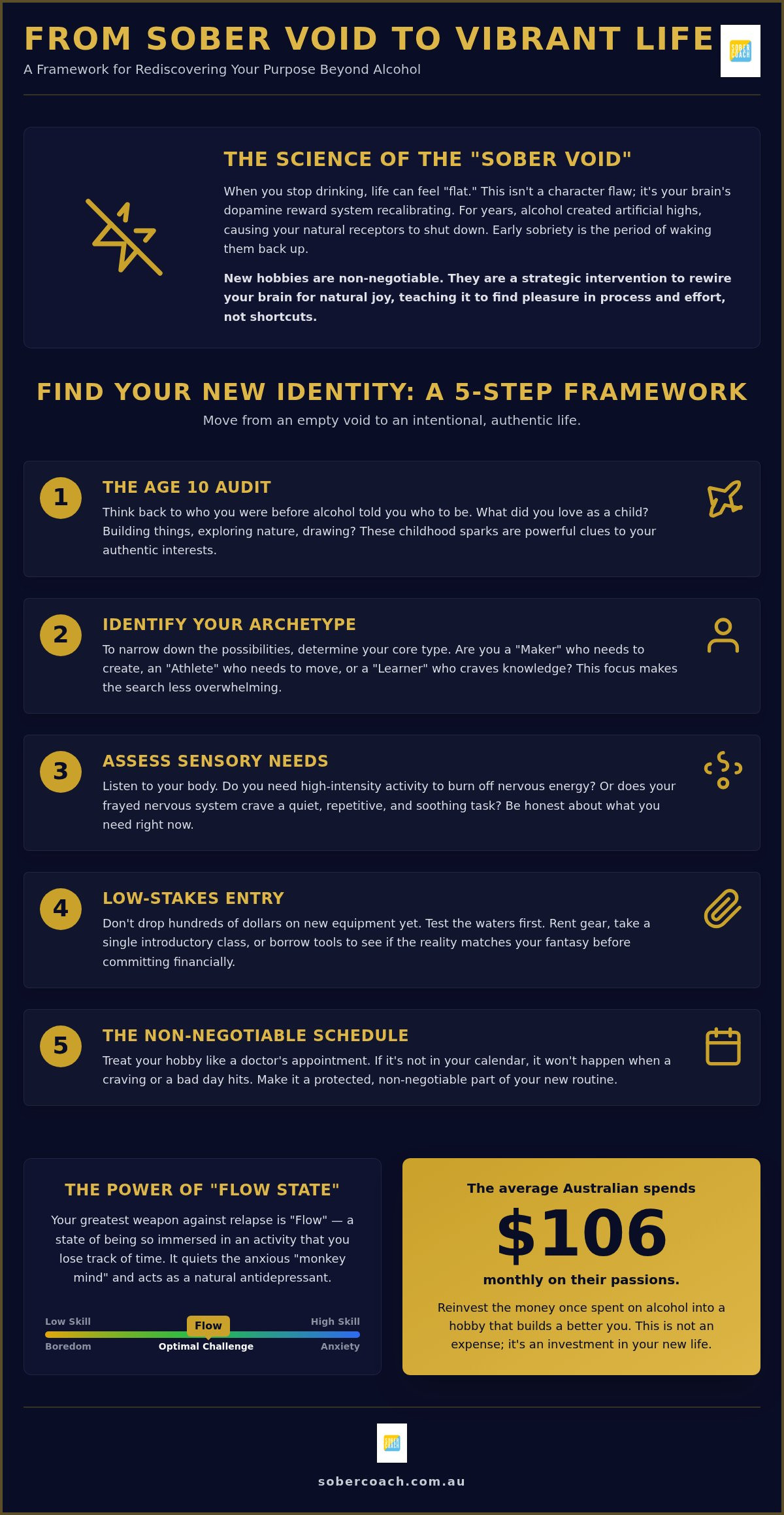
When you first stop drinking, the world can feel oddly flat. This isn't a failure of character; it's a biological reality known as the "sober void." For years, alcohol acted as a high-speed elevator for your dopamine levels, shooting them far beyond what nature intended. In response, your brain protected itself by shutting down dopamine receptors, effectively making the elevator buttons harder to press. When you remove the substance, your natural reward system is left in a state of hibernation. This is why ordinary life can feel "grey" or uninspiring in early recovery.
Integrating hobbies for sober living is the most effective way to wake those receptors up. Unlike passive entertainment like scrolling social media or binge-watching Netflix, which provides a cheap and fleeting hit of dopamine, active hobbies require engagement. This engagement is the foundation of neuro-remodeling. By consistently showing up for a task, you're teaching your brain to find pleasure in the process rather than the shortcut. Recreational therapy demonstrates that structured leisure isn't just about "having fun"; it's a strategic intervention that repairs the psychological damage caused by substance use.
Understanding the Dopamine Reset
Early sobriety often feels boring because your brain is still waiting for the massive dopamine spikes it's used to. Hobbies provide "micro-wins" that help bridge this gap. Completing a small woodworking project or learning a new guitar chord sends a gentle pulse of dopamine through your system. Neuroplasticity is the brain’s remarkable ability to physically rewire its neural pathways through the repetition of new, healthy habits. These small victories build the cognitive resilience you need to handle life's stressors without reaching for a drink. They prove to your nervous system that you can feel capable and satisfied through your own effort.
The Power of Flow State in Recovery
One of the greatest weapons against relapse is "Flow." This is the state of being so immersed in an activity that you lose track of time and your sense of self-consciousness fades away. Flow acts as a natural antidepressant by quieting the "monkey mind" and stopping the cycle of rumination that leads to anxiety. To find it, you must match the challenge of your hobby to your current skill level. If it's too easy, you'll get bored; if it's too hard, you'll feel frustrated. Finding that "sweet spot" in hobbies for sober living ensures your brain stays focused on the present moment, leaving no room for the obsessive thoughts that often fuel addiction.
Finding Your New Identity: A 5-Step Framework for Choosing Hobbies
Choosing hobbies for sober living isn't just about filling time; it's about reconstructing an identity that was previously anchored in a bottle. When you remove alcohol, you're often left with a version of yourself that feels unfamiliar or even unfinished. This framework helps you move from the "sober void" into a life that feels authentic and intentional. If you're struggling to remember what used to light you up, our Intensive Recovery Workshops are designed to help you peel back those layers and rediscover your drive.
Follow these five steps to find your fit:
Step 1: The Age 10 Audit. Think back to who you were before the world (and alcohol) told you who to be. Did you love building things, running until your lungs burned, or collecting strange rocks? Those childhood sparks are clues to your true interests.
Step 2: Identify Your Archetype. Are you a "Maker" who needs to create, an "Athlete" who needs to move, or a "Learner" who craves new information? Identifying your sober archetype narrows down the overwhelming list of possibilities.
Step 3: Assess Sensory Needs. Do you need high-intensity movement to burn off nervous energy, or do you need a quiet, repetitive task to soothe a frayed nervous system? Be honest about what your body is asking for right now.
Step 4: Low-Stakes Entry. Don't drop A$500 on equipment for a hobby you haven't tried. Rent gear, take a one-off class, or borrow tools to see if the reality matches the fantasy.
Step 5: The Non-Negotiable Schedule. Treat your hobby like a doctor's appointment. If it isn't in your calendar, it won't happen when a craving or a bad day hits.
Early Sobriety vs. Established Recovery
In the first 90 days, your nervous system is often highly sensitive. High-stress competitive sports or expensive commitments can lead to frustration, which is a common trigger. Instead, focus on tactile hobbies for sober living like pottery, gardening, or basic DIY. These activities provide immediate physical feedback and keep you grounded in the present moment. As your confidence grows and your brain recalibrates, you can graduate to more social or high-stakes activities. This gradual progression is supported by research highlighting how hobbies improve mental health by lowering cortisol and fostering self-esteem through manageable challenges.
Solo Hobbies for Self-Reflection
Sobriety requires a lot of "inner work," and solo hobbies provide the space for that to happen naturally. Journaling or creative writing allows you to process complex emotions without the pressure of an audience. Similarly, solo photography or birdwatching encourages a meditative focus on the outside world, reducing the tendency to ruminate on the past. Building a "sober sanctuary" at home through small DIY projects or interior decor can also reinforce your new lifestyle, making your physical environment a reflection of your internal growth.
Building a New Tribe: Social Hobbies That Don’t Involve the Pub
"I won't have any friends left if I don't drink." It's the most frequent objection I hear. In a country where the pub is often the community heart, it's a valid fear. But the truth is that "drinking buddies" are rarely "true friends." One group is bonded by a shared substance; the other is bonded by shared values and experiences. Transitioning to activity-based hobbies for sober living shifts the focus from what's in your glass to what you're actually doing. When you're mid-climb on a bouldering wall or planting seedlings in a community garden, the pressure to maintain constant, alcohol-fueled banter disappears.
The "Sober Curious" movement is exploding across Australia. Gen Z is nearly 20 times more likely to choose sobriety than Baby Boomers, which is driving a massive shift in how we socialise. Local clubs for running, pottery, and even board games are becoming the new standard for connection. These spaces offer a way to bridge the gap between isolation and the old, blurry nights at the local. They allow you to build a tribe based on who you are, not how much you can consume.
The "Third Place" Concept
Sociologists call it the "Third Place." It’s a setting that isn’t your home (the first place) or your work (the second place). For many in recovery, the pub used to be that third place. Reclaiming this space is vital for long-term success. Bouldering gyms, community gardens, and book clubs are perfect examples of modern third places that foster genuine connection without the hangover.
When someone asks, "Do you want a drink?" in these settings, it's usually less loaded than at a bar. A simple, "No thanks, I'm sticking to water today," or "I'm driving," usually ends the conversation. In activity-focused groups, people are more interested in your technique or your opinion on a book than your sobriety status. You're there for the hobby, and the social connection is a natural byproduct.
Volunteering as a Social Hobby
Service is a cornerstone of many successful recovery models because it triggers what researchers call the "Helper’s High." This is a natural release of endorphins that occurs when we contribute to something larger than ourselves. It’s a powerful way to build a sense of purpose while meeting people who share your values. Volunteering turns your focus outward, which is the ultimate antidote to the self-centred nature of addiction.
Australia offers incredible opportunities for this kind of social connection:
Surf Life-Saving: Join a local club to give back to the community while staying physically active and connected to the coast.
Animal Shelters: Places like the RSPCA always need volunteers, providing tactile connection and unconditional love from animals.
Food Banks: Organisations like Foodbank Australia allow you to work alongside a team to tackle food insecurity in your local area.
By engaging in these hobbies for sober living, you aren't just filling time. You're building a network of people who see you for your contribution and your character, rather than your capacity to party.
The Australian Sober Lifestyle: Leveraging the Great Outdoors
Australia’s landscape is a massive recovery asset that many people overlook. While our culture is often tied to the local pub, there is a powerful, parallel culture built around the sunrise. Moving your focus to "Blue Space" (the coast) or "Green Space" (the bush) is a game-changer for your nervous system. Science shows that being near water or deep in the trees naturally lowers your heart rate and reduces the "fight or flight" response that often fuels the urge to drink. These environments provide the perfect backdrop for hobbies for sober living that feel like an adventure rather than a chore.
Ocean-based hobbies like surfing and ocean swimming are part of a growing "Saltwater Therapy" movement. The cold water shock and rhythmic movement of the tide provide a natural reset for a brain that is used to the artificial spikes of alcohol. Replacing the 2 AM bar close with a 6 AM sunrise coffee and a run isn't just about changing your schedule. It’s about joining a community that values clarity over chaos. When you're out on the water or deep on a trail, the "sober void" is replaced by a sense of scale and connection to the world around you.
Active Recovery in the Sydney Sun
If you're in NSW, you have world-class recovery tools at your doorstep. Walking the Bondi to Coogee track or exploring the trails around Manly Dam isn't just exercise. It’s exposure to Vitamin D, which is essential for regulating the sleep cycles that addiction often disrupts. Joining a local run club or a "Sober Social" group in Sydney or Melbourne replaces the late-night bar scene with a community that values health. If you need help integrating these activities into your daily routine, our In-Home Recovery Support provides the practical guidance to make these lifestyle changes stick.
Camping and Off-Grid Exploration
Sometimes the best way to find yourself is to get lost in the bush. Camping acts as a secondary recovery tool by forcing a digital detox and a break from the triggers of your normal environment. Whether you're hiking through the Blue Mountains or the Royal National Park, you're learning essential skills like fire-building, navigation, and camp cooking. These tasks require focus and patience; they are the exact muscles you need to strengthen for long-term sobriety. Nature-based hobbies for sober living significantly reduce cortisol levels, helping you manage the anxiety that often triggers the urge to escape. Swapping a hangover for a sunrise coffee in the middle of the bush is a trade you will never regret.
Integrating Passion into Your Recovery Plan with a Sober Coach
A list of hobbies for sober living is a powerful starting point, but a list alone doesn't change a life. The transition from the clinical environment of rehab to the unstructured reality of home is where many people feel the weight of the "sober void" most acutely. This is where One-on-One Recovery Coaching becomes essential. We don't just suggest activities; we help you identify which ones actually resonate with your core values and then build the accountability structures to make them stick. It’s about moving past the "I should try that" phase and into the "this is who I am now" reality.
Accountability is the bridge between a passing interest and a lifelong passion. When you’re having a rough Tuesday, it’s easy to skip the pottery class or the morning run. Having a mentor who understands the emotional hurdles of starting over ensures that these new pillars of your life don't crumble under pressure. Our Intensive Recovery Workshops serve as a shortcut to discovering your "Sober Archetype," helping you bypass months of trial and error by putting you in a focused environment designed for self-discovery.
Customizing Your Lifestyle Design
A "one-size-fits-all" approach to recovery usually fails because it doesn't account for your specific living situation or sensory needs. Through In-Home Recovery Support, we can help you physically set up your hobby space, whether that’s a dedicated corner for painting or a gear rack for your surfing equipment. This hands-on guidance removes the friction that often stops people from starting. Sober Coach bridges the gap between the controlled environment of rehab and a vibrant, unpredictable real-world life by providing the practical tools you need to thrive in your own home.
Taking the Next Step
It's time to stop viewing sobriety as a loss of your social life or your fun. It is, in every sense, a "Power Beginning." You now have the clarity, the energy, and the extra A$106 per month that the average Aussie spends on hobbies to invest in yourself. Building a personalized "Sober Toolkit" is the most proactive way to ensure your long-term liberation. Don't wait for the void to feel overwhelming before you act. You have the agency to design a life that feels too good to escape from. Book a discovery session with Sober Coach today and let’s start building those new pillars together.
Design a Life You Don't Need to Escape From
Reclaiming your life isn't just about what you've removed; it's about what you're brave enough to add. We've explored how active engagement repairs your brain's reward system and how the right hobbies for sober living can turn the "sober void" into a space for genuine growth. Whether you're finding "Flow" in a creative project or catching a 6 AM sunrise at a local beach, these moments are the building blocks of your new identity. You've already done the hard work of quitting. Now, it's time to do the rewarding work of living.
Real transformation requires more than just a list of activities; it demands consistency and a plan that fits your real-world life. With personalized 1:1 accountability and the support of mentors who have lived this journey, you can turn a passing curiosity into a permanent pillar of your recovery. We offer flexible online and in-home support across Australia to help you stay on track when things get tough. Start building your vibrant sober life with a professional coach today. Your new chapter is waiting, and it's more colourful than you ever imagined.
Common Questions About Hobbies for Sober Living
Is it normal to feel bored in early sobriety even with a hobby?
Yes, feeling bored is a standard part of the brain's dopamine recalibration process. Your neural pathways are used to the massive, artificial spikes caused by alcohol, so natural activities can feel "flat" at first. It takes time for your receptors to heal and begin responding to the subtler rewards of a new interest. Stick with your chosen activity; the joy usually returns once your biology stabilizes.
What are the best hobbies for people with high social anxiety?
Focus on "parallel play" activities where you're around others but the focus is on a shared task rather than direct conversation. Hobbies like bouldering, pottery, or gardening are ideal because they provide a natural distraction. These hobbies for sober living allow you to exist in a social space at your own pace, reducing the pressure to perform or maintain constant eye contact.
How do I find sober-friendly clubs in Sydney or Melbourne?
Look for "sunrise culture" groups that meet early in the morning, as these are naturally less focused on drinking. Search community boards in suburbs like Surry Hills or Brunswick for run clubs, ocean swimming groups, or board game cafes. Platforms like Meetup are also excellent for finding niche Australian hobby groups that prioritize the activity itself over the post-event trip to the pub.
Can hobbies really replace the "hit" I got from alcohol?
A hobby won't give you the same explosive, artificial spike as a substance, but it provides a sustainable sense of satisfaction. Activities that induce a "Flow" state or a "Helper’s High" create a steady, healthy release of dopamine and endorphins. Over time, this natural glow becomes much more rewarding and less taxing on your nervous system than the volatile highs and lows of addiction.
How much time should I realistically dedicate to a new hobby in recovery?
Aim for two to four hours per week as a starting point to build a consistent habit. It's better to show up for twenty minutes a day than to attempt a six-hour marathon once a fortnight. Consistency is what actually rewires the brain. Don't overschedule yourself; the goal is to reduce stress and find joy, not to create another list of chores that leads to burnout.
What if I start a hobby and realize I actually hate it?
Give yourself permission to quit and try something else without feeling like you've failed. Early recovery is a season of self-discovery, and part of that process involves identifying what doesn't work for you. Treat each new activity as a "taster" rather than a lifelong commitment. The objective is to find what truly resonates with your authentic self, so keep experimenting until something clicks.
Are there specific hobbies that are better for preventing relapse?
Physical activities and service-based volunteering are particularly effective at keeping cravings at bay. Exercise helps regulate your mood and sleep hygiene, while volunteering provides a sense of purpose that counters the isolation often found in addiction. Integrating these specific hobbies for sober living into your weekly routine builds a lifestyle that is naturally more resilient against the triggers of your old environment.
How can I afford new hobbies if I am on a tight budget in recovery?
Many of the most effective recovery tools in Australia are completely free, such as bushwalking, ocean swimming, or visiting public libraries. While the average Aussie might spend A$106 a month on their passions, you can start small by using community gear libraries or attending "pay what you can" workshops. Focus on activities that utilize the great outdoors, as nature is a powerful, low-cost asset for your mental health.
Comments