

What Does an Australian Recovery Coach Do? 2026 Guide
- angie391
- Jul 31
- 12 min read

What if the missing piece in your recovery isn't another clinical diagnosis, but someone who actually knows how to navigate a Friday night at home without falling back into old habits? For many Australians, the transition from a structured rehab environment to the messy reality of daily life feels less like a fresh start and more like a cliff edge. You might feel stuck in a frustrating "rehab-relapse" cycle where clinical therapy feels too detached from the triggers waiting in your pantry or your social circle.
It's a common struggle, and it's exactly why understanding what does a recovery coach do australia is so vital for your long-term success. We believe recovery shouldn't be about deprivation or restrictive labels; it's about reclaiming your personal agency and building a life you don't want to escape from. This guide will show you how a recovery coach provides the practical, real-world bridge between clinical treatment and genuine thriving. We'll dive into the specifics of daily accountability, clarify the 2026 NDIS pricing standards versus private coaching fees, and explain how a mentor with lived experience can offer the non-judgmental support you've been searching for.
Table of Contents
What is a Recovery Coach in the Australian Context?
When you start looking into what does a recovery coach do australia, you'll quickly find they aren't here to replace your doctor or psychologist. Instead, they occupy the space where clinical treatment ends and real life begins. A recovery coach is a professional mentor who provides non-clinical support to help you navigate the tricky waters of addiction or mental health challenges. They don't look at you as a patient to be cured, but as a person with the potential to build a vibrant, liberated life. Their core mission is simple yet profound: helping you move from a state of merely surviving to one of truly thriving by building your internal capacity and resilience.
Australia is currently seeing a massive surge in the demand for this type of support. This isn't a coincidence. For decades, the focus has been on clinical detox and short-term intervention, yet many people find themselves back at square one just weeks after leaving a facility. There's a glaring gap between the safety of a hospital bed and the reality of a Friday night alone in your living room. A recovery coach is a tactical partner in lifestyle transformation rather than a clinical therapist. They provide the practical scaffolding you need to maintain long-term sobriety in the Australian landscape, focusing on the "how" of daily living rather than just the "why" of your past.
The Role of Lived Experience
Peer-led models are gaining significant traction across the country because they offer something clinical settings often lack: shared history. Professional Recovery coaching relies heavily on mentors who have walked the path themselves. This lived experience builds immediate trust and strips away the heavy weight of traditional stigma. It's different from casual peer support or a chat with a friend; it's a professional relationship grounded in proven tools and boundaries. When your coach says they understand the pull of a trigger, they actually mean it. This authenticity creates a safe, brave space where you can explore your habits without fear of judgment.
Clinical vs. Non-Clinical Support
It's vital to understand that coaches don't diagnose conditions or provide medical detox services. Their work is non-clinical and future-focused. Think of it as a synergy between your medical team and your daily life. While your GP or psychologist might work on your physical health and deep-seated trauma, your coach focuses on the logistics of your transformation. They help you figure out how to manage your grocery shopping, how to set boundaries with family, and how to structure your day for success. They're interested in your future agency, helping you find the practical tools to live well today.
NDIS vs. Private Recovery Coaching: Which Path is Yours?
Choosing the right support often comes down to your specific circumstances and how quickly you want to start moving forward. In the Australian landscape, the two primary pathways are NDIS-funded psychosocial recovery coaching and private professional coaching. While both aim to empower your journey, the entry points, funding, and daily focus differ significantly. When asking what does a recovery coach do australia, the answer depends heavily on which system you are navigating.
NDIS Psychosocial Recovery Coaching
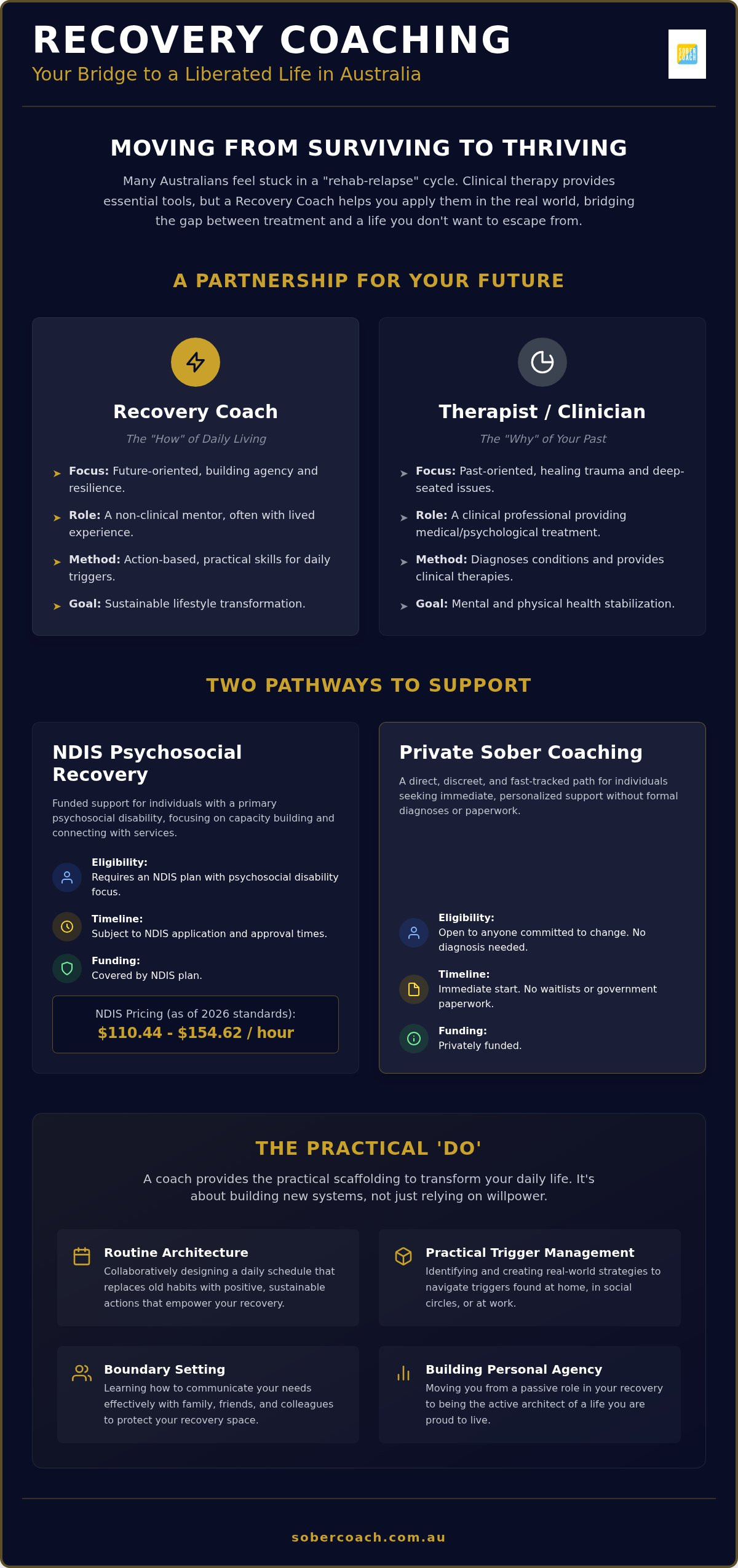
The NDIS pathway is specifically designed for individuals with a primary psychosocial disability. According to the NDIS definition of a recovery coach, these professionals focus on capacity building and life participation. As of 1 July 2026, the NDIS Pricing Arrangements set the standard weekday daytime rate at $110.44 per hour, with remote rates reaching up to $154.62. This model is ideal if you already have an NDIS plan and require long-term, funded support to manage complex mental health challenges.
A key distinction here is the difference between a Support Coordinator and a Recovery Coach. While a coordinator helps you understand and implement your plan, a coach is more hands-on. They use recovery-oriented practices to help you build resilience and take control of your own life. It's about agency. For the 14% of NDIS participants with a psychosocial disability, this role provides a structured way to connect with community and mainstream services without the clinical pressure of traditional therapy.
Private Sober Coaching in Australia
Private coaching offers a level of speed and discretion that the NDIS model cannot always match. There is no requirement for a formal diagnosis, no government paperwork, and no waiting for plan approvals. You can start your transformation today. This path is often the preferred choice for high-functioning professionals or individuals who want to focus on specific lifestyle design rather than managing a disability. It's about moving beyond the "rehab-relapse" cycle and into a life of vibrant liberation.
Private coaches often specialize in "Routine Architecture" and habit transformation. They offer flexible delivery, ranging from one-on-one recovery coaching to intensive workshops and in-home support. This model allows for a deeply personalized approach, focusing on things like "sober travel" or managing high-stress work environments. If you are looking for a courageous mentor with lived experience who can act as a tactical partner in your daily life, the private route provides the most direct access to that connection.
Ultimately, the choice depends on your goals. If you need long-term support funded by the government, the NDIS is a powerful resource. If you want immediate, tailored support to overhaul your habits and reclaim your personal agency, private coaching is designed for that exact purpose.
The Practical 'Do': How a Coach Supports Your Daily Life
Recovery isn't a destination you reach; it's a series of tactical decisions you make every single hour. While clinical settings provide the "why" behind your behavior, a coach focuses on the "how" of your future. If you're wondering what does a recovery coach do australia on a random Tuesday afternoon when the cravings hit, the answer lies in the practical scaffolding they help you build. It’s about moving beyond the theory of sobriety and into the grit of daily existence with a courageous mentor by your side.
We start with Trigger Mapping. This involves identifying the specific "danger zones" in your physical environment and social circles. It might be the bottle shop on your commute, the stress of the 5 PM "witching hour," or even a specific chair in your living room where you used to escape. Once these are mapped, we move to Routine Architecture. This isn't just a calendar; it's a new way of living. We build a daily schedule that prioritizes your wellness, replacing old habits with sustainable actions that support your personal agency. You get a no-nonsense check-in that keeps you on track, providing real-time accountability when you need it most.
In-Home Recovery Support
True transformation happens where you live. Our In-Home Recovery Support focuses on managing triggers in the kitchen, the office, and the bedroom. We work with you to create a "sober sanctuary" within your own four walls. This isn't about hiding from the world; it's about integrating recovery practices into your existing family routine so they become second nature. By addressing the environment directly, we strip away the triggers that clinical therapy often misses, ensuring your home remains a place of peace rather than a source of stress.
Intensive Workshops and Online Programs
For those who need to accelerate their healing, Intensive Recovery Workshops offer immersive educational sessions designed for deep growth. We recognize that many Australians live in remote or regional areas where face-to-face support is limited. That's why we offer group coaching online via zoom and comprehensive rehab online options. These programs allow you to access professional, lived-experience mentorship without leaving your home. You get the same courageous support and practical tools, delivered in a way that fits your life, no matter where in Australia you're located.
Finally, we connect you with local, Australian-based sober communities and activities. Whether it's a weekend hiking group or a local alcohol-free event, these connections ensure your journey isn't a lonely one. You aren't just quitting something; you're joining a vibrant, liberated community that values growth and self-discovery over deprivation.
Recovery Coach vs. Therapist: Addressing the Confusion
It is easy to see why people get these roles mixed up. Both professionals want you to get better, but the way they walk that path with you is fundamentally different. Understanding what does a recovery coach do australia involves looking at the power dynamic of the relationship. A therapist is a clinician, often viewed as the expert in the room who diagnoses and treats a patient. A recovery coach is a courageous mentor who stands beside you as an equal. We don't see you as a patient to be fixed, but as a person ready to reclaim their agency.
The direction of the work also differs. Therapy frequently looks backward, digging into childhood trauma or past wounds to understand why certain behaviors started. While this is incredibly valuable, coaching is relentlessly future-focused. We aren't here to dwell on the "why" of your past; we are here to master the "how" of your future. We look at your current habits and your goals for a liberated life. If you're still wondering what does a recovery coach do australia, think of it as the difference between a map and a compass. One shows you where you've been, while the other helps you navigate the terrain right in front of you.
The setting and frequency of support create the most practical difference. Therapy usually happens in fifty-minute sessions within a clinical office, once a week. Coaching is a high-touch, integrated model. It happens where life happens. Whether it's through in-home support, online workshops, or real-time check-ins, the connection is more frequent and immediate. It’s designed to be there when the real-world triggers hit, not just when you have an appointment booked.
When to Choose a Therapist
There are times when clinical intervention is the only responsible choice. You should prioritize a therapist if you are dealing with deep-seated trauma that requires specialized clinical processing. If you need a formal diagnosis for a mental health disorder or require medication management, a psychologist or psychiatrist is essential. Therapists are trained to handle acute crises and provide the clinical safety net that non-clinical mentors cannot offer. Many of our clients work with both a therapist and a coach to ensure every angle of their wellness is covered.
When a Recovery Coach is the Missing Link
A recovery coach is often the missing link when you already know "what" you need to do, but you keep failing at the "how." You might have the clinical knowledge, but you struggle to apply it when you're standing in your own kitchen on a Friday night. You want a partner with lived experience who has walked the same path and won't judge your struggles. If you are ready for a direct, no-nonsense approach that focuses on habit transformation and personal growth, it's time to take action. You can start your transformation today with our one-on-one recovery coaching to build the practical tools for a vibrant, liberated life.
Starting Your Journey: How to Find a Coach in Australia
Finding the right person to guide your transformation is a deeply personal process. In the Australian market, the search for a mentor often begins with a simple question: what does a recovery coach do australia and how can they fit into my specific life? To move from contemplation to action, you need a clear, tactical plan. This isn't about just browsing a directory; it's about finding a courageous mentor who aligns with your values and your vision for a liberated life.
Step 1: Identify your primary goal. Be honest with yourself. Are you seeking total sobriety, improved mental wellness, or a complete overhaul of your daily habits? Knowing your "why" helps you filter for the right expertise.
Step 2: Check for professional alignment and lived experience. Look for a coach who has walked the path. Lived experience builds immediate trust and ensures your coach understands the nuances of habit transformation beyond clinical theory.
Step 3: Book an initial consultation. You can't judge rapport from a website. Use a discovery call to test the "fit." You need someone who challenges you while maintaining a safe, non-judgmental space.
Step 4: Choose your delivery model. Decide whether you need In-Home Recovery Support, One-on-One Recovery Coaching, or the accessibility of rehab online. Your support should fit your lifestyle, not the other way around.
Step 5: Commit to a structured program. Real change requires consistency. Long-term accountability is the secret to moving past the "rehab-relapse" cycle and into sustainable thriving.
The Sober Coach Approach
Our methodology is built on the belief that recovery is a powerful beginning, not a restrictive end point. We offer personalized one-on-one sessions tailored to your Sydney or national lifestyle, focusing on modern descriptors for lifestyle exploration. We understand that many people navigate non-binary behavioral patterns that don't fit into traditional boxes. For those ready for a deep dive, our Intensive Recovery Workshops provide the immersive environment needed to accelerate your personal transformation and reclaim your agency.
Taking the First Step
It's natural to feel a sense of anxiety when seeking help for personal challenges. We aim to strip away that weight through a conversational, human-to-human first chat. This is your time to evaluate your readiness for change. Is now the right time to step into a more vibrant, liberated life? If you're tired of feeling stuck and clinical therapy hasn't bridged the gap, a coach with lived experience can provide the practical tools you've been missing. Book your discovery session with Sober Coach today and start defining your own path forward.
Reclaim Your Agency and Build Your Future
Choosing a path beyond the rehab-relapse cycle requires more than just willpower; it requires a tactical partner who understands the grit of daily transformation. We've explored how a recovery coach bridges the gap between clinical theory and the reality of your living room, focusing on routine architecture and the power of lived experience. By now, the question of what does a recovery coach do australia should have a clear answer. They provide the practical scaffolding you need to move from surviving to thriving.
Whether you need in-home support to manage specific triggers or prefer the accessibility of national online rehab programs, the focus remains on your growth and liberation. We offer professional one-on-one sessions and group support via Zoom designed to fit your unique lifestyle. You don't have to navigate the complexities of habit change alone or feel weighed down by traditional stigma any longer. It's time to step into a life where you're the architect of your own wellness.
Start your transformation with a professional Sober Coach today. You have the courage to change; we have the tools to help you stay there. Your vibrant, liberated life is waiting to begin.
Frequently Asked Questions
Is a recovery coach the same as a support coordinator in the NDIS?
No, they are distinct roles with different focuses. A support coordinator helps you understand and manage your NDIS plan. In contrast, a recovery coach works directly with you to build the skills and capacity needed for a better life. Most NDIS plans fund one or the other, so it's vital to choose the support that aligns best with your daily recovery goals.
Do I need a doctor's referral to work with a recovery coach in Australia?
You don't need a doctor's referral to start your journey. Private recovery coaching is a direct-access service, meaning you can reach out and begin working with a mentor today. While NDIS participants must have specific funding in their plan, those seeking private support can bypass clinical waitlists and formal diagnoses to focus immediately on their transformation.
Can a recovery coach help me if I'm not ready to quit completely?
Yes, a coach meets you exactly where you are. We focus on lifestyle exploration and personal agency rather than just restrictive labels. If you're questioning your relationship with habits but aren't ready for total abstinence, coaching provides a safe space to explore those patterns. It's about building a life you don't want to escape from, one step at a time.
How much does a private recovery coach cost in Australia?
Private coaching fees vary depending on whether you choose one-on-one sessions, intensive workshops, or in-home support. Unlike the fixed NDIS rates for 2026, private professional fees reflect the specialized, high-touch nature of the service. This investment covers a courageous mentor's expertise and the practical tools provided to help you navigate what does a recovery coach do australia in your daily life.
Does a recovery coach provide medical detox services?
No, a recovery coach never provides medical detox. This is a non-clinical role focused on behavioral change and habit transformation. Detox is a medical process that requires clinical supervision in a hospital or specialized facility. A coach is the tactical partner who helps you stay sober and build a vibrant life after the initial physical detox is complete.
What is the difference between a sober coach and a sponsor in AA?
A sponsor is a volunteer peer within the 12-step framework, whereas a recovery coach is a professional mentor. While both offer lived experience, a coach provides a more structured, goal-oriented methodology that often goes beyond the 12 steps. Coaching involves professional boundaries, scheduled sessions, and a focus on holistic lifestyle design rather than just program attendance.
Can recovery coaching be done online if I live in a rural area?
Absolutely, online support is a vital tool for many Australians. We offer group coaching online via zoom and comprehensive online rehab programs specifically for those in rural or remote areas. This ensures you can access high-quality, lived-experience mentorship without the need for travel. It's about bringing professional support directly into your home, wherever you are located across the country.
How long do people usually work with a recovery coach?
Most people work with a coach for three to twelve months to ensure long-term success. This period allows enough time to identify triggers, build new routines, and solidify habit transformation. Understanding what does a recovery coach do australia involves recognizing that deep change isn't an overnight event. It's a structured journey toward reclaiming your personal agency and building a sustainable, liberated future.
Comments