

What Does a Recovery Coach Do? Real-World Sobriety Guide

What if the hardest part of sobriety isn't putting down the drink, but actually picking up your life the next morning? Stepping out of a clinical environment and back into the real world often feels like walking a tightrope without a net. You're suddenly face to face with the same old triggers, from the Friday afternoon office shout to the pervasive pub culture that defines so much of Australian social life. It's here, in the gap between getting clean and living free, that many people feel most alone. You might be wondering, what does a recovery coach do to change that equation?
We understand that decision fatigue is real and that late-afternoon cravings don't care about your discharge papers. You deserve a life that feels expansive, not restricted by a list of things you can no longer do. This guide explains how a recovery coach provides the practical daily structure and supportive accountability you need to move from powerlessness to personal agency. We'll show you how to navigate Sydney's social scene with confidence and replace old habits with a sustainable, vibrant lifestyle. It's time to stop just surviving and start building a sobriety that feels like a reward, not a chore.
Table of Contents
What is a Recovery Coach? Defining the Modern Mentor
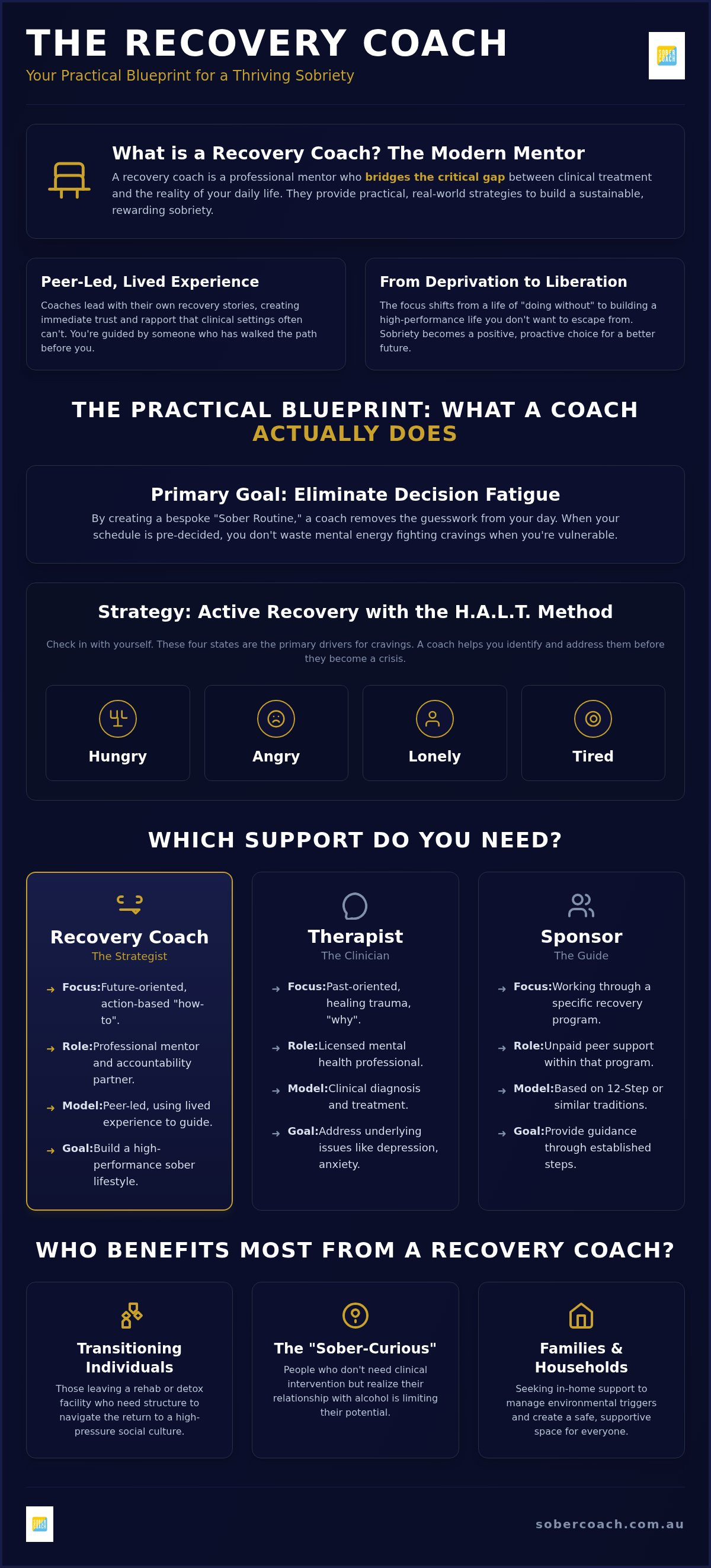
A recovery coach is your professional partner in the messy, beautiful reality of long-term sobriety. While doctors and clinical staff focus on stabilization and diagnosis, we focus on execution and the daily mechanics of living well. When people ask, what does a recovery coach do, the simplest answer is that we bridge the gap between "not drinking" and actually thriving. For a foundational overview of the role, What is a Recovery Coach? explains how this non-clinical support differs from traditional therapy or sponsorship.
Our approach is built on a peer-led model. This means we lead with lived experience. This shared history creates an immediate sense of trust and rapport that clinical environments often lack. We don't diagnose your past; we help you navigate your future. By focusing on personal agency rather than restrictive labels, we empower you to take the wheel. You aren't a patient in a system. You're an individual reclaiming your life. We are non-clinical mentors who respect your history while prioritizing your progress.
The Core Philosophy: From Deprivation to Liberation
Traditional recovery often frames sobriety as a life of "doing without." We reject that. We frame it as a positive, proactive choice. It's about moving from a state of perceived powerlessness to building a high-performance life that you don't feel the need to escape from. We don't want you to just survive the weekend; we want you to enjoy it. A recovery coach acts as a lifestyle architect for your sober future, designing routines that support your goals rather than your cravings.
Who Needs a Recovery Coach in 2026?
The transition out of a rehab facility or detox program is a vulnerable time. In cities like Sydney or Melbourne, the sudden return to a high-pressure social culture can be overwhelming. This is where we step in. We provide the structure needed to break stubborn habits before they reform. We also support the "sober-curious" demographic. These are individuals who might not need a clinical intervention but realize their relationship with alcohol is capping their potential. Families also utilize our in-home support to help manage household triggers and create a safe environment for everyone involved. So, what does a recovery coach do for these groups? They provide the real-world strategy that textbooks simply can't offer.
The Practical Blueprint: What Does a Recovery Coach Actually Do?
If you've ever left a detox facility only to find yourself staring at your fridge at 5 PM on a Tuesday, you know that knowledge isn't the same as execution. This is where the tactical side of support becomes vital. So, what does a recovery coach do to keep you on track? We focus on eliminating decision fatigue. By designing a bespoke "Sober Routine," we take the guesswork out of your day. When your schedule is pre-decided, you don't have to waste mental energy debating whether you should stop at the pub on your way home from work.
We use a strategy called Active Recovery. This involves mastering the HALT method; checking in with yourself to see if you are Hungry, Angry, Lonely, or Tired. These four states are the primary drivers of late-afternoon cravings in Australian culture. We help you identify these triggers before they become crises. Understanding the distinction between a Recovery Coach vs. Therapist vs. Sponsor is vital here; while others might explore your childhood, we are looking at your fridge, your social calendar, and your route home from the office.
One-on-One Coaching: Your Personal Strategy Sessions
Our individual sessions are designed to move you quickly from "what went wrong" to "what is the next right action?" We don't spend hours ruminating on past mistakes. Instead, we set clear 90-day recovery goals that focus on building a high-performance life. This might include a crisis plan for a high-pressure corporate event in Sydney or a rehearsal for a difficult family conversation. We provide real-time accountability through digital check-ins, ensuring you feel supported between sessions. It's about having a mentor in your pocket when the pressure mounts.
In-Home Support: Managing Triggers Where They Live
The most dangerous triggers aren't at the bar; they're in your kitchen or your lounge room. In-home support allows us to audit your environment for hidden cues that lead to cravings. We might rearrange a space to break a visual habit or help you integrate new morning rituals into your existing family dynamic. Managing the "kitchen trigger" is often more effective for long-term sobriety than months of traditional talk therapy. Creating a safe, vibrant space at home is often easier with one-on-one recovery coaching that meets you exactly where you live. When asking what does a recovery coach do, remember that we are your boots-on-the-ground partners in change.
Recovery Coach vs. Therapist vs. Sponsor: Which Do You Need?
Choosing the right support system is like assembling a high-performance team. Each member has a specific role, and understanding these distinctions is the key to your long-term success. A therapist is often the "surgeon" of the soul; they look backward to unpack trauma, childhood patterns, and clinical diagnoses. A sponsor, usually found in 12-step programs, is a peer who guides you through a specific spiritual framework, typically on a voluntary basis. So, what does a recovery coach do that makes them different? We are the architects of your daily execution.
Many Australians are moving toward the direct mentor approach because it feels modern and accessible. It strips away the clinical coldness of a doctor's office and the rigid dogma sometimes found in traditional rooms. Instead of just talking about your feelings, we focus on your actions. We help you build a life that is so vibrant and fulfilling that alcohol simply loses its appeal. While a sponsor focuses on a program and a therapist focuses on your history, a coach focuses on your potential and the practical steps required to reach it.
The Collaborative Care Model
You don't always have to choose just one. In fact, many of our clients find the most success when a coach works alongside their psychologist or GP. This creates a holistic safety net. Your therapist handles the deep emotional work during business hours, while your coach helps you navigate a high-pressure social event on a Saturday night. We provide the real-world integration that clinical settings often miss. If you're transitioning out of rehab, a coach acts as the bridge back to reality, ensuring your new habits don't crumble the moment you hit the Sydney pavement.
The 'No-Nonsense' Advantage
Coaches offer a level of directness that clinical therapists often avoid. We are goal-oriented and results-driven. We don't just ask how a craving feels; we help you build a strategy to neutralize it before it starts. This shift from clinical "abstinence" to real-life "liberation" is a game changer. It moves the conversation from what you're losing to what you're gaining. While a therapist explores your past, a coach builds your future. This proactive stance is what does a recovery coach do best; we turn your desire for change into a concrete, actionable blueprint for a better life.
Navigating the Australian 'Witching Hour' and Social Pressure
The "Witching Hour" in Australia isn't a myth; it's a cultural institution. Between 5 PM and 8 PM, the transition from the office to the home is traditionally lubricated by the local pub or a bottle of wine on the kitchen bench. This window is where most relapses occur because it's when the brain demands a reward after a high-pressure day. So, what does a recovery coach do during these high-risk hours? We help you dismantle the "reward" myth and replace it with high-value sober activities that actually restore your nervous system. Whether it's a coastal walk in Coogee or a late-afternoon ocean swim, we help you find what works for your specific lifestyle.
We also act as "Sober Travel Companions" or mentors for specific high-stakes events. If you have a wedding, a corporate gala, or a networking night in Sydney, your coach provides event-specific support. We don't just offer vague advice; we offer a blueprint for social survival. This includes rehearsing social scripts so you aren't caught off guard when a colleague pushes a drink into your hand. You'll learn how to decline with confidence, keeping your personal agency intact without feeling like the "boring" person in the room.
The 'Mocktail' Strategy and Beyond
Staying social doesn't mean you have to go into hiding. We teach you how to navigate the bar scene with confidence, focusing on the "Mocktail" strategy and other practical tools. It's about having a drink in your hand that isn't alcohol, which often stops the "why aren't you drinking?" questions before they start. A major part of this is identifying "Safe People" versus "Trigger People" in your network. Your safe people are those who support your liberation. Trigger people are those who still view your sobriety as a personal affront to their own habits. For those looking for new ways to connect, exploring Sober Activities Sydney can provide a fresh perspective on what a vibrant night out can look like.
Rebuilding Trust through Consistency
Active use often leaves a trail of damaged relationships. While you can't fix everything overnight, a coach helps you navigate the delicate process of social repair. We use the "Next Right Action" philosophy. This means focusing on being consistent today rather than making grand, empty promises about next year. By providing a layer of professional accountability, we help you prove your change to family and employers through visible, daily actions. This consistent presence is what does a recovery coach do to help you regain your reputation and your self-respect. It's time to build a life where you don't need to hide. If you're ready to master the social side of sobriety, our One-on-One Recovery Coaching provides the direct mentorship you need to succeed.
How to Start Your Journey with Sober Coach Australia
Taking the first step toward change is a courageous act of self-preservation. Our intake process is designed to be human, transparent, and entirely free from the clinical coldness often found in traditional systems. We start by matching you with a mentor who possesses the specific lived experience that aligns with your history. This isn't just about finding a coach; it's about finding a partner who truly understands the nuances of your challenges. Whether you're in the heart of the city or in a remote regional town, we ensure the connection feels personal and professional.
We offer flexibility in how we work together. If you're based in the city, you can access in-person Sydney coaching. For those elsewhere in Australia, our nationwide Zoom sessions provide the same level of high-impact support. In your first 30 days, we focus on stability. What does a recovery coach do in those initial four weeks? We help you build a fortress around your new habits. We establish your daily routine, identify immediate triggers, and create a sense of momentum that makes sobriety feel like a gain rather than a loss. As you grow, you may choose to transition into our Intensive Recovery Workshops for deeper personal development.
Bespoke Roadmaps for Lasting Change
There is no one-size-fits-all approach to liberation. Your history is unique, and your strategy for the future should be too. We leverage One-on-One Recovery Coaching to create a roadmap that fits your career, your family, and your personal goals. For those living in remote areas of Australia where support can be scarce, our online rehab programs and digital check-ins bridge the gap. We ensure that distance is never a barrier to your growth. We focus on building a high-performance life that reflects your values, helping you move from a state of survival to a state of true agency.
Taking the First Step
You don't need to wait for a crisis to ask for help. Booking a consultation with us is a move toward clarity, stripped of the traditional stigma associated with seeking support. As you prepare for your first session, we invite you to look forward. What do you want your life to look like in 2027? We are here to help you bridge the gap between where you are now and that vibrant, liberated future. It's time to stop managing a habit and start building a legacy of strength. Book your discovery call with a Sober Coach today and begin the transition to the life you deserve.
Building Your Blueprint for Liberation
Sobriety is more than just the absence of a substance; it's the presence of a life you actually want to live. Throughout this guide, we've explored how a professional mentor provides the tactical support needed to navigate the Australian social scene and the daily "Witching Hour" without compromise. By focusing on execution rather than just introspection, we help you eliminate decision fatigue and build routines that stick. You aren't just quitting a habit; you're reclaiming your potential.
When you ask what does a recovery coach do, remember that we are your boots-on-the-ground partners in change. We offer professional, non-clinical accountability led by coaches with authentic lived experience. Whether you need flexible in-home support or online sessions across Australia, we bridge the gap between clinical treatment and true real-world integration. You don't have to navigate this transition alone or feel lost in the space between rehab and your front door.
It's time to move from powerlessness to personal agency. Your new life is waiting for you to design it. Start Your Liberation: Book a One-on-One Coaching Session. You have the strength to change; we have the tools to help you sustain it.
Frequently Asked Questions
Is a recovery coach the same as a life coach?
No, they are distinct roles. While a life coach helps with broad personal or professional goals, a recovery coach focuses specifically on the mechanics of sobriety and habit transformation. We specialize in the nuances of addiction, social pressure, and the specific triggers that threaten long-term liberation. This role requires a deep understanding of the recovery process, often backed by lived experience, to help you navigate the transition from clinical treatment to a high-performance lifestyle.
Do I need to be 'sober' already to hire a recovery coach?
You don't need to have a perfect track record to start. We meet you exactly where you are, whether you're currently struggling or have just finished a program. However, because we are a non-clinical service, you must be medically stable. If you're wondering what does a recovery coach do for those still in the "sober-curious" phase, we provide the structure and accountability needed to break stubborn patterns and move toward a vibrant, alcohol-free life.
Can I use NDIS funding for a recovery coach at Sober Coach?
Yes, if your NDIS plan includes psychosocial recovery coaching. As of July 1, 2026, the NDIA set the maximum weekday daytime rate at $110.44 per hour. We work with NDIS-managed, plan-managed, and self-managed participants to provide peer-led support. Our focus is on helping you take control of your daily living and social integration, aligning with the CHIME-D recovery framework used across Australia to build hope, identity, and personal agency.
How many sessions a week do I usually need?
Frequency depends on your current needs and the level of support required to maintain stability. Most clients begin with one to three sessions per week during the initial 30-day transition period. This allows us to establish a bespoke "Sober Routine" and manage immediate environmental triggers. As you build confidence and personal agency, we often move to a weekly check-in to maintain professional accountability and focus on your long-term personal growth goals.
What is the difference between a recovery coach and a sober companion?
A sober companion typically provides intensive, often 24/7 supervision during high-risk periods or specific events. In contrast, a recovery coach acts as a strategic mentor who works with you in scheduled sessions to build long-term skills. We focus on empowering you to navigate life independently rather than relying on constant supervision. Our goal is your ultimate liberation, providing the tools and routines you need to manage your own sobriety in any social setting.
Does a recovery coach provide medical advice or detox?
No, we do not provide medical advice, clinical diagnosis, or detox services. Our role is strictly non-clinical and peer-led. We focus on the practical, daily execution of a sober lifestyle rather than medical intervention. If you require a medical detox, you must consult a healthcare professional or a clinical facility first. Once you are medically stable, we step in to bridge the gap between that clinical treatment and your real-world integration.
How long does a coaching relationship typically last?
There is no fixed timeline, but many clients find that a three to six-month commitment provides the best results for lasting change. This duration allows enough time to navigate several "Witching Hour" cycles, social holidays, and professional pressures. We move through phases of stabilization, skill-building, and eventually, maintenance. Our ultimate goal is to work ourselves out of a job by helping you build a sustainable, high-performance life that no longer requires external structure.
Can a recovery coach help me if I've relapsed?
Absolutely. Relapse is often a part of the learning process, and we provide a non-judgmental space to unpack what happened without the weight of traditional stigma. We don't focus on the slip; we focus on the "Next Right Action." By analyzing the specific triggers or decision fatigue that led to the event, we can adjust your bespoke roadmap. This real-world troubleshooting is exactly what does a recovery coach do to ensure a temporary setback doesn't become a permanent return to old habits.
Comments