

Alcohol Recovery Coach in Sydney: Practical Support for Your Next Steps

What if your next step with alcohol didn’t have to begin with a label or a dramatic promise? If you’re looking for an alcohol recovery coach sydney, you may know something needs to change but still feel unsure what kind of support would suit you. That uncertainty is understandable. Asking for help doesn’t mean you deserve judgement or have to follow someone else’s idea of recovery.
An alcohol recovery coach can help you turn intentions into practical changes: noticing triggers, reshaping routines and finding steadier ways to handle difficult moments and relationships. Coaching is non-clinical support, not medical or therapeutic care, and it doesn’t replace clinical help when that’s needed. The right support depends on where you are now and what feels manageable.
In this article, you’ll learn what recovery coaching can and can’t offer, how it differs from clinical care, and how personalised support can fit into everyday life. We’ll also cover one-on-one, in-home and online support, so you can consider a next step without pressure or stigma.
Table of Contents
What an Alcohol Recovery Coach in Sydney Can Help You Work On
An alcohol recovery coach offers practical, personalised support as you explore changes to your relationship with alcohol. The focus is on your goals and the everyday steps that may help you work towards them, not on judging you or deciding what your life should look like.
An alcohol recovery coach in Sydney provides non-clinical support to help people set personal goals, build routines, practise strategies for everyday challenges and stay accountable as they make changes around alcohol.
Coaching can turn a broad intention, such as “I want things to change”, into smaller actions you choose and can review. You might explore what tends to happen before you drink, which situations feel difficult and what routines you’d like to adjust. Your coach can help you consider options and follow up on the steps you decide to take.
What coaching can look like in everyday life
Practical work might include preparing for a dinner where alcohol is likely to be present, planning what to say if someone offers you a drink, or changing a familiar end-of-day routine. The aim isn’t to prescribe one right answer. It’s to identify an approach that feels realistic for your circumstances and consider how it works in practice.
In one-on-one recovery coaching, you can break a larger goal into manageable actions and revisit them in a later conversation. You might try a different way to handle a particular social situation or notice how a change to your evening routine affects you. Accountability means making space to reflect honestly and decide what to try next. It isn’t pressure, punishment or a scorecard.
Choose one situation you want to feel more prepared for.
Identify a small action that feels personally workable.
Review what you noticed, then adjust the plan if needed.
Who might explore alcohol recovery coaching
You might be questioning how alcohol fits into your life, trying to change a habit, or looking for practical support to maintain recovery. You don’t need a diagnosis or a particular identity before talking through what you want to change. A peer-led coach can offer a non-clinical perspective and help you focus on your priorities.
Those priorities differ from person to person. One person may want to rethink drinking in social settings; another may want more structure around routines or support to keep moving in a direction they’ve already chosen. Coaching can help you explore your goals without promising a particular outcome or insisting that everyone follow the same path.
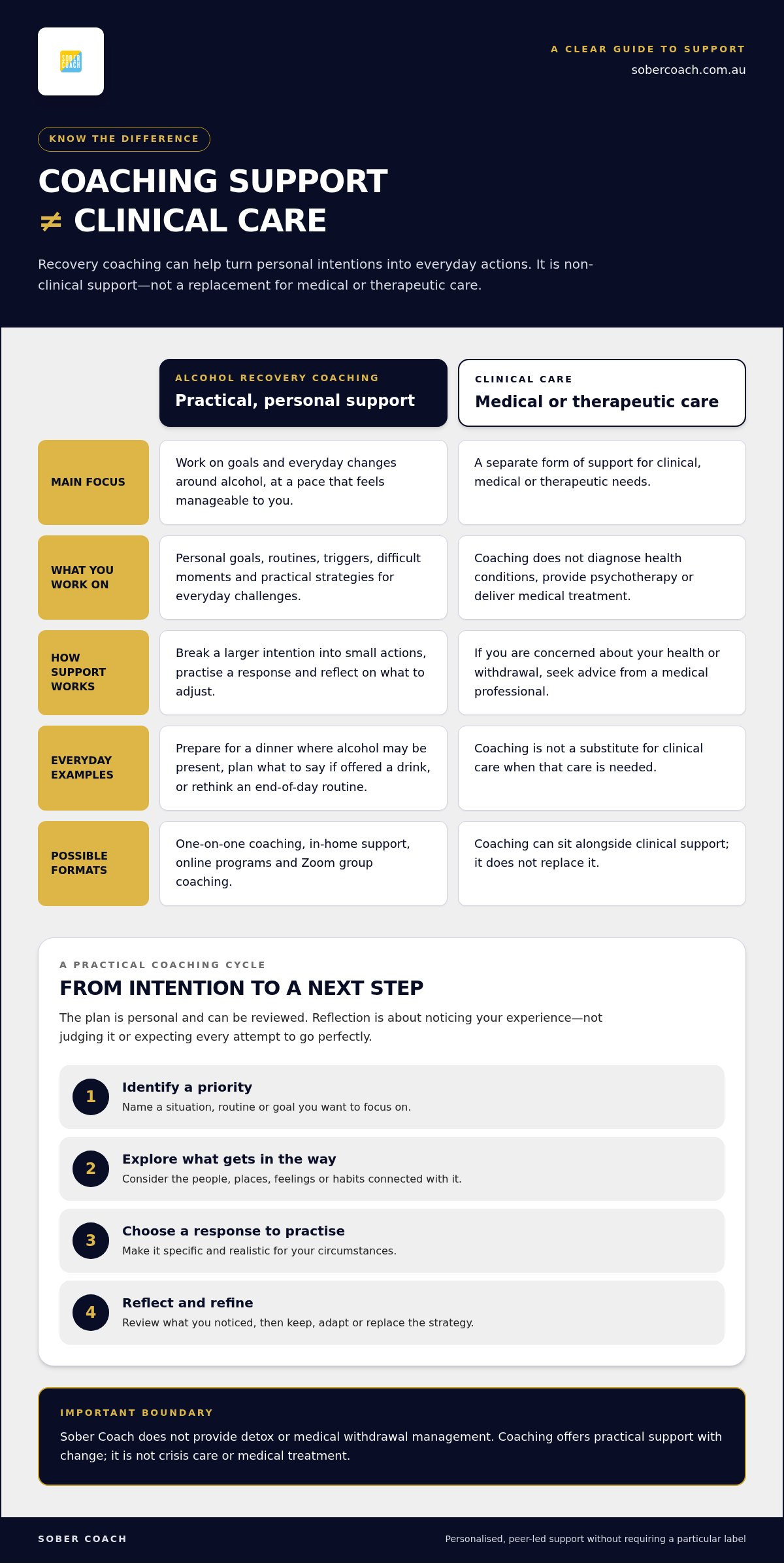
There are clear limits. A recovery coach doesn’t diagnose health conditions, provide psychotherapy or deliver medical treatment. Sober Coach doesn’t provide detox or medical withdrawal management. If you’re concerned about withdrawal or your health, seek advice from a medical professional. Coaching can support practical change, but it isn’t a substitute for clinical care when that’s needed.
How Alcohol Recovery Coaching Supports Change Beyond a Session
Useful change isn’t limited to what you discuss in a coaching session. You can keep working on personally chosen strategies in everyday situations, notice what happens and decide what to adjust. For someone working with an alcohol recovery coach sydney, this can make support relevant to the moments and routines they want to change, rather than leaving good intentions on the page.
A coaching process may follow a simple cycle:
Identify a priority. Name a situation, routine or goal you want to focus on.
Explore what gets in the way. Consider the people, places, feelings or habits connected with it.
Choose a response to practise. Make it specific and realistic for your circumstances.
Reflect and refine. Review what you noticed and decide whether to keep, adapt or replace the strategy.
Reflection isn’t a diagnosis. It’s a way to pay attention to your own experience, such as whether a particular time of day, social setting or feeling tends to influence your choices. Those observations can help shape your next step, without expecting every attempt to go perfectly.
Turning personal goals into workable routines
Imagine you often drink after work or find it difficult to navigate a regular social event. Coaching can help you identify what makes that moment challenging and consider alternatives. Depending on your goal, you might plan a different after-work activity, decide how to respond to an offer of a drink, or arrange another way to leave a gathering. These are options to explore, not universal rules.
After trying an action, consider what felt manageable and what didn’t. Perhaps the plan needs to be simpler, or a different situation needs attention first. Reviewing your experience helps keep the plan connected to real life, rather than turning it into another standard you feel you’ve failed to meet.
Support between appointments and in daily settings
In-home recovery support can connect the strategies you choose with your own environment, where familiar routines and cues are part of daily life. Online recovery programs and Zoom group coaching offer other ways to engage with support remotely. Whatever the format, the focus is practical: what you want to work on and how to apply it in your circumstances.
Coaching is not clinical monitoring or crisis care. For general information about substance use and behavioural health, the US-based Substance Abuse and Mental Health Services Administration (SAMHSA) provides resources; its information isn’t a substitute for Australian medical advice.
Recovery can be gradual and individual, with each next step shaped by what matters to you and what you learn along the way.
If you’re considering practical support to put your intentions into action, explore Sober Coach’s recovery coaching and how it can fit into everyday life.
Alcohol Recovery Coaching vs Clinical Care: Know the Difference
Alcohol recovery coaching and clinical care can support different parts of a person’s experience. Coaching focuses on practical goals and everyday follow-through. Clinical professionals can assess health concerns and provide diagnosis or treatment within their scope. Knowing the distinction helps you choose support that fits, without expecting coaching to do a clinical job.
These supports aren’t interchangeable, and a person may need more than one kind. An alcohol recovery coach in Sydney can help you work on practical change, but coaching doesn’t replace clinical assessment, therapy or medical treatment. A coach can support your chosen goals while a health professional addresses health questions.
What coaching does not provide
Coaching is non-clinical. It doesn’t diagnose conditions, prescribe medication or provide detox or medical withdrawal management. Sober Coach does not provide detox. Coaches also don’t manage withdrawal symptoms or provide emergency response. If you have concerns about your health or alcohol use, speak with a GP or another appropriate health professional.
When medical support matters
Stopping or reducing alcohol can carry health risks for some people, particularly if withdrawal is a concern. Don’t rely on a coach to assess whether it’s medically safe to stop. Talk with a GP or health professional about your situation and what support may be appropriate. If you feel seriously unwell or believe you’re in immediate danger, seek urgent medical help.
The National Institute on Alcohol Abuse and Alcoholism (NIAAA) offers information about alcohol and health, including treatment topics. It’s a US source, so use it as general background rather than a substitute for Australian medical advice. If you’re in Sydney, discuss decisions about withdrawal and health with a qualified health professional familiar with your circumstances.
Once clinical needs have been addressed, coaching may complement that care by helping you put practical plans into daily life. For example, you might work on a routine or social situation with a coach while discussing health and treatment questions with your GP. Each role stays clear. That boundary helps make sure the support you receive matches the need.
Choosing Your Next Step with Alcohol Recovery Support in Sydney
You don’t need a complete plan before asking for support. Start with what you’d like to be different, even if the answer is simply, “I want to understand my habits better.” Searching “alcohol recovery coach sydney” may be your first step; the next can be a low-pressure conversation about what support might suit you.
To make the decision feel more manageable, work through these steps:
Name one goal. Think about what you’d like to change, protect or better understand.
Notice the barriers. Consider which situations, routines or relationships make that goal harder to act on.
Choose a support format. Think about whether individual sessions, support in your home, an intensive workshop, online recovery support or Zoom group coaching feels like a good fit for your circumstances.
Review what you learn. As you try small changes, notice what feels useful and what may need adjusting.
Questions to clarify what support would feel useful
These prompts aren’t a test or clinical assessment. They can help you put what you want from support into your own words. You might reflect on:
Which alcohol-related situations feel hardest to navigate: time with friends, evenings at home, work events or something else?
Would it feel easier to talk one-on-one, apply ideas in your own home, or connect through an online group?
What pace feels manageable, and what kind of follow-through would feel encouraging rather than pressuring?
Your answers can change. You can arrive unsure and use an initial conversation to explore your priorities without committing to a label or deciding your whole future at once.
Making a realistic plan for the first weeks
Keep your first plan focused. Rather than trying to change everything at once, choose one practical action connected to your goal. You could plan how to handle one upcoming social situation or identify a different activity for a familiar time when drinking tends to be part of the routine. What feels workable will depend on you.
Think ahead about what support you’d want if a difficult moment comes up. That might mean identifying someone you trust, writing down a strategy you’ve chosen, or planning to discuss the situation in a coaching session. If health concerns or possible withdrawal are part of your situation, speak with a GP or health professional about safe next steps.
There’s no single format or pace that suits everyone. One-on-one recovery coaching offers individualised support; in-home support can relate strategies to your living environment; workshops and online options provide other ways to engage. The useful choice is the one that fits your needs and helps you take a manageable next step.
If you’re ready to talk through what support could look like, explore Sober Coach’s recovery support and consider what you’d like to focus on first.
How Sober Coach Supports Alcohol Recovery in Sydney
Once you’ve considered what you want from support, the next question is how to make it personal and practical. Sober Coach offers peer-led alcohol recovery support, including one-on-one coaching tailored to individual needs. The focus is on practical tools, accountability and applying intentions in everyday life, without shame or pressure to adopt a particular label.
Personalised coaching for real-life recovery goals
One-on-one sessions give you space to focus on what matters to you. You might want to build a new routine, prepare for a challenging situation or work out how to stay connected to the changes you’re making. Coaching can help turn those priorities into practical steps, then review what you’ve learned and what you’d like to try next.
The process is personal, not prescriptive. Your goals may shift as you reflect on what’s working in daily life. A coach can offer a peer perspective and supportive accountability, helping you keep your chosen actions in view without treating a difficult day as a failure. The aim is to build useful tools for the road ahead, not promise a particular result or define your identity for you.
Long-term recovery support can involve returning to strategies, adapting them to new circumstances and strengthening routines over time. Progress doesn’t have to look dramatic to be meaningful. A small action that fits your life may be a more useful place to begin than a sweeping plan that feels impossible to maintain.
In-person and online ways to access support
People have different needs and preferences, so support can take different forms. Alongside personalised coaching, Sober Coach offers intensive recovery workshops and in-home recovery support. In-home support can help you apply recovery practices in your own environment and work with the routines that shape your day.
Online recovery programs and Zoom group coaching offer remote ways to engage with support. Some people value individual focus; others may prefer learning alongside a group. These formats provide practical, non-clinical support, and the right fit depends on your circumstances and what helps you stay engaged.
It’s important to keep the boundary clear: recovery coaching is not medical treatment, detox or emergency care. Sober Coach does not provide medical detox or withdrawal management. If you have concerns about withdrawal or your health, speak with a GP or health professional. Coaching can complement appropriate clinical care, but it doesn’t replace it.
If you’re looking for an alcohol recovery coach sydney and want support shaped around your priorities, explore Sober Coach’s recovery coaching options. Start by identifying one thing you’d like help with. No label required, just a next step that feels right for you.
Let Your Next Step Be Small and Yours
You don’t need to have every answer before you begin. A useful next step might be naming one thing you’d like to change, then finding support that respects your pace and priorities. Seeking an alcohol recovery coach sydney can help you explore that change without shame or pressure to fit a label.
Sober Coach offers peer-led, non-clinical support focused on practical tools and longer-term recovery. Personalised one-on-one coaching is available alongside in-home support, online programs and Zoom group coaching, so you can consider what feels workable for your life. Coaching doesn’t replace medical care, but it can help you put your intentions into practice.
Explore personalised recovery support with Sober Coach and take the time you need to decide what comes next. One considered step is enough to begin.
Frequently Asked Questions
Do I have to call myself an alcoholic to work with an alcohol recovery coach?
No. You can seek support without using a particular label or having a diagnosis. You might simply notice that drinking is affecting your sleep, mood, finances or connection with people you care about. Describe what you’ve observed and what you’d like to be different, in your own words. The conversation can focus on your experience and priorities, not on deciding what to call yourself.
Can I work with an alcohol recovery coach while I am still drinking?
Yes, you can explore coaching while you’re still drinking. You might use a conversation to clarify what you want to change, consider situations where drinking feels difficult to manage, or identify questions for a health professional. Coaching isn’t medical assessment or withdrawal care. If you’re thinking about stopping or cutting down and are concerned about your health, talk with a GP before making changes.
Is alcohol withdrawal dangerous?
It can be. For some people, stopping alcohol suddenly can lead to serious withdrawal complications, and the risk depends on individual health and drinking history. Don’t try to judge your personal risk from an online article or rely on a coach for medical guidance. Contact a GP or health professional before stopping if you’re concerned. If severe symptoms occur, seek urgent medical care or contact emergency services.
What happens if I drink again after deciding to change?
Drinking again doesn’t mean you have to abandon your intention or hide what happened. If you choose, note what was going on beforehand, such as stress, a disrupted routine or feeling isolated, and bring that observation into coaching. It can help you decide what you want to do differently next time. If you feel unwell, injured or unsafe, prioritise medical help rather than waiting for a coaching conversation.
Can I keep working while getting alcohol recovery coaching?
Many people continue their usual responsibilities while exploring support. Think about how work patterns affect your goals, such as client dinners, a stressful commute or a regular after-work gathering, and identify what you’d like to address. Online support may suit someone who prefers to connect remotely. Coaching isn’t a substitute for workplace or medical support if alcohol-related concerns are affecting your safety or ability to work.
Can family members be involved in alcohol recovery coaching?
Family can be part of your wider support network, but your goals and comfort matter. You could reflect on what you’d want a relative to understand, or whether involving them would help with a specific practical change at home. You don’t have to share everything to seek support. If family conflict or safety concerns are involved, discuss them with an appropriate health professional as well as considering your coaching goals.
Comments