

Sleep Problems After Quitting Alcohol: What Helps and When to Seek Support

Broken sleep after stopping alcohol can be part of your body adjusting, not a sign that you’ll be exhausted forever. Sleep problems after quitting alcohol may mean long nights trying to fall asleep, repeated waking, or vivid dreams that leave you drained the next day. It’s understandable to feel worried, especially when tiredness and irritability make everyday recovery harder. Sleep can take time to settle, and the experience is different for everyone.
This guide explains why sleep may change after drinking stops, which low-risk routines may support rest, and when to seek medical advice. You’ll also learn the difference between everyday sleep disruption and warning signs that need urgent care. If you want practical support with recovery routines, coaching can help you build them as part of a path to sobriety without rehab or AA meetings. Coaching isn’t medical treatment, and serious withdrawal symptoms need medical attention.
Table of Contents
Why Can Sleep Problems Happen After Quitting Alcohol?
Sleep disruption after stopping alcohol means a change in how easily you fall asleep, stay asleep, or feel rested. Some people notice sleep problems after quitting alcohol; others don’t. If nights suddenly feel unsettled, that can be frustrating and worrying, especially when you’re trying to build a new routine. Difficulty sleeping by itself doesn’t tell you exactly why it’s happening or what will happen next.
What can disrupted sleep feel like?
You might lie awake longer than usual, wake several times overnight, or get what seems like enough sleep but still feel worn out in the morning. Dreams may feel more vivid, too. These experiences vary from person to person and can change over time. They don’t prove a specific condition, and a rough night doesn’t mean you’ve failed at recovery.
Why might sleep feel different without alcohol?
Alcohol can make some people feel drowsy at first, but it can also disrupt sleep later in the night and affect normal sleep patterns. After stopping, the body and brain may need time to adjust, which can contribute to restlessness or frequent waking. The National Institute on Alcohol Abuse and Alcoholism describes alcohol’s effects on sleep, while background information on alcohol withdrawal syndrome includes insomnia among possible withdrawal symptoms.
Sleep disruption describes what’s happening, but it isn’t a medical diagnosis. The Australian Government’s health information on alcohol and sleep can help explain the connection. Sleep difficulty alone can’t establish whether alcohol adjustment is the cause or predict a fixed outcome. Stress, health conditions, medicines, and changes to daily routines can also affect rest. If sleep problems are severe, persist, or affect your ability to cope, a GP can help assess what may be contributing.
How Long Can Sleep Problems Last After Quitting Alcohol?
There isn’t one reliable countdown. Sleep problems after quitting alcohol can ease gradually, fluctuate from night to night, or continue longer than you expected. A better night followed by a difficult one doesn’t necessarily mean you’re moving backwards. Sleep recovery varies, and no single symptom can tell you how long your adjustment will take.
What can affect the sleep recovery timeline?
Your experience may be shaped by how much and how often you drank, your general health, stress, daily routines, and whether sleep was difficult before you stopped drinking. These factors can overlap, making it hard to identify one cause or predict a personal timeline from drinking history alone. Don’t treat a general recovery estimate as a deadline your body has to meet.
When should ongoing insomnia be assessed?
If sleep stays disruptive, worsens, or makes daily life hard to manage, speak with a GP or another health professional. They can consider whether other health issues, medicines, stress, or sleep conditions may be contributing and discuss suitable care. MedlinePlus guidance on alcohol withdrawal symptoms notes that withdrawal experiences vary; sleep changes may outlast the earliest phase for some people.
Sleep changes on their own aren’t the same as severe alcohol withdrawal. Confusion, hallucinations, seizures, or rapidly worsening symptoms need urgent medical assessment in Australia. Call 000 for an emergency. If you’re concerned about withdrawal risk, get medical advice before stopping alcohol rather than trying to manage it alone.
Persistent or worsening sleep problems deserve individual medical advice. While a health professional assesses possible causes, practical support can help you build recovery routines and stay connected. Sober Coach provides non-medical recovery support for sobriety without rehab or AA meetings. Recovery coaching support can complement medical care, but it doesn’t diagnose or treat insomnia.
What Can You Do to Support Sleep After Quitting Alcohol?
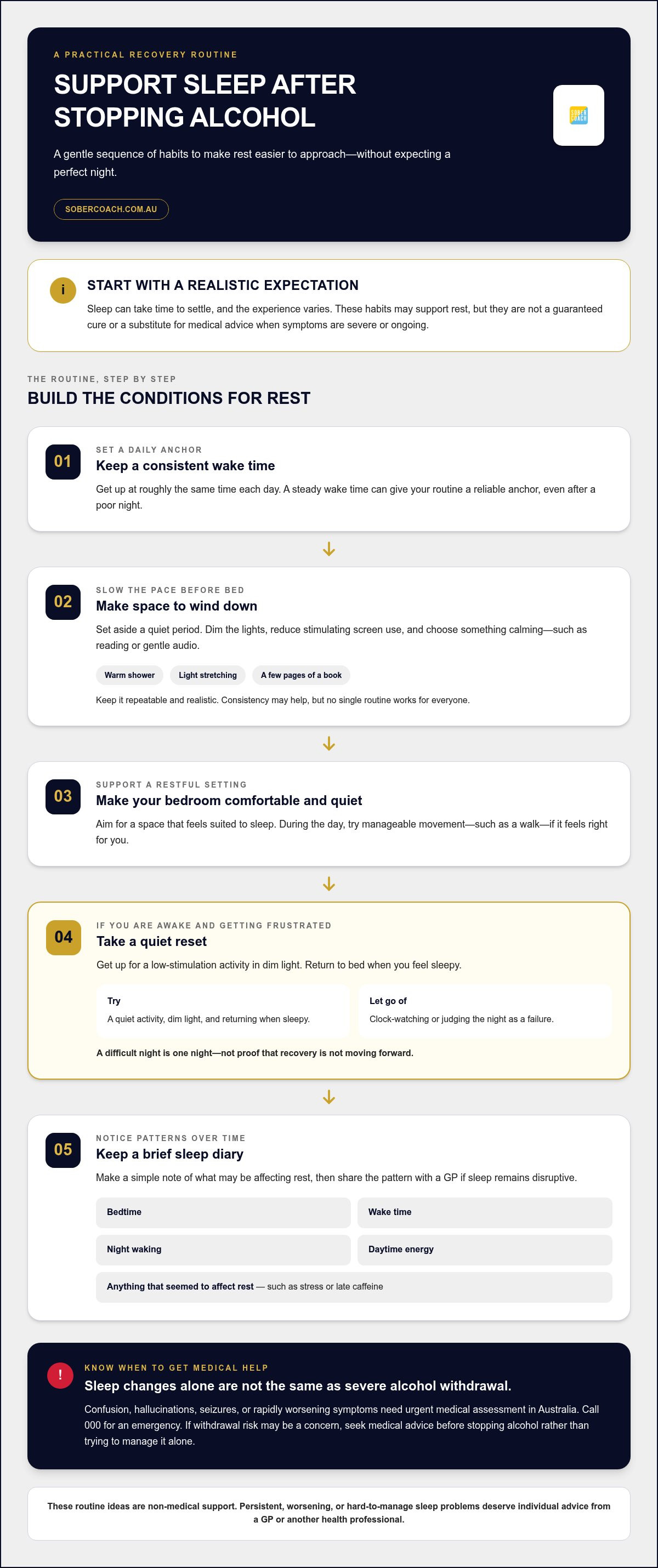
There’s no perfect routine, and one restless night doesn’t erase your progress. Start with a few steady habits that make rest easier to approach. These steps may support sleep problems after quitting alcohol, but they aren’t a guaranteed cure or a substitute for medical advice if symptoms are severe or ongoing.
Keep a consistent wake time. Getting up at roughly the same time each day can give your routine a reliable anchor, even after a poor night.
Make space to wind down. Set aside a quiet period before bed. Dim the lights, reduce stimulating screen use, and choose something calming, such as reading or listening to gentle audio.
Make your bedroom restful. Aim for a space that feels comfortable, quiet, and suited to sleep. During the day, try manageable movement, such as a walk, if it feels right for you.
Build a simple wind-down routine
Keep it realistic: a warm shower, light stretching, or a few pages of a book can signal that the day is slowing down. Choose activities you can repeat without turning bedtime into another test you have to pass. Consistency may help, but no single routine works for everyone.
What if you are awake for a long time?
If you’re lying awake and becoming frustrated, get up for a quiet, low-stimulation activity in dim light, then return to bed when you feel sleepy. Try not to watch the clock or judge the night as a failure. A difficult night is one night, not proof that recovery isn’t moving forward.
For a clearer picture, keep a brief sleep diary. Note bedtime, wake time, night waking, daytime energy, and anything that seemed to affect rest, such as stress or late caffeine. Share the pattern with a GP if sleep remains disruptive. Avoid using alcohol, unprescribed medicines, or supplements as sleep fixes, and discuss medication or treatment changes with a health professional.
Recovery coaching can offer practical, non-medical support with everyday routines as you work towards sobriety without rehab or AA meetings. Explore recovery coaching support for help building steady habits and accountability.
When to Seek Help for Sleep Problems After Quitting Alcohol
If you’re worried you may be dependent on alcohol or at risk of withdrawal, speak with a GP or health professional before stopping. Withdrawal can be dangerous, and sleep difficulty alone doesn’t show whether it’s happening. Getting advice first is safer than trying to manage a potentially serious change by yourself.
Get urgent medical help for severe or rapidly worsening symptoms such as confusion, hallucinations, seizures, a racing heart, high fever, or significant tremors. In Australia, call 000 for an emergency or go to an emergency department. Don’t wait for sleep to improve if these symptoms appear.
Where can Australians turn for help?
A GP or appropriate health professional can assess your sleep concerns, withdrawal risk, and possible contributing factors, then discuss suitable care. You can also call the National Alcohol and Other Drug Hotline on 1800 250 015. It’s a free, confidential service available 24/7 that connects callers with state-based alcohol and other drug support.
How can non-medical recovery coaching support everyday routines?
Medical professionals are the right people to assess withdrawal or persistent insomnia. Recovery coaching has a different role: it offers practical guidance, structure, and accountability for everyday recovery routines, not medical care. Angie Dowling offers one-to-one and online group recovery coaching for people seeking sobriety without rehab or AA meetings. Sober Coach doesn’t provide medical detox or guarantee sobriety.
If you have medical care in place and want practical support alongside it, explore Sober Coach support. Coaching can support your recovery routines, but it isn’t a substitute for assessment or urgent help when withdrawal symptoms are severe.
Take the Next Step at Your Own Pace
Sleep problems after quitting alcohol can make recovery feel heavier, but a difficult stretch doesn’t define what comes next. Give yourself room to adjust, and reach for the kind of support that fits your needs. If you’re concerned about withdrawal or ongoing sleep issues, seek medical advice first.
For practical encouragement with everyday recovery routines, Sober Coach offers support for building sobriety without rehab or AA meetings. Founder Angie Dowling brings 23 years of continuous sobriety to her coaching. Online group coaching includes weekly one-hour live Zoom sessions and a private members community, with ongoing connection and accountability. This is non-medical support, not treatment for insomnia or withdrawal.
Visit Sober Coach to book a session and choose a next step that feels manageable. You don’t have to have everything figured out today. Small, steady steps can help you keep moving towards a life that feels more like your own.
Frequently Asked Questions
Is it normal to have sleep problems after quitting alcohol?
Yes, sleep difficulties can happen after stopping alcohol, although the experience varies and some people sleep differently for reasons unrelated to alcohol. A single bad night can’t identify the cause. If you notice a pattern, jot down when sleep changes occur and what else is going on, such as stress or a shift in routine. Bring those notes to a health professional if the problem is affecting your days.
How long does insomnia last after quitting alcohol?
There’s no dependable number of days or weeks that applies to everyone. Sleep may settle gradually, fluctuate, or remain difficult enough to need assessment. Rather than measuring yourself against someone else’s timeline, note whether you’re functioning better, unchanged, or struggling more over time. If insomnia continues or leaves you too tired to manage work, driving, or daily responsibilities safely, contact a GP or other health professional.
Can quitting alcohol suddenly cause sleep problems?
Yes, sleep can change after alcohol stops, but the bigger concern is whether withdrawal could be unsafe. If you’ve been drinking heavily or regularly, speak with a GP before stopping, even if poor sleep is your main concern. Seizures, confusion, hallucinations, or severe and rapidly worsening symptoms call for emergency help in Australia: ring 000 or go to an emergency department.
What can I do to sleep better after quitting alcohol?
Use a steady wake-up time and a low-key bedtime routine, and don’t try to force sleep with alcohol or medicines that weren’t prescribed for you. Keep any changes simple, then notice whether you feel more rested. If insomnia persists, ask a health professional whether cognitive behavioural therapy for insomnia (CBT-I), a recognised non-drug approach for persistent sleep problems, may suit you.
When should I seek help for insomnia after quitting alcohol?
Seek advice if insomnia is ongoing, worsening, or making everyday tasks harder. A GP can consider possible causes beyond alcohol adjustment and discuss appropriate care. For alcohol and other drug support in Australia, call the National Alcohol and Other Drug Hotline on 1800 250 015, a free, confidential 24/7 service connecting callers with state-based support. For a life-threatening emergency, call 000.
Comments