

High-functioning alcoholism: Meaning, signs, and how to talk about drinking

A steady job, close relationships and a full calendar don’t rule out a serious drinking problem. High-functioning alcoholism is a colloquial term for a person who maintains responsibilities while experiencing problems with alcohol; it isn’t a formal diagnosis in the DSM-5. High tolerance can make drinking seem manageable, but needing more alcohol to feel the same effect may be a warning sign.
It can be hard to know what to make of drinking when someone seems to be coping well. This article explains high-functioning alcoholism, how tolerance can mask alcohol’s effects, and which changes in behaviour or wellbeing may warrant attention.
You’ll also learn how to raise concerns without blame, listen to the other person and recognise when support may help. A label isn’t required to take a concern seriously or start a more honest conversation about drinking.
Table of Contents
What Is a High-Functioning Alcoholic?
A person may keep up with work and relationships while experiencing alcohol-related harm. “High-functioning alcoholic” is a colloquial term, not a DSM-5 diagnosis.
External and Behavioural Warning Signs
Warning signs are changes in drinking, behaviour or wellbeing, even when someone appears to manage daily responsibilities. Examples include hiding alcohol, drinking alone, making excuses, taking risks while drinking or continuing despite relationship problems. Irritability, anxiety, sleep problems and social withdrawal may add to the concern. No single sign establishes alcohol use disorder, but a repeated pattern deserves attention.
Signs of Alcohol Dependence
Dependence may involve a strong urge to drink, needing more alcohol to get the same effect, or feeling unwell after reducing intake. Someone might drink to cope with stress, hide alcohol or return to drinking after a period without it. These patterns matter because withdrawal can occur when a person who is physically dependent cuts down. Anyone who drinks heavily every day should seek medical supervision before stopping.
Alcohol treatment costs in Australia depend on the service and funding pathway; Medicare rebates depend on eligibility and treatment. Public-service referrals and free, confidential counselling information are available through the National Alcohol and Other Drug Hotline on 1800 250 015.
Risk depends on both how much a person drinks and their drinking pattern, including the amount consumed on each occasion. Repeated drinking that affects health, safety or relationships is a reason to reassess, regardless of how well someone appears to function.
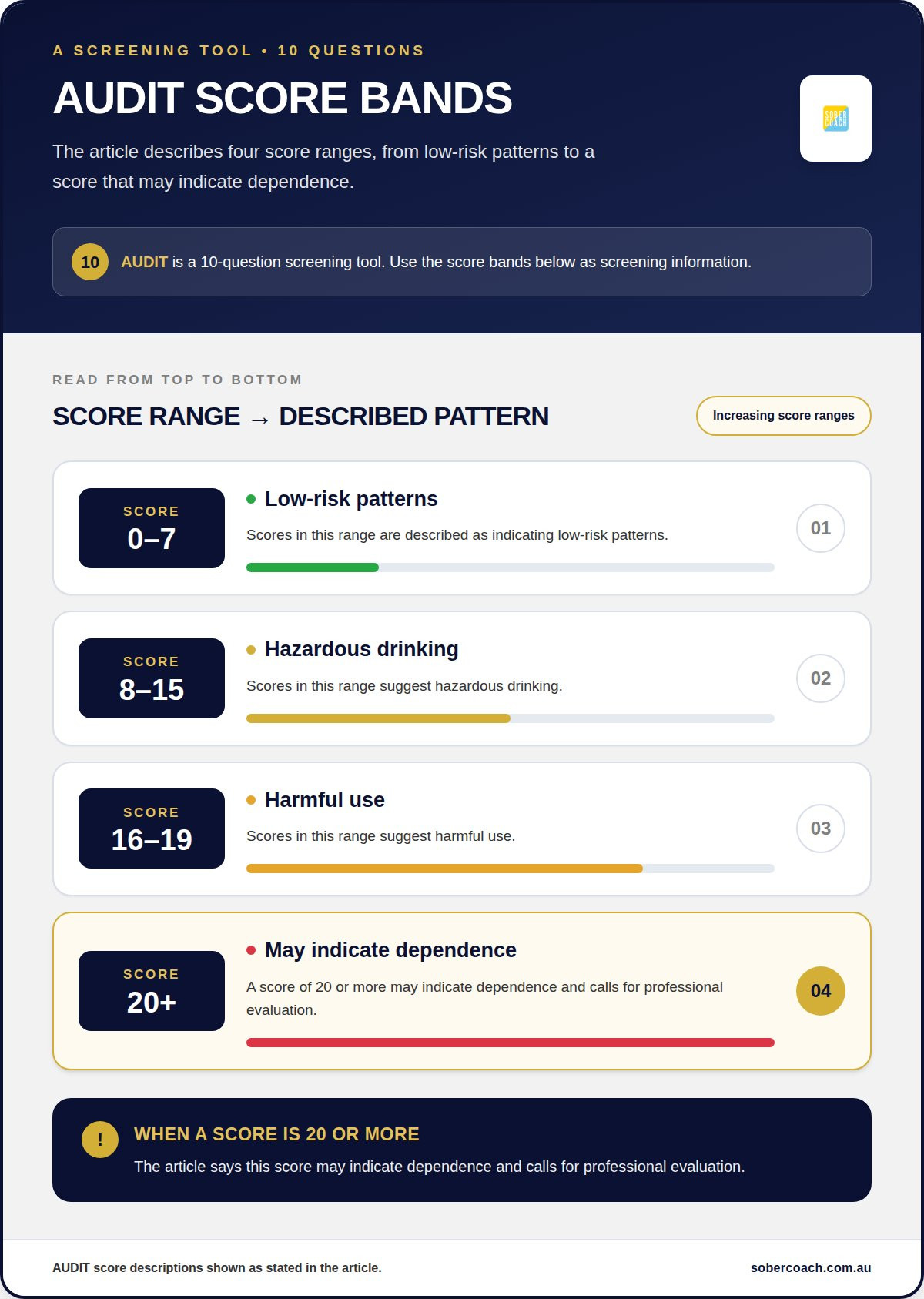
The AUDIT is a 10-question screening tool. Scores of 0-7 indicate low-risk patterns, while 8-15 suggest hazardous drinking; 16-19 suggests harmful use. A score of 20 or more may indicate dependence and calls for professional evaluation.
Support options include one-to-one counselling, support groups and professional assessment. A health professional can discuss whether medication may be suitable, alongside other support for drinking-related concerns.
For confidential Australian help, call 1800 250 015 for counselling, information and referrals. The hotline can help callers find a relevant local service.
Yes. Stopping suddenly can be dangerous for someone who drinks heavily every day, because withdrawal may occur after they reduce their intake. Seek medical supervision before stopping, and get urgent medical attention for severe or rapidly worsening symptoms.
Meaning of high-functioning alcoholism
“High-functioning alcoholism” describes a person who maintains responsibilities while experiencing alcohol-related problems. It’s a colloquial term, not a formal DSM-5 diagnosis; daily performance alone can’t establish or rule out alcohol use disorder.
Meaning and Characteristics
High-functioning alcoholism describes a gap between someone’s outward ability to cope and the consequences of their relationship with alcohol. They might meet work deadlines, care for family and seem socially confident, yet experience health, mood or relationship problems linked to drinking. That contrast can make concerns easier to dismiss, particularly when wellbeing is judged only by visible responsibilities.
Possible signs include denial, isolation, physical or mental health concerns, and returning to drinking after periods without it. These are indicators to consider, not a checklist or diagnosis. For example, a missed family commitment may be more concerning when it is part of a recurring alcohol-related pattern than when it happens once.
The label describes how someone may appear, not how much harm they experience. Alcohol use disorder can affect people with a wide range of jobs, family lives and abilities. Looking at the consequences over time gives a fuller picture than asking whether someone seems “normal” or successful.
Clinical Diagnosis
DSM-5 does not recognise “high-functioning alcoholic” as a clinical diagnosis; alcohol use disorder is the clinical term. This distinction matters because treatment and therapy should respond to a person’s drinking patterns and effects, not a label that can obscure them.
People who appear to function well may still meet DSM-5 criteria for alcohol use disorder, sometimes at moderate or severe levels. A qualified professional assesses the broader pattern and its impact. Honest, confidential discussion can help someone describe what drinking changes in daily life, even if they remain able to work or maintain a relationship.
You don’t need to settle on a label before exploring support. If alcohol is affecting your choices or relationships, one-on-one recovery coaching can offer a space to examine those patterns and consider next steps.
Talking with someone about their drinking
Choose a time when your loved one is sober and able to focus. Start with one clear observation: “I noticed you drank before dinner on the nights you had work the next day, and I’m concerned.” A calm, specific opening is more likely to invite conversation than a confrontation.
Keep the focus on care, not blame. Describe what you’ve seen and how it affects you, rather than labelling the person an addict or demanding they stop. For example, you could say, “I miss spending time with you when drinking takes over our evenings.” Accusations can make someone defensive and shut down an honest conversation.
Then listen. Ask what they think about their drinking, and give them time to answer without interrupting or judging. If they minimise the issue, don’t argue over every detail. Calmly restate the example that concerned you. A collaborative conversation can help someone consider change without feeling forced into a decision.
Long-term heavy drinking can affect several aspects of health, increasing the risk of liver disease, cardiovascular problems and neurological impairment. These effects may develop over time, while changes in sleep, mood or memory can affect daily life sooner. Naming a specific change you’ve noticed may make your concern clearer than giving a general warning about alcohol addiction.
Alcohol can also become entangled with mental health. Someone may drink to cope with anxiety or depression, even though drinking can intensify those feelings. You might say, “I’ve noticed you seem more anxious after drinking, and I want to understand what’s going on.” This acknowledges their struggle without reducing them to a diagnosis.
If the person is open to support, discuss options without insisting on one path. A health professional can assess their needs, while approaches such as cognitive-behavioural therapy or motivational interviewing can address thoughts and behaviours linked to drinking. Support groups may also reduce isolation. Treatment can address alcohol use alongside mental health concerns, so the conversation can start with one manageable next step.
Alcohol tolerance and functional tolerance
Alcohol tolerance develops when a person needs progressively more alcohol to achieve the same effect. As a result, a familiar amount may seem less noticeable, but that doesn’t mean drinking has become safer. Tolerance can be a warning sign of problematic drinking, especially when someone increases their intake to recreate an earlier feeling.
Functional tolerance describes the impression that someone can keep performing familiar tasks while drinking. They might hold a conversation, finish work or appear steady at a gathering, yet still drink in a way that causes harm. Success at work doesn’t measure alcohol’s effects on health, choices or relationships. Outward composure can conceal the extent of the problem.
Tolerance can also distort other people’s judgement. If someone seems less affected than expected, friends may assume their drinking is normal or manageable. But high tolerance can make the extent of a drinking problem harder to recognise. Focus instead on changes such as needing more alcohol, drinking to cope or continuing despite consequences.
Tolerance isn’t immunity to alcohol’s effects. Someone may still make risky decisions or experience physical and mental health concerns, even if they don’t appear intoxicated. The important question isn’t whether they can finish a task after drinking, but whether alcohol is increasingly shaping their routine and wellbeing.
Denial can make this pattern difficult to discuss, particularly when daily life still looks intact. Compare what has changed over time: how much alcohol is needed, why the person drinks and how drinking affects their responsibilities. These details offer a clearer starting point than arguing over labels or whether someone looks drunk.
Recovery can begin with understanding the role alcohol plays, without deciding that one approach fits everyone. If you want help exploring drinking patterns and change, work with a recovery coach through one-on-one support.
Sober Coach: One-on-One Recovery Coaching
Sober Coach offers One-on-One Recovery Coaching for people ready to explore their relationship with alcohol and make practical changes. You don’t need a label or a perfect plan to begin. Coaching can help you reflect on your patterns, identify goals and work through next steps at a manageable pace.
For a different kind of support, options include Intensive Recovery Workshops, In-Home Recovery Support and group coaching online via Zoom. The right format depends on what kind of support feels useful as you move forward.
To talk about support, contact Sober Coach or visit sobercoach.com.au.
Make your next step your own
A label doesn’t have to decide what happens next. Understanding high-functioning alcoholism can open the door to a more honest relationship with drinking, but change starts with your own priorities. You may want to be more present with people you care about, understand what’s driving your habits, or talk through a concern without being judged.
Choose one small, specific step. Write down what you’d like to change, note what kind of support would feel comfortable, or share your concern with someone you trust. You don’t need every answer before reaching out. Asking for support is a choice, not a verdict on who you are.
If you’re ready to explore what could help, contact Sober Coach for support. Your next chapter can start with one honest conversation.
Frequently Asked Questions
What are the signs of alcohol dependence in someone who appears to function well?
Notice whether drinking is becoming central to daily routines, even when work and family commitments continue. Someone might plan errands around buying alcohol, feel unable to enjoy social occasions without it, or repeatedly break personal limits. Keeping a private record of drinking occasions and the reasons for them can reveal patterns that a polished appearance may hide. It can also provide concrete details to discuss with a health professional.
How can I tell the difference between heavy drinking, alcohol dependence and alcohol use disorder?
Heavy drinking describes a pattern or amount of alcohol use; dependence describes features such as impaired control or withdrawal; alcohol use disorder is a clinical diagnosis assessed through a broader pattern of symptoms and consequences. These terms overlap, but they aren’t interchangeable. For instance, a person can drink heavily without meeting diagnostic criteria, while dependence symptoms warrant a professional conversation even if they meet daily responsibilities.
What are the health risks of long-term heavy drinking, even without obvious problems?
Long-term heavy drinking can harm health before obvious problems appear. Risks include liver conditions, high blood pressure, irregular heartbeat, stroke, memory and learning difficulties, and some cancers. Alcohol can also weaken the immune response, making infections harder to fight and healing slower. Feeling well isn’t proof that drinking is safe. Discussing alcohol use and health concerns with a health professional is a practical step.
Is it dangerous to stop drinking suddenly, and what are the signs of alcohol withdrawal that need urgent care?
Yes. Anyone who drinks heavily every day should seek medical supervision before stopping, because withdrawal can occur after reducing their intake. Severe or rapidly worsening symptoms need urgent medical attention.
Comments