

Managing Mental Health in Early Sobriety: A Guide to Emotional Stability

What if the hardest part of sobriety isn't actually putting down the bottle, but finally meeting the person who was hiding behind it? For many of us, the initial "pink cloud" of recovery eventually fades, leaving us standing in the cold light of reality. You might feel blindsided by sudden waves of anxiety or find yourself staring at the ceiling at 3 AM with a racing mind. This process of managing mental health in early sobriety is a vulnerable, often overwhelming season of unmasking where every emotion feels amplified and raw.
It's vital to realize that these intense shifts are a normal part of your brain finding its balance again. At Sober Coach, we see this stage as a powerful beginning rather than a period of deprivation. You deserve to feel stable and empowered without relying on a substance to numb the edges. In this guide, we'll unpack the complexities of emotional recovery and help you build a resilient mental health toolkit. We'll explore practical daily routines to maintain your peace and help you distinguish between temporary recovery symptoms and long term mental health needs.
Table of Contents
The Emotional Unmasking: Why Early Sobriety Feels So Raw
For years, you likely used alcohol as a chemical buffer between yourself and the world. It wasn't just a drink; it was a maladaptive coping mechanism that muted your anxiety, dampened your anger, and blurred the edges of your grief. When you remove that layer, the sudden influx of raw data can feel like standing in a storm without a coat. This is the reality of managing mental health in early sobriety. You aren't just quitting a habit; you're learning to live without a shield.
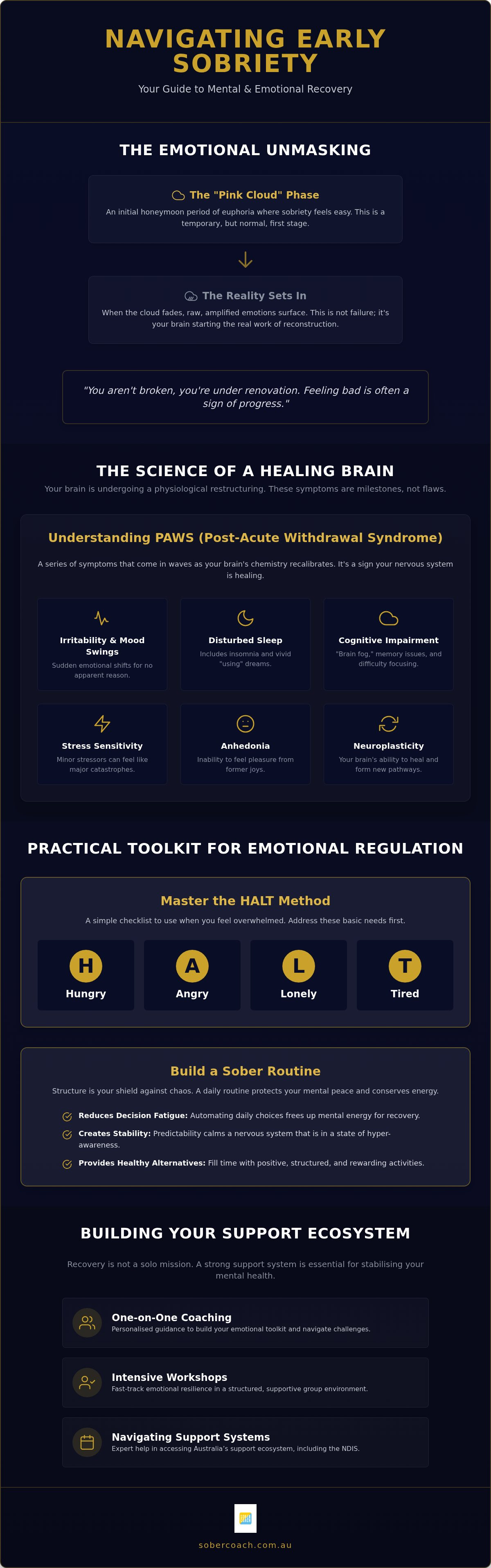
Many people experience an initial burst of euphoria often called the "Pink Cloud." It's a honeymoon phase where sobriety feels easy and the future looks bright. However, when that cloud inevitably dissipates, reality sets in with a heavy thud. This crash isn't a sign of failure. It's a normal recovery milestone that signals your brain is moving past the honeymoon and into the real work of emotional reconstruction. Understanding this shift helps you realize that the "lows" aren't a permanent state, but a necessary part of the recalibration process.
The Transition from Numbing to Feeling
During the first 90 days, you might experience a literal sensory overload. A crowded shopping centre, a minor traffic jam, or a sharp comment from a colleague can feel like a major catastrophe. This happens because your nervous system, which was suppressed for so long, is now hyper-aware. Emotional unmasking is the process where true feelings emerge without a chemical filter. It can be jarring to realize that you don't yet have the tools to handle these feelings, but acknowledging this void is the first step toward filling it with healthy regulation strategies.
Normalising the Struggle in 2026
There is a persistent, often damaging stigma that sobriety should bring immediate, radiant happiness. In 2026, we are finally seeing a shift where people acknowledge that "not being happy yet" is a valid and common part of the timeline. It is essential to distinguish between clinical depression and the temporary emotional volatility of early recovery. If you feel irritable, flat, or prone to outbursts, it doesn't always mean you need a lifelong diagnosis. Often, it means your brain is working hard to repair itself.
At Sober Coach, we encourage a non-judgmental stance toward these emotional waves. Feeling bad is frequently a sign of progress; it means your brain is no longer being artificially suppressed. Much of this instability is linked to Post-acute-withdrawal syndrome (PAWS), a condition where the brain's chemistry remains in flux for months after the last drink. By managing mental health in early sobriety with patience, you allow your neurobiology the time it needs to find a new, stable baseline. You aren't broken; you're just under renovation.
The Science of the Dry Brain: Neuroplasticity and PAWS
The brain doesn't just "bounce back" the moment you stop drinking. It's a complex organ that has spent years adapting to a chemical depressant. When that substance is removed, your biology enters a state of frantic recalibration. This isn't a failure of willpower; it's a physiological restructuring. Managing mental health in early sobriety requires a deep understanding of this process to avoid the trap of thinking you're just a naturally miserable or anxious person. You're simply a person with a healing brain.
During the first six months, you will likely encounter periods of anhedonia, which is the inability to feel pleasure from things you used to enjoy. This happens because your dopamine receptors, which were constantly overstimulated by alcohol, have "downregulated" or effectively gone dormant. They need time to wake up. Reassure yourself that the brain fog and lack of motivation you feel are physiological milestones, not character flaws. Your reward system is essentially under construction.
Understanding Post-Acute Withdrawal Syndrome (PAWS)
PAWS is the brain’s way of recalibrating its chemical balance after the cessation of long-term substance use. Unlike the acute withdrawal that happens in the first week, PAWS is a protracted experience that comes in waves. You might feel excellent for three days and then suddenly wake up feeling irritable and exhausted for no apparent reason. This wave-like nature is the most frustrating part of the process, yet it's a sign that your nervous system is testing its new limits.
Common PAWS symptoms include:
Chronic irritability and sudden mood swings
Disturbed sleep patterns and vivid "using" dreams
Cognitive impairment or "brain fog"
Difficulty with memory and focus
Sensitivity to stress
Neuroplasticity: Rewiring Your Reward System
Neuroplasticity is your greatest ally in this journey. It's the brain’s ability to form new, healthy neural pathways to replace the ones worn deep by years of drinking. Every time you choose a walk over a wine, or a meditation session over a meltdown, you're physically changing your brain's architecture. In 2026, we understand brain health as something proactive. We don't just wait for the brain to fix itself; we use specific actions to speed up the process.
High-intensity exercise and consistent mindfulness are particularly effective because they stimulate the production of brain-derived neurotrophic factor (BDNF), a protein that acts like "miracle-grow" for your neurons. This is vital when managing mental health in early sobriety, especially for those navigating co-occurring mental disorders that may have been masked by substance use. Our One-on-One Recovery Coaching focuses on these proactive habits, helping you bridge the gap between clinical detox and a vibrant, self-directed life.
The timeline is your friend. At 30 days, your sleep cycles begin to regulate. By 60 days, dopamine sensitivity starts to return. By 180 days, the structural healing is significant enough that the "waves" of PAWS become much smaller and easier to manage. Hang in there; your brain is doing exactly what it's supposed to do.
Practical Strategies for Emotional Regulation Without Alcohol
Understanding your brain's recalibration is one thing, but sitting through a Tuesday afternoon panic attack is another. Managing mental health in early sobriety isn't just about abstract concepts; it's about having a tactical response when your nervous system feels like it's short-circuiting. You need a toolkit that works faster than your desire to numb out. This transition requires moving from reactive survival to proactive regulation.
The "HALT" method is your first line of defence. When you feel a sudden surge of irritability or a craving, stop and ask: Am I Hungry, Angry, Lonely, or Tired? These four states are the primary drivers of emotional instability. Often, what feels like a spiritual crisis is actually just low blood sugar or exhaustion. By addressing the physical need first, you strip the emotional trigger of its power. If you find yourself in a moment where these self-regulation tools aren't enough, resources like SAMHSA's National Helpline can provide immediate guidance while you work on your long term strategy.
Another powerful tool is "Urge Surfing." Instead of fighting an emotional urge, which only creates more tension, you learn to observe it. Imagine the feeling as a wave. It starts small, builds to a peak, and then inevitably breaks and recedes. You don't have to control the wave; you just have to stay on your board for the fifteen to thirty minutes it takes for the intensity to pass. It's about witnessing the discomfort without being consumed by it.
The 5-Step Grounding Technique for Sobriety
When anxiety spikes and your thoughts start racing, you need to get out of your head and into your body. This sensory grounding interrupts the "fight or flight" response and brings you back to the present moment. Follow these steps slowly:
Step 1: Acknowledge 5 things you can see around you.
Step 2: Acknowledge 4 things you can touch.
Step 3: Acknowledge 3 things you can hear.
Step 4: Acknowledge 2 things you can smell.
Step 5: Acknowledge 1 thing you can taste.
By forcing your brain to process external sensory data, you physically shift focus away from internal panic. It's a simple, direct way to regain control when managing mental health in early sobriety feels like a losing battle.
Developing a Non-Negotiable Daily Routine
Decision fatigue is a major trigger for relapse. If you have to decide to stay sober every hour, you'll eventually run out of willpower. A "Sober Routine" automates your day, preserving your mental energy for the tough moments. A solid morning routine, even if it's just ten minutes of stretching and a glass of water, sets an intentional tone for emotional resilience. It's about creating a predictable environment for a brain that's currently in flux.
Sleep hygiene is equally critical. A tired brain is an impulsive brain. By sticking to a consistent bedtime, you reduce the late-night cravings that often strike when your guard is down. Finally, integrate "micro-wins" into your day. Small acts like making your bed or completing a five-minute task provide a natural, steady drip of dopamine. These small victories prove to your brain that you can achieve satisfaction without a chemical shortcut, building the foundation for a vibrant, liberated life.
Building Your Support Ecosystem in Australia
Sobriety isn't a solo sport. Managing mental health in early sobriety means surrounding yourself with people who understand the nuance of the unmasking process. While your internal work is vital, the scaffold you build around your life often determines your long-term success. This ecosystem should be diverse, combining peer support, professional guidance, and clear social boundaries.
In Australia, the landscape of support has expanded significantly. Peer groups like AA or NA offer a vital sense of belonging and shared history. For those with a dual diagnosis, the NDIS now provides access to psychosocial recovery coaches who specialise in long-term mental health maintenance. If you're in regional Australia where in-person meetings are scarce, online recovery communities and Zoom-based coaching sessions have bridged the gap. Your postcode no longer has to be a barrier to your transformation.
You must also audit your physical and social environments. Creating a "sober-safe" home is a practical first step, but the harder work lies in setting boundaries with old social circles. This isn't about being unkind; it's about protecting your new, fragile peace. You have the right to step away from environments that trigger the urge to numb out.
Recovery Coach vs. Therapist: Which Do You Need?
It's helpful to understand the different roles these professionals play. Therapists generally look backward. They help you unpack trauma and resolve past wounds that might drive your habits. A Sober Coach, however, looks forward. We focus on lifestyle design, habit architecture, and the practical "how-to" of daily life. While a medical professional is necessary for severe clinical depression, a coach provides the real-time accountability that a weekly 50-minute therapy session often lacks. We are the bridge between clinical rehab and the messy reality of your everyday world.
Leveraging Australian Resources
Crisis lines like Lifeline (13 11 14) are essential for immediate distress, but they aren't designed for the daily work of personal growth. For proactive maintenance, you need a strategy that meets you where you live. In Sydney, we provide In-Home Recovery Support to help you navigate your actual environment without the buffer of a clinic. This hands-on approach reduces the anxiety of returning to a space where old triggers might still live. Whether you prefer the anonymity of digital sessions or the intensity of face-to-face work, the goal is to move toward personal agency. You can explore the differences in our guide on Online Rehab vs. In-Person Support in Australia.
If you're ready to stop just surviving and start designing a life you don't want to escape from, consider our One-on-One Recovery Coaching to build your bespoke mental health toolkit.
How Professional Coaching Stabilises Early Mental Health
When you move past the initial fog of detox, the real work of reconstruction begins. Managing mental health in early sobriety is less about the substance you've left behind and more about the emotional infrastructure you build to replace it. This is where professional coaching acts as a vital stabilising force. While clinical models often focus on the pathology of addiction, a Sober Coach focuses on the practical architecture of your new life. Through our Online Rehab model, we provide flexible, nationwide support that integrates into your actual daily schedule, allowing you to heal in the context of your real world.
One-on-one sessions are designed to create a tailored roadmap for your specific mental wellness needs. We don't believe in one-size-fits-all solutions because your triggers and aspirations are unique to you. If you feel you need to fast-track your progress, our Intensive Recovery Workshops offer a concentrated environment to sharpen your emotional tools and build resilience quickly. This proactive approach ensures that your recovery is a goal-oriented journey toward liberation rather than a passive state of deprivation.
The Power of Lived Experience
There is a unique, immediate relief in talking to someone who has actually been where you are. This shared history breaks down the walls of shame that often keep people isolated during the unmasking process. Our coaching style is professional yet deeply personal, stripping away the clinical anonymity of typical services to offer a human-to-human connection that feels both brave and transparent. We use a direct, no-nonsense approach to help you identify the self-sabotaging patterns that often emerge during the "messy middle" of recovery.
By working with a mentor who possesses lived experience, you gain an expert guide who understands the nuances of emotional volatility. We don't just offer sympathy; we offer strategy. This relationship builds immediate trust, allowing us to challenge your current perceptions while providing the gentle, practical guidance needed to stay steady. It's about having a courageous mentor in your corner who sees your potential even when you're struggling to see it yourself.
Next Steps: From Survival to Thriving
The ultimate goal of managing mental health in early sobriety isn't just to stop drinking. It's to reach a point where you actually like your life and feel empowered by your choices. We want to help you move beyond the survival mindset of "one day at a time" and start designing a vibrant, liberated future. This transition is where true personal transformation happens, turning your sobriety from an end point into a powerful beginning.
Community is a cornerstone of this growth. We invite you to join our Zoom-based group sessions to experience the power of collective support and shared wisdom. You don't have to navigate this vulnerable season of unmasking alone. If you're ready to take agency over your recovery and build a mental health toolkit that lasts, it's time to reach out. Take the first step toward your new life and Book a consultation with a Sober Coach today.
Your New Life is Just Beginning
Sobriety is far more than just the absence of alcohol; it's the active presence of a life you finally enjoy living. You've learned that the raw emotions of the unmasking process are actually signs of a brain in repair, and that tools like sensory grounding and the HALT method provide the stability you need to stay on track. Managing mental health in early sobriety is a skill that grows stronger with every proactive choice you make. It's about moving from a state of survival into a season of intentional lifestyle design.
We offer a vital bridge between clinical care and real-world maintenance through our lived-experience mentors who truly understand the Australian recovery landscape. Whether you need comprehensive online rehab from a regional area or Sydney-based in-home support, our team provides a non-judgmental and empowering approach to your long-term transformation. You don't have to navigate the complexities of your evolving identity alone. Our coaching model is built on trust and a shared history, ensuring you have the support needed to thrive.
Start your journey to emotional freedom with a professional Sober Coach today. This isn't just about quitting a habit; it's about discovering the vibrant, liberated version of yourself that has been waiting to emerge. You have the agency to change your story, and we're here to help you write the next chapter.
Frequently Asked Questions
Is it normal to feel more depressed after I stop drinking?
Yes, feeling a dip in mood is a standard physiological response as your brain’s reward system recalibrates. For years, alcohol artificially inflated your dopamine levels. Now that the substance is gone, your brain needs time to start producing those chemicals on its own again. This period of managing mental health in early sobriety is temporary. It's a sign that your biology is healing, not that you're broken.
How long does the emotional volatility of early sobriety last?
Emotional volatility typically peaks within the first 90 days but can fluctuate for up to two years. This is often due to Post-Acute Withdrawal Syndrome (PAWS), where symptoms come in waves rather than a steady decline. You might feel stable for weeks before a sudden surge of irritability or anxiety hits. Understanding this timeline helps you realize these waves are a normal part of the brain's long-term restructuring process.
What is the difference between a recovery coach and a psychologist?
A psychologist is a clinical professional who often focuses on diagnosing mental health conditions and exploring past trauma. In contrast, a Sober Coach acts as a mentor with lived experience who focuses on your future. We look at lifestyle design, habit architecture, and real-time accountability. While a psychologist helps you understand the "why" of your past, we help you master the "how" of your daily sober life.
Can I manage my mental health in sobriety without joining AA?
You absolutely can find emotional stability without traditional 12-step programs. While AA works for many, it isn't the only path to liberation. Managing mental health in early sobriety often involves a combination of professional coaching, clinical therapy, and modern secular communities. The key is to find a support ecosystem that resonates with your personal values and provides the practical tools you need to build a life you actually enjoy.
What should I do if I feel like I am going to relapse due to anxiety?
When anxiety spikes, immediately use sensory grounding to interrupt the fight or flight response. This involves focusing intensely on your current environment to pull your brain out of a panic loop. Reach out to your Sober Coach or a trusted friend to talk through the feeling before it escalates. Remember that an urge is like a wave; it will break and recede if you can stay present for just twenty minutes.
How does an online rehab program help with mental health?
Our online rehab model provides professional guidance and community support directly within your home environment. This is crucial because it allows you to practice new mental health tools in the same space where your triggers actually live. You get the structure of an intensive program without the isolation of an inpatient facility. It bridges the gap between clinical detox and the messy reality of your everyday life across Australia.
Are Sober Coach services covered by the NDIS in Australia?
Yes, Sober Coach services can be accessed through NDIS funding for those with psychosocial recovery coach requirements in their plans. We work with individuals who have dual diagnoses to provide the non-clinical, empathetic support needed for long-term stability. As of 2026, these requirements ensure that coaches have the specific skills to support your mental health journey. Contact us to discuss how we can integrate into your NDIS support plan.
What are the first signs that my mental health is improving in recovery?
Improved sleep is often the first tangible sign that your nervous system is beginning to settle. You might also notice that small stressors don't trigger the same level of panic they once did. Other signs include a returning interest in old hobbies, clearer cognitive function, and the ability to feel genuine moments of joy without a chemical aid. These small victories are proof that your neuroplasticity is working in your favour.
Comments