

Healthy Coping Mechanisms in Recovery: Practical Tools for Everyday Life

What if the goal isn’t to find one perfect coping strategy, but to choose a response that fits the moment? When stress or strong emotions hit, old habits can feel automatic, and generic advice rarely helps you decide what to do next. If you’re finding recovery difficult, that doesn’t mean you’re failing. It means you’re facing a hard moment, and you can meet it with support and practical tools. Healthy coping mechanisms in recovery work best when they fit your needs, your triggers and your everyday life.
This article explains how to match coping tools to different feelings and situations, and how to build a recovery plan you can actually use. There’s no single checklist that works for everyone. Start with small, specific actions you can practise and return to when things get tough.
We’ll look at options for managing stress, cravings and difficult emotions, then explore how personalised coaching and other forms of support can help you put those strategies into practice.
Table of Contents
Why healthy coping mechanisms matter in recovery
Recovery doesn’t mean you’ll feel steady every day. Stress, loneliness, conflict, boredom or an unexpected change can make familiar habits feel tempting, even when you’re committed to doing things differently. Needing support in a difficult moment isn’t proof that recovery is failing. It’s a human response, and a chance to notice what’s happening before choosing what to do next.
Healthy coping mechanisms in recovery are responses that help you meet a need without returning to harmful patterns. That need might be comfort, connection, rest or a way to solve a problem. A useful response won’t necessarily erase a difficult feeling or urge. It can help you look after yourself while making room for a more deliberate choice.
Coping strategies are often described as emotion-focused, which can help you manage a feeling, or problem-focused, which can help you address a situation. This overview of coping mechanisms explains the distinction. Both approaches can have a place in recovery: calming yourself may help in the moment, while addressing an ongoing source of stress may support your wellbeing over time.
What can make recovery feel difficult day to day?
There isn’t one set of circumstances that affects everyone in the same way. A disagreement might leave one person wanting to withdraw, while another may feel restless during unstructured time. Work pressure, feeling disconnected, a change in routine or having too much on your mind can also make it harder to stick with habits that support recovery.
Treat a difficult moment as information, not a verdict. You might notice tension after a difficult conversation, a pull to isolate when you’re lonely, or unease when the day has no plan. Naming what you notice doesn’t force you to act a certain way. It creates space to ask what you need and consider a response that supports your wellbeing.
Healthy coping versus familiar but unhelpful responses
Some responses offer quick relief by helping you avoid a feeling or situation. You might cancel plans, shut people out or put off a problem. Wanting distance can make sense when you feel overloaded, but avoidance may leave the underlying need untouched. A more supportive option could be taking a short break, then reaching out to someone you trust or choosing one manageable step to address the problem.
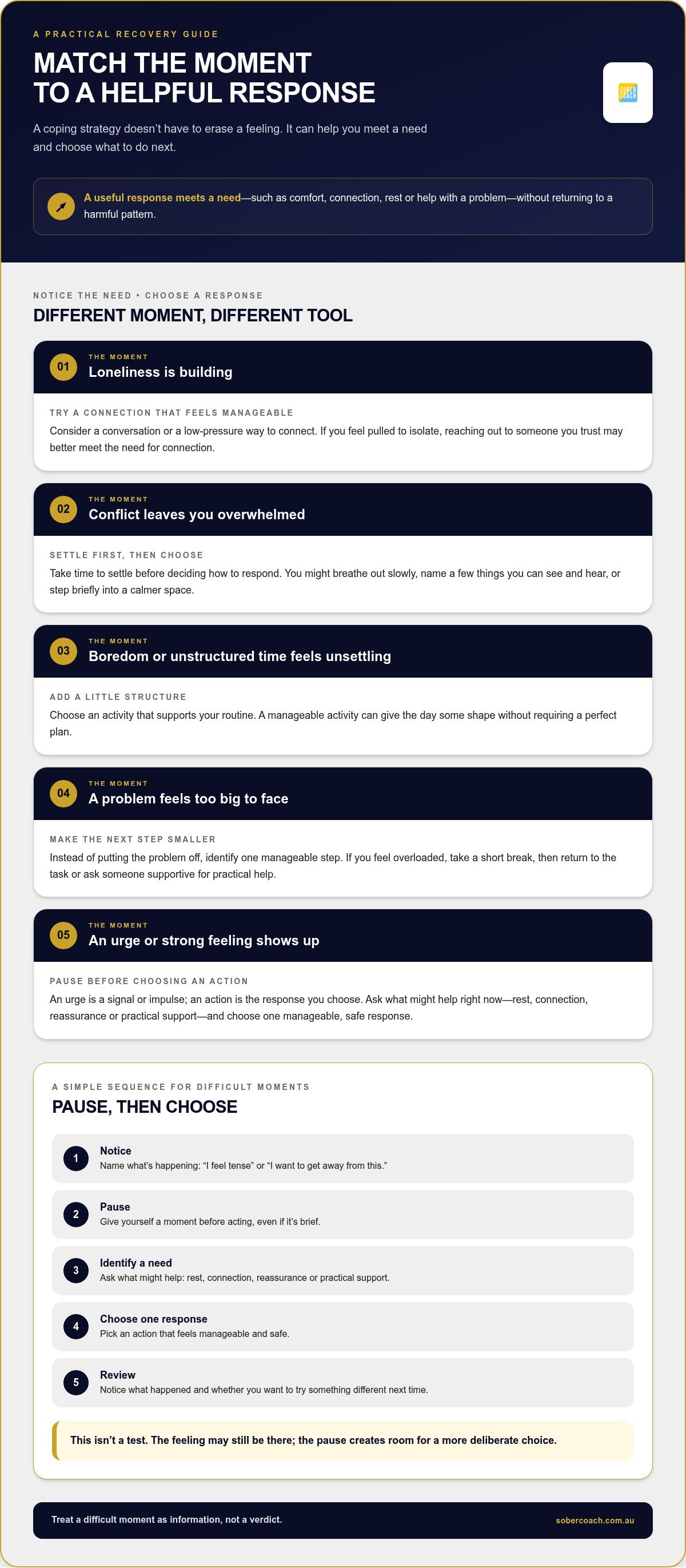
If loneliness is building, consider a conversation or a low-pressure way to connect.
If conflict has left you overwhelmed, take time to settle before deciding how to respond.
If boredom is unsettling, add structure with an activity that supports your routine.
These are possibilities, not rules. A strategy that helps one day may not fit the next. Change course if an option increases distress or harm. If you’ve returned to an old behaviour, that doesn’t mean change is impossible. Meet the moment with honesty and self-compassion, then consider what support or adjustment could help from here.
How healthy coping mechanisms help you respond to urges and emotions
An urge can feel urgent, but it doesn’t have to make the decision for you. An urge is a signal or impulse; an action is the response you choose. You may not be able to control the first feeling that appears, but a small pause can create room to decide what could help next. The aim isn’t to force an urge away. It’s to respond with more awareness and care.
Try this simple sequence when a difficult moment shows up:
Notice: Name what’s happening, such as “I feel tense” or “I want to get away from this.”
Pause: Give yourself a moment before acting, even if it’s brief.
Identify a need: Ask what might help: rest, connection, reassurance or practical support?
Choose one response: Pick an action that feels manageable and safe.
Review: Notice what happened and whether you want to try something different next time.
This isn’t a test, and there’s no need to get every step right. Healthy coping mechanisms in recovery can help you make a deliberate choice, even if the feeling is still there. A need for connection may call for a message to someone you trust; a practical problem may need one small task; emotional overload may call for a quieter space. SAMHSA offers broader information about mental health and substance use support, alongside everyday strategies you can practise yourself.
Pause and regulate before choosing what to do
When emotions are running high, start with a low-pressure experiment. Try breathing out slowly, naming a few things you can see and hear, or stepping briefly into a calmer space. These are options to test, not guaranteed fixes or treatments. After trying one, check in: has the intensity shifted, stayed the same or increased? If it hasn’t helped, choose another response, such as contacting someone supportive or getting practical help.
Name the need beneath the urge
The same urge can point to different needs. Wanting to withdraw might mean you need quiet after a demanding day, or it might reflect loneliness and a wish for connection. Feeling restless could be a cue to move, eat, rest or deal with something you’ve been putting off. Ask yourself, “What would help me look after myself right now?” There may be more than one reasonable answer.
If it helps, jot down the situation, what you noticed and what you tried in a phone note or notebook. Keep the record curious, not critical. “I felt overwhelmed after that call; a short walk helped me reset” gives you useful information without turning reflection into self-blame.
Practising this sequence with personalised recovery coaching support can help you explore which responses fit your routines and values. Coaching supports practical skill-building. Medical, mental health or emergency care remains important when that level of support is needed.
Which coping strategy fits the moment? Compare practical options
The most useful response depends on what’s happening and what you can access right now. If you’re overwhelmed, a private grounding exercise may feel easier than a conversation. If you’re feeling isolated, connection may matter more than trying to manage the feeling alone. Use the options below as a starting point, not a ranking or a checklist you have to complete.
When you need to settle an intense moment
Grounding, breathing and changing location are options you can try on your own. Contacting a trusted person brings connection, but depends on their availability, so it helps to have more than one support option in mind. You don’t need to feel perfectly calm before taking a next step. Aim for something small, like moving to a quieter room or sending a brief message.
When you need connection, structure, or a reset
A check-in can ease disconnection; a planned activity or supportive group can make the day feel less open-ended. Regular meals, movement, sleep routines and meaningful activities can also support everyday wellbeing. These aren’t instant fixes, and your circumstances may shape what’s possible. Healthy coping mechanisms in recovery should be flexible: adapt an idea, combine approaches or try something else if it doesn’t suit.
The most useful strategy is one you can realistically practise. Keep a few accessible options, including something you can try privately and someone you can reach out to. Notice which responses fit different situations. That’s how a general list becomes a personal set of tools.
Build a healthy coping plan you can use in real life
A coping plan doesn’t need to predict every hard moment. It gives you a few options to reach for when thinking clearly feels harder. Keep it personal, brief and easy to find, such as in a phone note or notebook. Healthy coping mechanisms in recovery are more useful when they fit your actual routines, preferences and support network, rather than an ideal version of your life.
Use this planning exercise to shape a plan you can adjust over time:
Identify a situation. Choose a moment that can feel challenging, such as being alone after work or facing an unplanned change.
Notice early signs. Write down what you might notice first, such as restlessness, tension, difficulty concentrating or wanting to withdraw.
Choose two or three options. Include realistic actions you can try in that situation, not a long list that’s hard to use.
Name support. Note a trusted person or other support you could reach out to if you need more help.
Review and revise. After trying the plan, keep what helped and change what didn’t fit.
Practise one of your options during a steadier moment, too. Rehearsing how to find a contact, take a short break or follow a grounding exercise can make the steps more familiar when stress rises. This is preparation, not a promise that every moment will go to plan.
Create a simple if-then coping plan
Try filling in this sentence: “If I notice [early sign], I’ll try [first option]. If that’s unavailable or doesn’t help, I’ll [backup action] and contact [support person] if I need to.” For example, if you feel overwhelmed in a busy place, you might step somewhere quieter; if that isn’t possible, you could message someone you trust. Keep the wording clear enough to follow when you’re tired or distracted.
Two or three options are enough to start. Choose actions that are safe, accessible and genuinely workable for you. Your plan might include something you can do alone, one way to connect with support and a backup for times when your first choice isn’t available.
Review setbacks with curiosity, not blame
If a difficult moment doesn’t go the way you hoped, pause before judging yourself. Note what happened before, during and after: what was going on, what you noticed, what you tried and what support was available. Treat these details as information. They can show you where to adjust the plan, make an option easier to access or add another form of support. A setback isn’t a reason to abandon recovery.
Plans can change as your routines, circumstances and support needs shift. Review yours when it stops feeling useful, and update it without expecting perfection. If you’re in immediate danger or experiencing severe withdrawal symptoms, seek urgent medical assistance; call 000 in an emergency. To build and practise a personal plan with support, explore one-on-one recovery coaching.
How recovery coaching can help you practise coping skills
Knowing a coping strategy is one thing. Remembering to use it in the middle of an ordinary, demanding day can be another. Personalised recovery coaching can help you turn healthy coping mechanisms in recovery into practical routines, then review and adjust them as your needs change. It’s a way to build skills and accountability around your own goals, not a promise of a particular outcome.
Personalise strategies around your life
One-on-one coaching gives you space to explore what you want to change, which situations tend to throw you off course and what responses feel realistic. You can consider how a strategy fits around work, home life, relationships and existing routines. If a tool feels awkward or hard to maintain, reflect on why and try a different approach.
That process can be practical. You might identify a routine that leaves little room for rest, work out where a supportive check-in could fit, or practise breaking an overwhelming task into manageable steps. In-home recovery support brings the focus into your living environment, where daily patterns take shape. The aim is to help you build on your own choices and make useful strategies easier to practise.
Support can take different forms. Online rehab programs and Zoom group coaching offer ways to engage remotely, while intensive recovery workshops provide structured learning and personal growth. Each format gives you a setting to practise skills and reflect on what you want to carry into everyday life.
Know when coping support is not enough
Recovery coaching is not medical detox, emergency care or a substitute for clinical treatment. If you need medical or mental health care, coaching should not take its place. For immediate danger in Australia, call 000. Severe withdrawal symptoms also need urgent medical assistance.
The National Alcohol and Other Drug Hotline is another Australian support option for people seeking information and support related to alcohol and other drugs. Its contact and opening details can change, so use current information from official Australian health sources rather than relying on an old number or saved hours.
Healthy coping is personal, and it’s okay to need a sounding board as you work out what fits. If you’d like support turning your chosen strategies into everyday practice, Sober Coach offers one-on-one recovery coaching, in-home support, workshops, online programs and Zoom group coaching.
Let your next step be small and personal
Building a different response takes practice, not perfection. You don’t have to wait until a difficult moment to begin: choose one small action you’re willing to try, and give yourself credit for making space to choose. Over time, healthy coping mechanisms in recovery that fit your needs can become part of a life that feels more connected to your values.
If you’d like help making those tools practical for your everyday routines, personalised support can help you shape a plan around your goals and keep adapting it as life changes. Explore Sober Coach’s personalised recovery support, including one-on-one coaching, in-home support and flexible online options across Australia.
You’re allowed to learn as you go. Each thoughtful next step is a beginning, and you don’t have to take it alone.
Frequently Asked Questions
Is it normal to struggle with coping in recovery?
Yes, difficult moments can be part of recovery, and they don’t erase the effort you’ve already made. A tense family conversation or a disrupted plan might leave you feeling unsettled, even if you’ve been managing well. Try to identify one immediate need, such as taking a breather or letting someone supportive know you’re having a hard day. If you feel unsafe or overwhelmed, seek urgent or professional help.
What are healthy coping mechanisms in recovery?
Healthy coping mechanisms in recovery are actions that help you handle emotions, urges or pressure without returning to patterns that harm your wellbeing. They could include stepping away from a heated conversation, asking a trusted person to stay on the phone while you complete a difficult task, or getting support to plan around a demanding event. Choose options that feel safe and practical for your circumstances, rather than trying to follow someone else’s exact routine.
Can coping skills stop cravings completely?
No coping skill can guarantee that cravings will disappear, but it may help you decide how to respond while one is present. For example, you could leave a situation that feels risky, delay making a decision and contact someone in your support network. If the first approach isn’t useful, that doesn’t mean you’ve done anything wrong. Try another safe option and discuss recurring cravings with an appropriate support professional.
How do I make a coping plan for recovery?
Start with one situation you’d like to feel more prepared for, such as an upcoming social event or an evening when plans fall through. Write down what you might notice, one action you can take and a backup if that action isn’t possible. Add a support person you could contact, with their details easy to find. Keep the plan somewhere accessible and update it if your circumstances or needs change.
What should I do if my usual coping strategy is not working?
You don’t have to keep repeating an approach that isn’t helping. If you can, change something about the situation, such as moving to a quieter place or putting distance between yourself and a stressful conversation. You might also ask a trusted person to stay with you or help you work out the next step. If you may be in immediate danger in Australia, call 000.
Can a recovery coach help me develop coping strategies?
Yes. A recovery coach can help you explore strategies that fit your goals and daily life, then reflect on what you want to adjust. Sober Coach provides one-on-one coaching, in-home support, workshops, online programs and Zoom group coaching. This is practical recovery support, not medical detox, emergency care or a replacement for clinical treatment. If you need those forms of care, seek support suited to that need.
Comments