

Dealing with Guilt After Relapse: A No-Nonsense Guide to Getting Back on Track

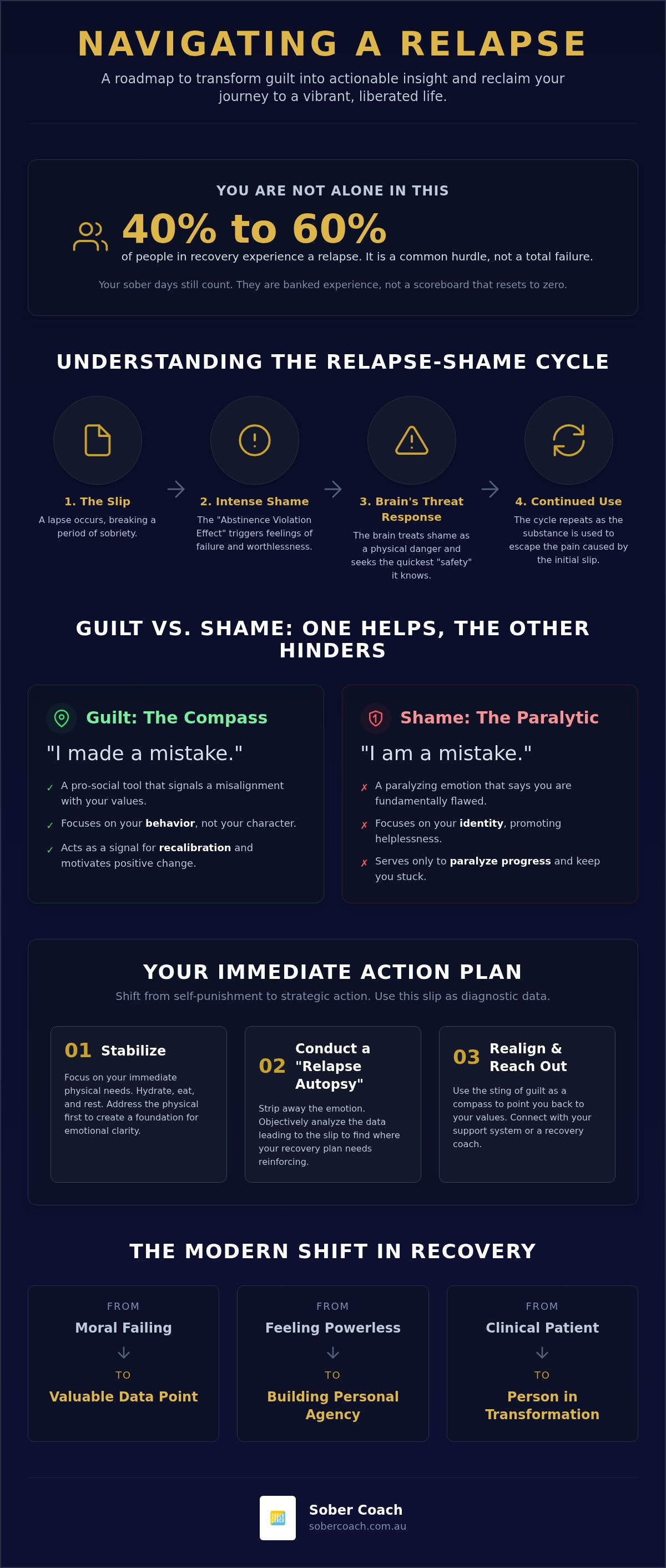
What if the soul-crushing shame you're feeling right now isn't a sign that you've failed, but a signal that your recovery architecture simply needs a better foundation? Dealing with guilt after relapse is often the hardest part of the journey, making you feel like every sober day you've earned has been wiped off the map. You might be terrified to admit the slip to your partner or feel like you're back at square one, but that's just the shame talking. Statistics show that 40% to 60% of people in recovery experience a relapse at some point; it's a common hurdle, not a life sentence.
We agree that this moment feels heavy, but it doesn't have to be the end of your story. I'm going to show you how to transform that paralyzing guilt into actionable insight so you can reclaim your life without the weight of traditional stigma. This isn't about clinical lectures; it's a direct, compassionate roadmap for your transformation. We'll start by stabilizing your emotions, creating a clear plan for your next 24 hours, and proving why this slip is a diagnostic tool rather than a total failure. Your vibrant, liberated life is still waiting for you, and we're going to get you back on track right now.
Table of Contents
Understanding the Relapse-Shame Cycle
The moment you realize a slip has happened, your brain doesn't just register a mistake; it often sounds a full-scale alarm. This is the physiological trap of the Relapse-Shame Cycle. When you're dealing with guilt after relapse, your brain's threat response system, the amygdala, takes over. It treats the crushing feeling of shame as a physical danger. Because your brain wants to protect you from this perceived threat, it naturally reaches for the quickest "safety" it knows: the very substance you're trying to move away from. It is a cruel irony that the brain often tries to use the poison as a cure for the pain of the slip.
The Relapse-Shame Cycle is a self-perpetuating loop where emotional pain drives the search for chemical relief.
Validating your current distress is essential, but we have to separate your feelings from your identity. You aren't a failure because you had a slip. You're a person navigating a complex habit change who hit a snag. The "failure" narrative is just a story your brain tells you to make sense of the discomfort, but it isn't the truth of your journey. Acknowledging the weight of the moment without letting it define your future is the first step toward breaking the loop.
Why Guilt Feels Different This Time
To move forward, you have to understand the difference between guilt and shame. Guilt is actually a pro-social tool; it's that uncomfortable nudge telling you that your actions didn't line up with your personal values. Shame is different. Shame is a paralytic that tells you your character is fundamentally flawed. In early recovery slips, your inner critic becomes incredibly loud, often triggering the "abstinence violation effect." This is the feeling that because you've "broken" your streak, all previous progress is deleted. It makes one drink feel like a total reset, which often leads to a multi-day bender because you feel there is nothing left to save. Dealing with guilt after relapse requires recognizing that your sober days still count. They are banked experience, not a scoreboard that resets to zero.
The Australian Recovery Landscape in 2026
The way we approach recovery in Australia has changed significantly. In 2026, modern AU support models in cities like Sydney and across regional NSW or Victoria are moving away from old-school stigma. There is a powerful shift toward personal agency. Instead of being told you're powerless, the focus is now on your capacity for growth and self-discovery. We are normalizing the slip as a part of the learning curve. In recovery communities from Queensland to Melbourne, a relapse is increasingly seen as a data point rather than a moral failing. It's a sign that your current strategy needs an update, not that you're incapable of change.
Guilt vs. Shame: Why One Helps and the Other Hinders
Guilt and shame are often used interchangeably, but they are polar opposites in terms of utility. Guilt is pro-social. It’s the internal alarm that sounds when your behavior doesn't match your values. It says, "I made a mistake." Shame is a paralytic. It says, "I am a mistake." Dealing with guilt after relapse requires you to stop using your emotions as a whip and start using them as a compass. When you feel that sting of guilt, it's simply your integrity trying to pull you back toward the life you actually want to live. It is a signal for recalibration, not a reason for self-punishment.
The no-nonsense reality is that you don’t need to be "good" to stay sober; you need to be effective. Being effective means looking at the slip and asking what happened, rather than wallowing in the feeling of being a "bad person." If you view your progress as a moral scoreboard, you’ll always be one mistake away from total defeat. Instead, realize that relapse is often considered part of lifelong recovery, not because it's desirable, but because it's a common site of profound learning. You are allowed to be human while you learn to be free.
De-medicalising Your Emotions
We need to stop treating a slip as a clinical symptom and start seeing it as feedback. When we over-medicalize the experience, we strip away your personal agency. You aren't "suffering from a relapse episode"; you're navigating a complex transformation. Liberation comes when you shed the weight of traditional recovery labels that make you feel like a patient rather than a person. If you're struggling to bridge the gap between a slip and long-term stability, a one-on-one recovery coach can help you focus on practical growth rather than clinical definitions. Viewing your emotional responses as feedback rather than a diagnosis allows you to stay in the driver's seat of your own life.
The Power of Radical Honesty
Hiding the slip is what feeds the shame monster. When you keep it a secret, you validate the idea that what you did is unforgivable. Breaking the silence doesn't have to be a dramatic performance. You don't need a tearful apology tour. You just need to state the facts: "I drank, I've looked at why, and here is my plan for today." Trust isn't rebuilt through grovelling; it's rebuilt through consistent, reliable action over time. Dealing with guilt after relapse becomes much easier when you stop managing other people's perceptions and start managing your own choices. Radical honesty strips the power away from the slip and puts it back in your hands.
Deconstructing the Slip: Using Relapse as Data
Instead of seeing a relapse as a moral failing or a medical catastrophe, we need to treat it as a source of high-quality information. Dealing with guilt after relapse is much easier when you shift from being the defendant to being the detective. You should treat your slip like a scientist examining a failed experiment. This is where we perform a "Relapse Autopsy." By looking back at the 48 hours preceding the event without judgment, you can identify the exact moment the trajectory shifted. We aren't looking for excuses; we are looking for the "Why" behind the "What."
Most slips aren't random. They are often driven by the classic HALT triggers: being Hungry, Angry, Lonely, or Tired. However, the most important part of the autopsy is identifying the function the alcohol served in that moment. Did it provide an escape from a high-pressure work deadline? Did it numb the sting of a social rejection? When you understand the job you hired the substance to do, you can find a more effective tool to handle that task next time. This shift in perspective turns a painful moment into a diagnostic breakthrough.
Mapping the Triggers
Triggers in a modern Australian lifestyle are often a mix of internal whispers and external shouts. You might face the "after-work drink" culture in a Sydney corporate office or the deep isolation that can come with living in a regional town. It is also vital to recognize "sober fatigue," the mental exhaustion that comes from the constant effort of habit change. Dealing with guilt after relapse involves identifying the specific gap in your current recovery toolkit. Maybe you have great tools for physical cravings but lack a strategy for managing long-term boredom or emotional burnout. Identifying these gaps allows you to reinforce your recovery architecture exactly where it's leaking.
Personal Agency over Powerlessness
One of the most damaging ideas in traditional recovery is the "Back to Day 1" narrative. If you had 100 days of sobriety and slipped for one night, you haven't lost those 100 days of neurological healing and skill-building. You are not at Day 1; you are at Day 101 with a new piece of data. Counting your "sober percentage" is a far more empowering metric than a "streak." If you’ve been sober for 99 out of the last 100 days, you are operating at a 99% success rate. That’s an elite level of performance in any other area of life. Reclaiming the driver's seat means refusing to let one mistake cancel out months of courageous work. You have the agency to decide that this slip is a comma in your story, not a full stop.
5 Immediate Steps to Get Back on Track After Drinking
When you're dealing with guilt after relapse, the sheer weight of the "what now" can feel like lead. You don't need a lecture; you need a tactical checklist. Getting back on track isn't about grand gestures or punishing yourself through deprivation. It's about taking specific, practical actions to stabilize your nervous system and your environment so you can move forward with clarity.
Step 1: Physical Stabilization. Your body is in a state of stress. Focus on hydration, electrolytes, and a decent meal without an ounce of self-flagellation. Rest isn't a luxury right now; it's a physiological requirement for your brain to start functioning logically again.
Step 2: The 24-Hour Rule. Stop looking at the next six months or even the next week. Commit only to the next 24 hours. When you shrink the timeline, the task of staying sober becomes manageable rather than monumental.
Step 3: Reach Out. Shame thrives in silence. Contact a trusted, non-judgmental peer or a mentor who understands the nuances of habit change. This isn't about "confessing"; it's about breaking the isolation.
Step 4: Audit Your Environment. Remove any remaining triggers from your space. Clean your house, throw away the empties, and change your immediate surroundings. A fresh space helps signal to your brain that the slip is over.
Step 5: Schedule an Action. Don't just "hope" things get better. Book a session or attend a workshop to identify the gap that led to the slip. Taking a proactive step shifts you from a state of regret to a state of agency.
If you need immediate, non-judgmental support to close that gap and build a stronger foundation, you can book a one-on-one recovery coaching session to get a clear, actionable plan in place today.
Managing the 'Morning After' Anxiety
The "hangxiety" that follows a slip is often more damaging than the drink itself. Your brain is chemically depleted, making every problem feel magnified. Use grounding exercises like the 4-7-8 breathing technique to calm your nervous system. Most importantly, avoid making any major life decisions in the first 24 hours. Your perspective is currently skewed by a "shame storm," and things will look significantly different once your chemistry stabilizes. Dealing with guilt after relapse requires recognizing that your current thoughts are a side effect, not a permanent reality.
Australian Support Resources for 2026
In 2026, the Australian recovery landscape offers more than just traditional clinical models. Whether you are in Sydney or a regional town, you can access immediate connection through online rehab programs and group coaching via Zoom. These modern platforms allow for instant support without the waitlists of traditional systems. For those who need a more hands-on approach, in-home recovery support is a powerful way to manage environmental triggers in real-time. This peer-led, non-clinical model focuses on your personal agency and the practical tools you need to thrive in your daily life.
Beyond the Slip: Building a Life of Personal Agency
The ultimate goal of recovery isn't just to stop drinking. It's to build a life so vibrant and fulfilling that you no longer feel the need to escape it. Dealing with guilt after relapse is a necessary bridge, but once you've stabilized, the focus must shift toward personal agency. You aren't just surviving a slip; you're using it to refine your vision of a liberated life. This is where the transition from "not drinking" to "living well" actually happens. It requires moving beyond the mindset of deprivation and embracing the promise of growth.
If you find yourself stuck in a cycle of slips, it usually means there is a gap between your desire for change and your daily habits. This is where Intensive Recovery Workshops come in. These programs are designed for deeper habit transformation, helping you identify the structural weaknesses in your lifestyle that lead to burnout or boredom. We focus on the Sober Coach philosophy: creating a lifestyle that supports your goals rather than one that requires constant white-knuckling to endure.
The Role of a Recovery Coach
Many people confuse coaching with therapy, but the two serve very different purposes. While therapy is often history-oriented, looking into the "why" of your past, One-on-One Recovery Coaching is action-oriented. We focus on the "how" of your future. A coach acts as a courageous mentor with lived experience, someone who has walked the path and understands the nuances of emotional recovery without the weight of clinical stigma. This human-to-human connection is often the missing piece for those who find traditional models too anonymous or restrictive.
This partnership provides a professional framework for accountability that is deeply personal. We don't just talk about the problem; we design personalized strategies to navigate your specific triggers. Whether you are in Sydney, Melbourne, or regional Queensland, having a mentor who possesses shared history builds immediate trust. Dealing with guilt after relapse becomes much easier when you have someone in your corner who sees your potential even when you can't see it yourself.
Your Path Forward Starts Now
The weight you feel right now doesn't have to be a permanent anchor. In fact, this moment of clarity following a slip can be the most powerful beginning you've ever had. It is the moment you decide that your agency matters more than your history. You are not defined by a single night or a specific label. You are defined by the choices you make in the next hour, the next day, and the next week. Transformation isn't about being perfect. It's about being brave enough to stay in the driver's seat even when the road gets rough.
You have the power to turn this setback into the foundation of a life that feels authentic and free. If you're ready to stop looking back and start moving forward, you can book a one-on-one discovery session with Sober Coach to begin your personalized roadmap today. Your recovery is a powerful beginning, not an end point. Own your journey.
Your Recovery Doesn't Reset, It Evolves
Breaking the cycle of shame means seeing your journey as a series of lessons rather than a scorecard. You've learned that a slip is actually a diagnostic tool, revealing exactly where your recovery architecture needs reinforcement. Dealing with guilt after relapse isn't about grovelling or starting from "Day 1"; it's about reclaiming your personal agency and making the next 24 hours count. By separating the paralytic effect of shame from the useful signal of guilt, you can stop punishing yourself and start growing again.
You don't have to navigate this transition alone. Our peer-led, non-clinical approach provides the lived experience mentorship you need to move from surviving to thriving. Whether you're in a major city or regional Australia, our online support is designed to bridge the gap between a slip and long-term stability. Your progress isn't lost; it's simply being refined. Ready to turn your slip into a breakthrough? Book a one-on-one session today. You are far more than your mistakes, and your most vibrant, liberated life is still within reach. Own your future.
Frequently Asked Questions
Is my sobriety 'reset' to zero after a relapse?
No, your sobriety isn't a game of all or nothing. You still have the neurological healing and skills you built during your sober time. If you had 100 days and slipped for one, you are operating at a 99% success rate. Focus on your sober percentage rather than a streak. This mindset is crucial when dealing with guilt after relapse because it prevents you from feeling like a total failure.
How do I tell my partner or family that I drank again?
Use radical honesty without the drama. State the facts clearly: "I had a drink, I've looked at the triggers, and here is my plan for today." Avoid over-promising or grovelling apologies. Trust is rebuilt through consistent, reliable action over time rather than words. Keeping it a secret only feeds the shame monster and makes getting back on track much harder for everyone involved in your life.
What is the difference between a 'slip' and a 'relapse'?
A slip is usually a brief, isolated event where you catch yourself quickly and return to your recovery plan. A relapse often involves a more prolonged return to old habits and a total abandonment of your tools. In our coaching framework, we treat both as data points. The goal is to catch a slip before it becomes a full relapse by conducting an immediate autopsy to see what went wrong.
Can I use NDIS funding for recovery coaching after a relapse?
Yes, provided you have psychosocial recovery coach funding in your NDIS plan. As of 2026, the NDIS continues to recognize the value of peer-led support for habit change and emotional stability. We recommend checking your specific plan goals or speaking with your support coordinator to ensure our non-clinical coaching aligns with your current funding categories for recovery and community participation across Sydney, NSW, Victoria, or Queensland.
Should I go back to detox if I had one drink?
Not necessarily. Detox is a medical service for managing physical withdrawal symptoms, which typically doesn't happen after a single drink. If you aren't at risk of dangerous physical withdrawal, your focus should be on emotional stabilization and environmental audits. We don't provide medical detox services; instead, we offer the coaching tools to help you bridge the gap between a slip and long-term stability in your daily life.
How do I deal with the physical anxiety (hangxiety) after a slip?
Focus on immediate physical stabilization first. Hydrate, eat a nutritious meal, and use grounding techniques like 4-7-8 breathing to calm your nervous system. Dealing with guilt after relapse is difficult when your brain chemistry is depleted. Don't make any major life decisions in the first 24 hours. Your anxiety is a temporary side effect of the substance, not a permanent reflection of your character or your future potential.
Why do I keep relapsing when things are finally going well?
This is often due to sober fatigue or a subconscious fear of the pressure that comes with success. When life improves, you might lower your guard or feel like you no longer need your tools. It can also be a reaction to the stress of maintaining a perfect new life. We use intensive recovery workshops to dig into these patterns, helping you build a lifestyle that feels sustainable rather than a performance.
How can an online rehab programme help me more than a meeting?
Our online rehab and group coaching via Zoom provide a structured, professional framework that goes beyond the peer-to-peer sharing found in traditional meetings. You get access to specific tools, personalized strategies, and expert guidance from mentors with lived experience. It offers a higher level of accountability and a goal-oriented approach that focuses on personal agency and practical life skills rather than just staying abstinent one day at a time.
Comments