

Creating a Sober Life You Love: A Practical Guide to Thriving in 2026

Updated: Jun 20
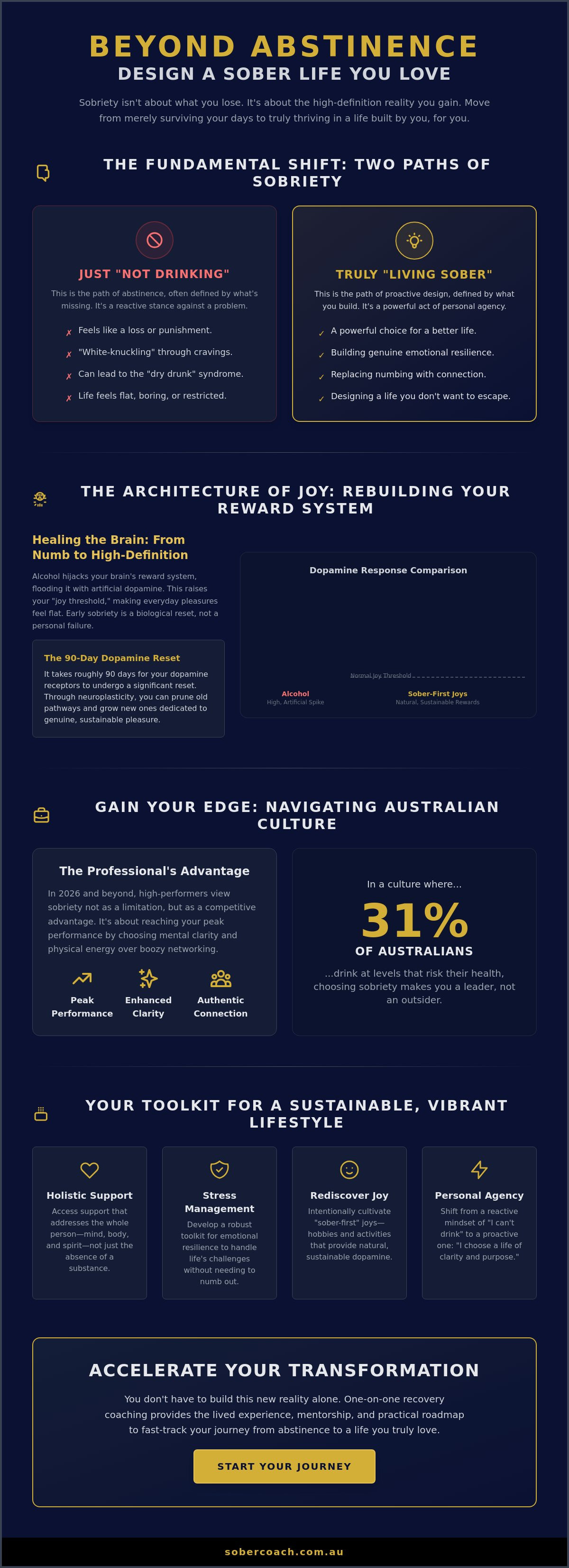
What if the hardest part of sobriety isn't actually putting down the glass, but finally admitting you're terrified of being bored? In a culture where 31 percent of Australians drink at levels that risk their health, choosing to step away can often make you feel like a social pariah. You might worry that your spark has vanished or feel a spike of anxiety at the thought of facing Sydney’s bar scene without a liquid shield. It’s a common hurdle, yet creating a sober life you love is less about what you’re giving up and more about the high-definition reality you’re finally stepping into.
You likely believe that sobriety should feel like a reward rather than a life sentence, but the path there isn't always clear. This guide is designed to help you move beyond mere abstinence so you can build a vibrant, liberated life that you actually enjoy living. We will look at how to cultivate a social life that doesn't leave you with a hangover, develop genuine emotional resilience, and find a sense of purpose that never requires numbing. It’s time to stop simply enduring your days and start truly thriving.
Key Takeaways
Shift your mindset from "white-knuckling" abstinence to embracing personal agency and proactive growth.
Understand the science of neuroplasticity and how to recalibrate your brain’s reward system to rediscover genuine joy.
Gain a practical framework for navigating Australia’s intense drinking culture without feeling like an outsider.
Identify the essential elements of creating a sober life you love, from building a stress-management toolkit to accessing holistic support.
Learn how one-on-one recovery coaching provides the lived experience and mentorship needed to fast-track your personal transformation.
Table of Contents
Beyond Abstinence: What Does it Mean to Create a Sober Life You Love?
Creating a sober life you love is a radical act of personal agency. For too long, the conversation around alcohol has been framed as a loss. People talk about "giving up" or "quitting," as if sobriety is a cold, empty room you’re forced to sit in because you couldn’t handle the party. That is a fundamental misunderstanding. In reality, choosing to live without alcohol is a proactive design choice. It is the strategic architecture of a life where you no longer need to escape your reality because you have built one you actually enjoy.
The shift from "white-knuckling" your way through the week to experiencing genuine liberation is profound. It requires moving away from the idea that sobriety is a reactive punishment for past mistakes. Instead, see it as a powerful beginning. It is the moment you stop letting a substance dictate your moods, your health, and your social standing. This is where the work of designing your new reality starts, often with the guidance of a mentor who understands the terrain.
The Difference Between "Not Drinking" and "Living Sober"
There is a massive gulf between abstinence and true sobriety. For a comprehensive overview of sobriety, it is helpful to look at it as a state of mind rather than just a physical count of days. Abstinence is simply the absence of a substance. You can be abstinent and still be miserable, angry, and stuck in the same emotional loops that led you to drink in the first place. This is the "dry drunk" syndrome, where the bottle is gone but the internal chaos remains.
True sobriety is the presence of a meaningful life. It moves beyond restrictive labels and clinical stigmas that suggest you are "broken" or "powerless." By creating a sober life you love, you replace the numbing effects of alcohol with genuine connection and emotional resilience. You stop surviving your social calendar and start participating in it with clarity. It’s about lifestyle design, not just habit suppression.
Why 2026 is the Year of the "Sober Curious" Professional
The professional landscape in Australia has shifted. In 2026, high-performers are viewing sobriety as a competitive advantage. It is no longer about hitting a traditional "rock bottom." It is about reaching a performance ceiling and realizing that alcohol is the primary thing keeping you from the next level of mental clarity and physical energy. This modern movement embraces non-binary drinking patterns, where individuals choose to opt out of the boozy networking culture to find more authentic ways to connect.
This newfound clarity often sparks entrepreneurial ambition, making it the ideal time to explore Starter Website Package options for your next business project.
For B2C entrepreneurs, this shift toward mental clarity is often the catalyst for scaling their ventures. When you are no longer held back by the fog of alcohol, you can focus on high-level strategy, and Founder Freedom offers the specialized business coaching needed to maximize that potential.
This isn't about being a social pariah; it's about being the person in the room with the most focus and the most genuine "spark." Designing this new reality doesn't have to be a solo mission. Engaging with One-on-One Recovery Coaching allows you to bridge the gap between where you are and where you want to be. A coach provides the lived experience and practical roadmap to ensure your journey is a proactive pursuit of excellence rather than a reactive retreat from a habit.
The Architecture of Joy: Rebuilding Your Reward Systems
When you first stop drinking, the world can feel remarkably grey. This isn't a sign that life is inherently dull or that you've made a mistake. It is a physiological reality. Alcohol doesn't just relax you; it hijacks your neural pathways. It floods the brain with artificial dopamine, raising your "joy threshold" so high that everyday pleasures like a good cup of coffee or a sunset simply can't compete. This is why early sobriety often feels flat. It's not that your spark is gone; it's that your reward system is temporarily offline. Understanding this biological lag is the first step in creating a sober life you love.
The good news is that your brain is incredibly elastic. Through neuroplasticity, you can actually prune away the old pathways associated with drinking and grow new ones dedicated to genuine pleasure. This process takes time and intentionality. By identifying "sober-first" joys, activities that provide a natural, sustainable dopamine hit, you begin to recalibrate your internal compass. Whether it's the rush of a cold ocean swim, the flow state of a creative project, or the clarity of a morning run, these experiences slowly lower that joy threshold until the world returns to high-definition.
Healing the Brain: From Numb to High-Definition
Science suggests it takes roughly 90 days for your dopamine receptors to undergo a significant reset. During this window, persistence is your greatest asset. Your old hobbies might feel like chores at first. You might sit down to read or paint and feel nothing. Don't panic. This flatness is a sign of healing, not a permanent state. By staying the course, you allow your brain to regain its natural ability to regulate emotions without a chemical "off-switch." Working with a mentor through One-on-One Recovery Coaching can help you navigate this transition and identify the specific activities that will reignite your internal spark.
Designing a Routine That Supports Liberation
A vibrant life doesn't happen by accident; it's designed. To thrive, you must replace your old drinking cues with high-value restorative rituals. The "witching hour," that 5 PM slump where the urge to pour a glass of wine is strongest, is the most critical time to re-engineer. Instead of white-knuckling through the craving, fill that space with something that actually nourishes you. This might mean a vigorous workout, a guided meditation, or even structured In-Home Recovery Support to help you manage triggers in your own living room. When you set a non-reactive tone for your day with a solid morning ritual and protect your evenings with intent, you move from a state of deprivation to one of true liberation.
Navigating Australian Drinking Culture with Confidence
Australia’s relationship with alcohol is deeply woven into our social fabric. From the Sunday afternoon session at a Sydney pub to the "bring a case" backyard BBQ, the pressure to conform is relentless. According to the 2022–2023 National Drug Strategy Household Survey, 31 percent of Australians drink at levels that pose a risk to their health. In a culture where heavy consumption is often the default, choosing to stay dry can make you feel like a social pariah. But creating a sober life you love isn't about hiding from society; it's about reclaiming your right to be present without being pickled.
The key to surviving the "boozy BBQ" is a shift in perspective. You aren't missing out on the party; you're experiencing the party in high-definition. While others are numbing their experiences, you are building genuine memories and real connections. Handling "The Question"—the inevitable inquiry about why you aren't drinking—requires direct, no-nonsense grace. You don't owe anyone a medical history or a detailed apology. A simple "I've retired from the game" or "I just prefer life this way" is often enough to shut down the interrogation and move the conversation forward.
The "No-Nonsense" Guide to Social Pressure
You don't need to be a martyr for your sobriety. If a corporate event or a wedding feels overwhelming, have a "Sober Exit" strategy ready. This means knowing exactly when the "diminishing returns" of the night kick in. Once the conversation starts repeating or the vibe gets messy, leave. No one will remember you slipped away early, but you will certainly remember the clear-headed, hangover-free morning that follows. Use simple scripts to deflect pressure: "I'm on a health kick" or "I've got an early start tomorrow" are perfectly valid, low-friction answers.
Finding Your Tribe in a Drinking Town
Authentic connection is the ultimate antidote to the isolation of early sobriety. Sydney is changing, and you don't have to look far to find your people. The non-alcoholic beverage market in Australia is projected to reach USD 48.01 billion by 2034, reflecting a massive cultural shift toward wellness. From morning ocean swim clubs at Bondi to sophisticated alcohol-free bars, there is a burgeoning scene that values clarity over chaos. Engaging in Group Coaching Online can help you find like-minded Australians who are also navigating this transition, allowing you to build a "Sober Squad" that supports your growth instead of questioning your choices.
Practical Tools for a Sustainable, Vibrant Lifestyle
Sustainability is the bridge between a temporary break and a permanent transformation. Once the initial fog clears, you need a reliable system to manage the inevitable spikes of stress and boredom that life throws your way. Creating a sober life you love requires more than just willpower; it demands a practical toolkit that you can reach for when the world feels loud. This isn't about avoiding life, but about developing the emotional muscle to handle it without a chemical buffer. It’s about moving from a state of survival to a state of deliberate, high-value living.
Long-term success relies on a foundation of psychosocial support and holistic wellness. You cannot simply remove a habit and leave a vacuum; you must fill that space with practices that nourish your mind and body. This is where the shift from reactive abstinence to proactive growth happens. By engaging in Intensive Recovery Workshops, you can deep-dive into the personal development work that traditional models often skip, giving you the architecture needed to support a liberated lifestyle.
The Sober Toolkit: What to Reach for Instead of a Glass
A modern toolkit focuses on immediate physiological intervention. Breathwork, movement, and micro-meditations aren't just wellness trends; they are strategic tools to reset your nervous system during an emotional spike. The HALT method remains a cornerstone, but we update it for the 2026 professional. If you are Hungry, Angry, Lonely, or Tired, your executive function is compromised. Recognising these states allows you to address the actual need, whether it’s a twenty-minute nap or a protein-rich snack, rather than numbing the symptom with a drink. Journaling serves as your ledger of gains, helping you track the tangible benefits of your new life, such as improved sleep quality and increased mental bandwidth.
Rebuilding Relationships and Professional Trust
Rebuilding trust is a process of consistent, sober action rather than a series of grand gestures. You don't need to embark on an exhaustive apology tour. The most effective way to repair relationships is through living amends, showing up reliably and authentically day after day. You may encounter colleagues who only knew you as the "fun drinker" or family members who are still struggling with their own habits. In these cases, clear boundaries are your best friend. Protect your peace by choosing which environments you enter and which conversations you engage in. If you want to master these social complexities, joining Intensive Recovery Workshops can provide the scripts and strategies you need to navigate your professional and personal circles with absolute confidence.
Accelerating Your Transformation with a Sober Coach
You now understand the science of the 90-day dopamine reset and the cultural nuances of the Australian BBQ. However, knowledge alone doesn't always translate into a lived reality. There is often a gap between "knowing" you want a different life and "executing" the daily actions required to build it. This is where One-on-One Recovery Coaching serves as a powerful catalyst. It is the difference between reading a map and having a guide who has already traversed the terrain. A coach provides the accountability and direct, no-nonsense guidance that turns abstract goals into a sustainable, high-definition lifestyle.
The value of lived experience cannot be overstated. When you work with a mentor who has walked the path before you, the traditional weight of stigma evaporates. This isn't a clinical observation from a detached professional. It is a human-to-human connection built on shared history and mutual respect. This authenticity builds immediate trust, allowing you to move past the shame and focus entirely on growth. By creating a sober life you love with a dedicated coach, you stop guessing and start following a proven roadmap for personal liberation.
Coaching vs. Therapy: Which One Do You Need?
Traditional therapy is an essential tool for many, primarily focusing on the "why" of your past and unpacking historical trauma. Coaching is fundamentally different. It is obsessed with the "how" of your future. Think of it as a tactical hunt for a better life rather than a tourist ride through your problems. We focus on habit architecture, emotional regulation, and real-world social strategies. For Australians with qualifying mental health plans, integrating NDIS psychosocial support can provide a structured, funded pathway to access this proactive, goal-oriented mentorship.
Your New Life Starts with a Single Conversation
Transformation doesn't have to be a loud, disruptive event that puts your career on hold. For busy professionals and high-performers, Online Rehab and digital coaching sessions offer the ultimate flexibility. You can engage in deep, transformative work from the privacy of your own home, fitting your recovery around your life rather than the other way around. It starts with a simple discovery session to map out your unique challenges and aspirations. This is the moment you move from the waiting room of "thinking about it" to the active arena of execution. Stop enduring a life of deprivation. It is time to start creating a sober life you love. The spark you’ve been looking for is waiting on the other side of that first conversation.
Design Your High-Definition Future Today
You've seen that sobriety isn't a cold room; it's a doorway. By rebuilding your reward systems and mastering the art of socialising without a glass, you move from surviving your days to truly owning them. Creating a sober life you love is a deliberate, strategic process that replaces numbing with genuine, vibrant connection. It's about having the tools to surf the urges and the confidence to stand tall in any Sydney pub. You have the map; now it's time to take the first step toward your new reality.
You don't have to navigate this transition alone. Our professional peer-led coaching offers the lived experience and no-nonsense guidance you need to execute your plan with precision. We provide flexible online and in-home support across Australia, ensuring you have the right tools exactly when you need them. Our non-clinical, empowering approach focuses on your future potential rather than your past habits. Book your discovery session with Sober Coach today and start building the liberated life you deserve. Your vibrant new beginning is just one conversation away.
Frequently Asked Questions
Is it possible to ever really enjoy a party without drinking?
Yes, you can absolutely enjoy social events without alcohol. Once you stop numbing your senses, you will find that real connection and authentic laughter are far more rewarding than a chemical buzz. You will also appreciate the freedom of leaving when the conversation gets repetitive, knowing you will wake up the next morning feeling refreshed and clear-headed.
How long does it take for the "sober boredom" to go away?
The "flat" feeling typically begins to lift as your dopamine receptors recalibrate, a process that often takes about 90 days. During this window, your brain is healing from the artificial highs of substance use. Persistent action and the development of new rituals help the "spark" return to your hobbies and daily life as your reward system returns to high-definition.
Do I have to call myself an "alcoholic" to work with a sober coach?
No, we do not require or encourage the use of restrictive labels. Our approach focuses on your personal agency and your desire for growth rather than a clinical diagnosis. We work with anyone looking to move beyond habit loops toward creating a sober life you love by focusing on future potential rather than past mistakes.
Can I use my NDIS plan for recovery coaching in Australia?
Yes, recovery coaching can often be accessed through NDIS plans under psychosocial support categories. If you have a qualifying plan, this professional mentorship can be a structured way to build the emotional resilience and life skills needed for long-term lifestyle changes. It provides a non-clinical, goal-oriented pathway to personal transformation that aligns with many self-managed or plan-managed goals.
What if my partner still drinks? Can I still create a sober life I love?
You can certainly thrive even if those around you continue to drink. Your sobriety is about your own personal agency and the architecture of your individual life. By setting clear boundaries and finding your own "sober squad" through group coaching, you can ensure your path remains solid. It is about your choices, not theirs.
What is the difference between a recovery coach and a sponsor?
A recovery coach is a professional mentor focused on the "how" of your future, while a sponsor is a volunteer peer within a specific 12-step framework. Coaching provides tactical, goal-oriented guidance and lifestyle design rather than focusing primarily on powerlessness. We work as partners in your transformation, offering professional accountability and lived experience without the weight of traditional stigma.
How do I handle business lunches in Sydney without alcohol?
Approach business lunches as a high-performer seeking a competitive advantage. Sydney’s corporate culture is shifting; many professionals now prioritise mental clarity over mid-day drinks. Use direct, no-nonsense scripts like "I've got a big afternoon ahead" to keep the focus on your professional excellence. Most colleagues will respect your focus and drive more than your drink choice.
Is online rehab as effective as in-person support?
Online rehab and digital support are highly effective because they integrate recovery into your actual daily environment. Instead of retreating to a facility, you learn to manage triggers in real-time where they actually happen. This flexibility is essential for busy Australians who need to maintain their careers and families while creating a sober life you love.
Comments