

When to Hire a Sober Companion: High-Risk Recovery Guide

You've spent weeks in the protected sanctuary of a clinic, but the moment the taxi drops you at your front door, the silence of your living room feels incredibly heavy. That sudden shift from constant supervision to total isolation is where the treatment bubble often bursts. It's a high-stakes transition that leaves many wondering if they are truly ready for the triggers of real life. Knowing exactly when to hire a sober companion isn't a sign of failure or a lack of willpower. It's a courageous choice to bridge the gap between the insulation of rehab and the reality of sustainable independence in cities like Sydney or Melbourne.
We understand that the anxiety of upcoming work events or the weight of old habits can feel suffocating. You deserve to feel confident in your choices rather than paralyzed by the fear of a slip. This guide will help you discover the specific life transitions and red flags that signal it's time to move beyond solo recovery and hire professional, one-on-one support. We will unpack the difference between intensive companions and ongoing coaching, ensuring you have a clear plan for moving through high-risk periods without losing the progress you've fought so hard to achieve.
Table of Contents
What is a Sober Companion and Why Does the 'Treatment Bubble' Burst?
A sober companion is a professional who provides real-time, one-on-one accountability directly in your daily environment. Unlike a doctor you see for an hour, a companion walks beside you as you navigate the grocery store, the office, or the family dinner table. This level of support becomes vital when the "treatment bubble" bursts. In rehab, every minute is scheduled and every trigger is removed. It's a sanctuary. But when you return home, that structure vanishes. Suddenly, you're faced with total autonomy and the same old streets where you used to use. This is often exactly when to hire a sober companion, because the sudden shift from 24/7 care to zero supervision creates a massive shock to the system.
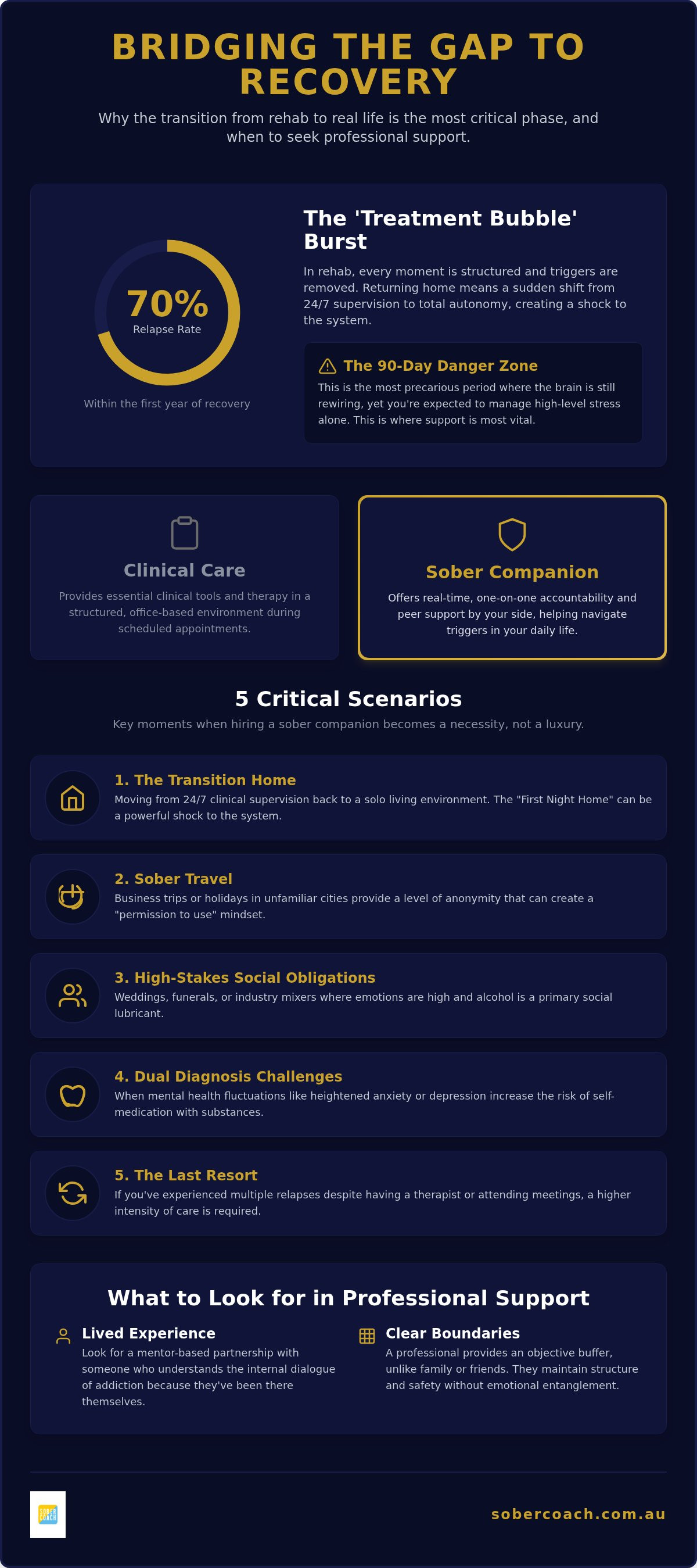
Research indicates that approximately 60% to 70% of individuals experience a relapse within their first year of recovery. The "90-Day Danger Zone" is particularly precarious. It's the period where your brain is still rewiring, yet you're expected to manage high-level stress. Hiring intensive support isn't about admitting you're weak. It's a strategic recovery insurance policy. It protects the massive investment of time and money you've already put into your health by ensuring you don't have to face the hardest days alone.
The Difference Between Clinical Care and Real-World Support
Therapists and doctors offer essential clinical tools, but they don't live in your world. They can't help you navigate a Friday night trigger in real time. A companion brings lived experience to the table, offering a non-judgmental partnership built on shared history. They understand the "why" behind your urges because they've been there. A sober companion is a peer-led bridge between the clinic and the street.
Identifying the 'Vulnerability Gap'
Your old environment holds a powerful "muscle memory" for addictive behaviors. Walking into your kitchen or driving past a certain pub can trigger physical cravings before you even realize what's happening. This "vulnerability gap" is where family and friends often struggle to help. They are often too emotionally involved, and their own history with your addiction can create tension rather than safety. A professional provides an objective buffer. They help you navigate high-stress work dynamics or complex family reunions without the weight of past baggage, ensuring your new habits stick during the most fragile stages of your journey.
5 Critical Scenarios: When to Hire a Sober Companion
Identifying the specific moments where your resolve might buckle is the first step in protecting your hard-won progress. While the general desire for support is always positive, there are five specific scenarios where professional intervention becomes a necessity rather than a luxury. Determining when to hire a sober companion often comes down to your personal history and the specific challenges of your upcoming schedule. For many, the most dangerous moment is the immediate transition from the structured, safe environment of residential treatment back to the autonomy of home life.
The Transition Home: Moving from 24/7 clinical supervision to a solo living environment often triggers a shock to the system.
Sober Travel: Business trips or holidays in unfamiliar cities provide a level of anonymity that can lead to a "permission to use" mindset.
High-Stakes Social Obligations: Weddings, funerals, or industry mixers where emotions are high and alcohol is the primary social lubricant.
Dual Diagnosis Challenges: When mental health fluctuations, such as heightened anxiety or depression, increase the risk of self-medication.
The Last Resort: If you've experienced multiple relapses despite having a therapist or attending meetings, a higher intensity of care is required.
The core value of peer-based recovery support is its ability to provide immediate, lived-experience feedback during these exact moments. It's about having someone who understands the internal dialogue of addiction and can help you pivot before a craving turns into an action.
Navigating High-Risk Life Transitions
The "First Night Home" syndrome is a real phenomenon. You leave the clinic feeling strong, but the second you see your old couch or open your fridge, your brain's old wiring fires up. If you're returning to a high-pressure corporate environment in Sydney or Melbourne, the sudden weight of deadlines and expectations can be overwhelming. A companion provides "Safe Passage" during these shifts. They can even accompany you on interstate or international travel, ensuring that the isolation of a hotel room doesn't become a trigger for old habits. If you're feeling the weight of an upcoming change, our in-home recovery support can provide the bridge you need.
Social and Family Re-Entry
Family dynamics are often the most complex triggers to manage. Home doesn't always feel like a safe space if old conflicts remain unresolved or if family members don't fully understand your new boundaries. A companion acts as a social buffer at events where alcohol is prevalent, allowing you to focus on the occasion rather than the bar. They provide tactical support in social settings by identifying exit strategies and managing the "why aren't you drinking?" questions before they trigger anxiety. It's about mastering the situation rather than just surviving it.
Sober Companion vs. Recovery Coach: Which Level of Support Do You Need?
Deciding when to hire a sober companion often depends on whether you need a safety net or a roadmap. While both roles provide professional, peer-led support, the intensity of the engagement varies significantly. A companion is essentially a safety net, providing 24/7, one-on-one presence to ensure you stay safe during your most vulnerable hours. A coach, on the other hand, acts as a roadmap for sustainable change, offering structured sessions to help you rebuild your life without the constant physical presence. Understanding which one fits your current risk profile is the key to a successful transition.
The Intensity Spectrum
The primary difference lies in the level of "eyes-on" support required for your safety. A sober companion lives with you or stays by your side around the clock, which is often necessary when the physical urge to use is still overwhelming. This is about immediate abstinence and crisis management. In contrast, working with a recovery coach sydney provides a regular cadence of weekly accountability. The goal here shifts from surviving the next hour to thriving in the next year. Coaching focuses on psychosocial growth, helping you navigate corporate stress, mend relationships, and rediscover personal agency.
Companion: 24/7 live-in support, real-time trigger management, and total environmental control.
Coach: Scheduled sessions, goal-oriented strategy, and long-term lifestyle integration.
Choosing Based on Your Recovery Stage
Your recovery timeline is a reliable indicator of the support level you need. During early sobriety, specifically the first 0 to 30 days, the case for a companion is strongest because your brain is still in a state of high reactivity. You need a buffer between your impulses and your actions. Once you've established a baseline of stability, usually between 3 and 12 months, a recovery coach becomes the more effective choice. They help you transition from "not using" to "living well."
Many people find success in a hybrid model. This involves starting with intensive in-home support for the first few weeks after rehab and then transitioning to remote coaching as they gain confidence. Evaluating the cost-to-value ratio is about looking at the risk of relapse. If the financial and emotional cost of a slip is catastrophic, the high-intensity support of a companion is a strategic investment in your future. These roles don't have to be mutually exclusive; they can overlap to create a comprehensive, tiered plan that evolves as you grow stronger.
What to Look for When Hiring: A Professional Checklist
Determining when to hire a sober companion is only half the battle; the other half is ensuring you invite the right professional into your private space. This role is deeply personal. You aren't just hiring a set of credentials; you're choosing a partner to walk through your most vulnerable moments. A professional vetting process protects your recovery and ensures the relationship remains productive rather than codependent. Authentic connection often beats a clinical-only background because shared history creates a level of trust that textbooks simply cannot replicate.
Lived Experience: Look for someone who has successfully navigated their own recovery journey. This peer-led perspective removes the "us versus them" dynamic often found in medical settings.
Clear Boundaries: A companion is a mentor and an advocate, not a friend, a servant, or a driver. They should have the courage to challenge you when necessary.
Flexibility and Availability: Recovery doesn't follow a 9-to-5 schedule. Verify if they can provide 24/7 support or travel with you for work or family obligations.
Professional Support Network: Ensure the individual is part of a wider team. Lone-wolf operators can burn out, whereas a professional group provides oversight and backup.
If you're ready to find a partner who understands the nuances of the Australian recovery landscape, our one-on-one recovery coaching team offers the professional accountability you need to stay on track.
Ethics, Boundaries, and Expectations
The "Best Friend" trap is a common risk in high-intensity support. Because you spend so much time together, it's easy for the relationship to slip into codependency. A professional companion maintains a strict boundary to ensure they remain an objective guide. This includes absolute confidentiality and discretion, which is essential for our corporate or high-profile clients in Sydney and Melbourne. It's also vital to define the scope of work early. A companion provides practical life skills and accountability, but they do not perform medical tasks such as detox. Their role is to help you live, not to act as a mobile clinic.
The Value of a Peer-Led Model
Shared history is the foundation of the peer-led model. When your support person has stood where you are standing, the stigma of asking for help evaporates. You don't have to explain the "why" behind a craving; they already know. However, lived experience must be paired with professional training and a significant length of personal sobriety. You want someone who has mastered their own life before they attempt to help you navigate yours. Professional empathy is the ability to hold space for your pain without becoming lost in it, providing a steady hand as you build your new, vibrant life.
Beyond the Bubble: How Sober Coach Bridges the Gap in Australia
The transition from clinical care to the chaos of the real world is where many people feel most alone. At Sober Coach, we don't just offer advice; we provide a partnership rooted in lived experience. Our approach is empathic, direct, and focused entirely on personal transformation. We understand that knowing when to hire a sober companion is a decision about reclaiming your agency. By bringing professional, peer-led support directly into your environment, we help you dismantle the old habits that no longer serve you. Whether you're in the heart of Sydney or a regional town in Queensland, our in-home recovery support brings the safety of structured care into the context of your actual life.
We recognise that recovery needs to be accessible, regardless of your postcode. For those who don't require a constant physical presence, our online rehab and Zoom-based group coaching provide nationwide support that fits into a busy schedule. This flexibility allows you to maintain your career and family commitments while receiving high-level accountability. Crucially for many Australians, we also integrate with existing NDIS plans to support psychosocial recovery. This ensures that those with complex mental health needs have the specific, one-on-one eyes they need to move toward independence without falling through the cracks of the traditional medical system.
Personalised Support in Sydney and Beyond
The Australian lifestyle presents unique challenges, from the pervasive pub culture to the high-pressure corporate environments of our capital cities. Our one on one recovery coaching sydney is designed to navigate these specific triggers in real time. We don't just talk about change; we practice it. For those looking for a more concentrated experience, our intensive recovery workshops accelerate the healing process by providing deep-dive tools for emotional regulation and habit replacement. It's about building a toolkit that works when you're actually under pressure, not just when you're in a therapy session.
Your Path to a Vibrant, Liberated Life
We reframe sobriety as a powerful beginning rather than a dull end point. It's not about what you're giving up; it's about what you're gaining. True liberation comes from building a life you don't feel the need to escape from. This requires a level of accountability that friends and family often cannot provide. By choosing professional support, you're making a strategic investment in your future self. You're deciding that your growth is worth the extra layer of protection. If you've been questioning when to hire a sober companion, the answer is usually the moment you realise you want more than just "getting by." Take the first step toward a life defined by strength and clarity. Book a discovery call with Sober Coach today.
Building a Life Beyond the Treatment Bubble
The journey back to your daily life is where the real work begins. We've explored the specific red flags and life transitions that signal when to hire a sober companion, showing that seeking help is a sign of strategic strength rather than a lack of willpower. Identifying high-risk moments, such as returning to a high-pressure corporate role or navigating complex family events, allows you to protect your progress before a crisis occurs. It's about mastering your environment rather than just surviving it.
Sober Coach provides the essential bridge through peer-led support and authentic lived experience. We offer flexible in-home and online support across Australia, focusing on practical real-world tools that move beyond clinical theory. You don't have to face the vulnerability gap alone. Our team is here to help you build a life that feels vibrant and truly liberated.
Take the first step toward a liberated life; book your one-on-one consultation with Sober Coach today.
Your new beginning starts the moment you decide your growth is worth the investment. Stay brave. The most empowered version of your future is already within reach.
Frequently Asked Questions
Is a sober companion the same as an AA sponsor?
No, a sober companion is not the same as an AA sponsor. While a sponsor is a volunteer offering peer support through a specific program, a sober companion is a trained professional providing intensive, one-on-one accountability. They offer a higher level of dedicated support, often staying with you for extended periods to manage real-time triggers. This professional relationship ensures focused attention and practical intervention that goes well beyond the scope of a volunteer role.
How much does it cost to hire a sober companion in Australia?
The cost of hiring professional support in Australia varies significantly based on the intensity and duration of the engagement. Factors like whether you require 24/7 live-in assistance or scheduled sessions will influence the overall investment. It's best to view these services as a strategic recovery insurance policy for your health. You should contact a professional service directly to discuss a tailored plan that meets your specific risk profile and personal requirements.
Can a sober companion travel with me for work or holidays?
Yes, professional companions frequently travel with clients on business trips or holidays. These environments often present high risks due to anonymity and a lack of routine. A companion provides safe passage by identifying triggers in transit and managing high-stakes social situations at your destination. This support ensures you can fulfill your professional or personal obligations without compromising your progress. It turns a potentially high-risk trip into a successful milestone in your journey.
Do I need a sober companion if I’ve already finished rehab?
Finishing rehab is often the most critical time to consider when to hire a sober companion. The treatment bubble provides a safe, structured environment that doesn't exist at home. Returning to old triggers can cause a massive shock to the system, leading to high relapse rates in the first 90 days. A companion bridges this vulnerability gap by helping you integrate your new tools into your actual life, ensuring your hard-won progress sticks.
Can a recovery coach help if I have a dual diagnosis?
A recovery coach can be incredibly effective for those navigating a dual diagnosis. While they don't provide clinical treatment for mental health conditions, they offer the practical accountability needed to manage daily habits. This includes ensuring you attend medical appointments and follow self-care routines. By providing an extra set of eyes on your wellbeing, a coach helps you identify when mental health fluctuations might be increasing your risk of self-medication or relapse.
What is the difference between in-home support and a sober companion?
In-home support and sober companions both focus on your living environment, but the intensity differs. A sober companion typically provides a constant, 24/7 presence during high-risk periods. In-home recovery support often involves structured sessions where a professional comes to your house to help you redesign your routines and manage local triggers. Both services aim to make your home a sanctuary for your new life rather than a place filled with old habits and emotional baggage.
How long do most people hire a sober companion for?
The duration of support is entirely personalized to your needs. Some individuals decide when to hire a sober companion based on a specific event, such as a wedding or the first week after rehab. Others engage support for several months to ensure their new lifestyle is fully established. The goal is to move from intensive supervision to independent agency. You'll work with your mentor to determine when you feel confident enough to maintain your progress alone.
Will my NDIS plan cover the cost of a psychosocial recovery coach?
Yes, many NDIS plans include funding for psychosocial recovery coaches to support individuals with mental health challenges. This support focuses on building your capacity for independence and improving your overall wellbeing. It's a professional service that helps you navigate the complexities of life while maintaining your recovery goals. You should check your specific plan or speak with your NDIS coordinator to see how these coaching services can be integrated into your current funding model.
Comments