

Relapse Prevention Sydney: 2026 Guide to Long-Term Sobriety

Sobriety in Sydney shouldn't feel like a life sentence of tepid mineral water and missed opportunities at the office Friday drinks. If you've ever stood in a crowded CBD bar feeling like an outsider or felt the crushing weight of a deadline trigger an old craving, you know that willpower alone isn't a strategy. It's exhausting to navigate a city that often feels like it's built on a foundation of "work hard, play harder." You deserve a life that feels expansive, not restricted.
Creating a sustainable relapse recovery plan Sydney residents can actually live by requires a shift from clinical deprivation to personal empowerment. We agree that the traditional, cold models of support often miss the nuance of our high-pressure local culture. This 2026 guide promises to equip you with practical, real-world tools to handle Sydney-specific triggers and high-stress networking with total confidence. You'll discover how to transition from simply "not drinking" to building a vibrant, liberated lifestyle you no longer want to escape. We're moving past the labels and focusing on your agency; unpacking everything from in-home support strategies to the modern reality of long-term maintenance in a fast-paced world.
Table of Contents
Navigating the Sydney Social Scene: Why Relapse Prevention is Personal
Sydney’s professional landscape is often fuelled by an unspoken "work hard, play hard" contract. Whether you’re in a glass tower in the CBD or a creative agency in Surry Hills, the expectation to unwind with a drink is pervasive. For many, this isn't just social; it’s where deals are made and networks are built. Traditional clinical models often fail here because they suggest total withdrawal from these spaces, which isn't always realistic for a modern professional. We need to reframe sobriety. It isn't a loss; it’s a competitive advantage. You get the clarity, the sleep, and the cognitive edge that your peers are drowning in schooners. Sydney doesn't slow down, but you can learn to move through it with a clearer lens.
Active Relapse prevention (RP) is the difference between white-knuckling your way through a gala and actually enjoying the night. Simply "not drinking" is a passive state that eventually cracks under pressure. A robust relapse recovery plan sydney locals use involves specific, actionable strategies to handle the unique pulse of this city. It’s about building a lifestyle that supports your goals rather than one you need to escape from every Friday at 5:00 PM. You deserve a life that feels expansive, not one defined by what you've had to give up.
Triggers in the Harbour City
High-risk environments in Sydney are everywhere. It’s the Friday afternoon tray of drinks at the office, the long lunches at Barangaroo, or the Sunday sessions overlooking Bondi. Social proximity is a powerful trigger; being around the same people in the same places often invites old behavioural patterns to resurface. You might encounter "sober shaming," where colleagues or mates pressure you to "just have one." Handling this requires more than a polite "no." It requires a pre-rehearsed script and a firm boundary that protects your progress without making you feel like a social pariah. You are in control of your narrative, not the person holding the wine list.
Beyond the Dry July Mindset
Temporary abstinence like Dry July can be a helpful reset, but it isn't a long-term solution. When the month ends, the underlying triggers remain. You have to move from a deprivation mindset, where you feel you're missing out, to a liberation mindset, where you realise you've gained your life back. Building a "Sober Tribe" in Sydney is essential. This doesn't mean you only hang out with people in recovery, but it does mean finding a community that values health and authentic connection over blurred nights. It's about finding the people who will join you for a sunrise surf at Manly instead of a late night at the pub. A relapse recovery plan sydney is about creating a new social map of the city that serves your future self.
The Three Stages of Relapse: Spotting the Signs Early
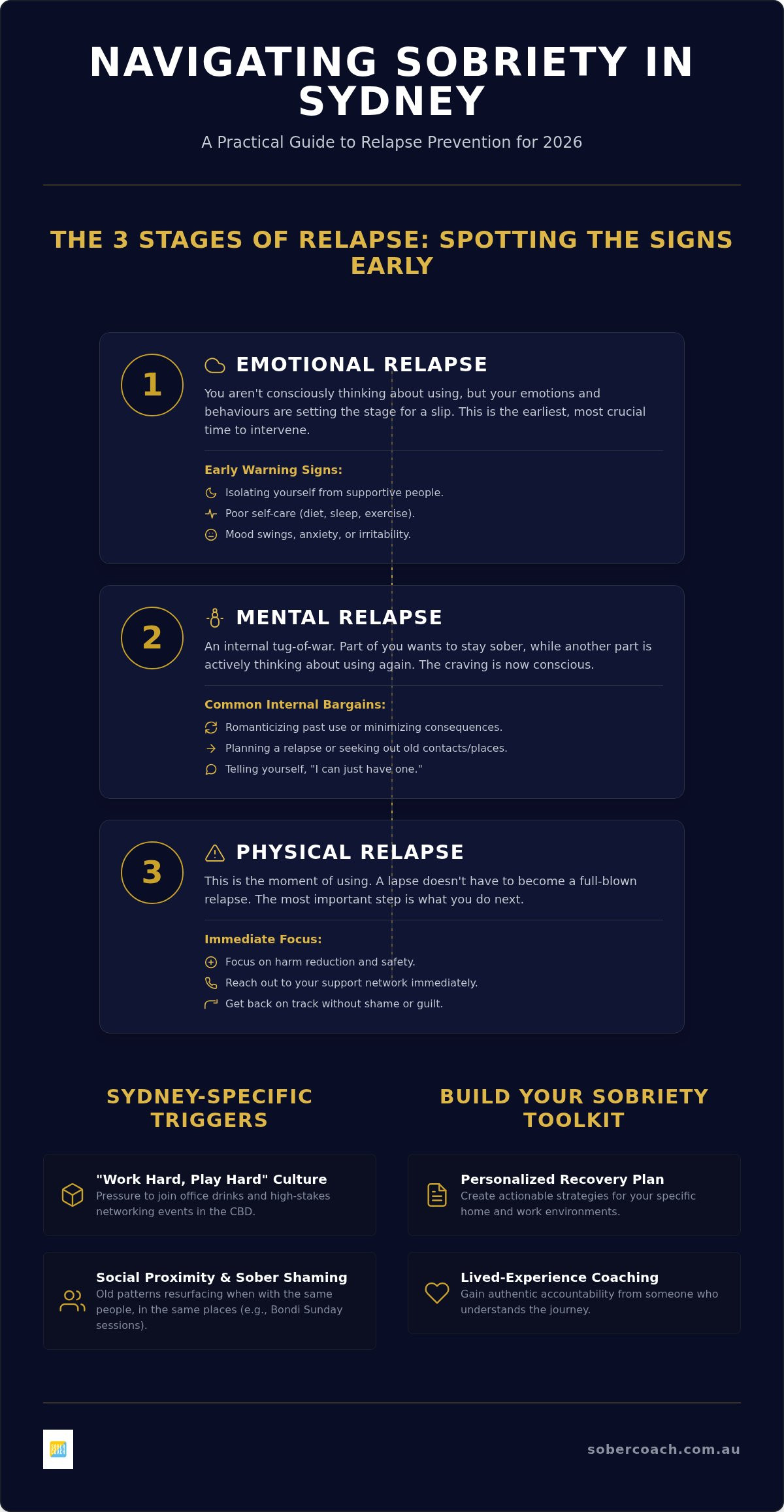
Relapse doesn't happen in a vacuum. It’s not a single moment of weakness but a gradual erosion of your boundaries. Think of it as a slow leak in a tyre rather than a sudden blowout. Understanding this timeline is the cornerstone of any effective relapse recovery plan sydney professionals use to stay on track. If you can spot the leak early, you can patch it before you're stranded on the side of the M4. Building a relapse recovery plan sydney residents can rely on means catching these emotional shifts before they become physical actions.
Emotional Relapse: You aren't consciously thinking about using yet. Instead, your emotions are doing the heavy lifting. You’re skipping the gym, staying up too late watching Netflix, or snapping at colleagues. You’re setting the stage for a slip.
Mental Relapse: This is the internal tug-of-war. You start "bargaining" with yourself. You might think, "I've been sober for six months; surely I can handle a glass of wine at this Barangaroo lunch." The struggle is real. The "pro" list for using starts to look longer than the "con" list.
Physical Relapse: This is the act of using. Once you reach this stage, the focus shifts to immediate harm reduction and getting back on track without the weight of shame.
Early Warning Signs in Your Sydney Routine
For a busy professional, the first red flags are often physical. Are you skipping your morning run along the harbour? Is your diet becoming a cycle of caffeine and processed food? Another major risk is the "Isolation Trap." Because Sydney's social life is so drink-centric, many people in recovery simply stop going out. This isolation breeds loneliness, which is a primary driver for relapse. You might also notice "Dry Drunk" syndrome, where you’re technically sober but still exhibiting the same old irritable, impulsive behaviours. If these signs feel familiar, professional recovery coaching can help you realign your habits before the mental tug-of-war begins.
HALT: The Classic Tool for Modern Life
The HALT acronym (Hungry, Angry, Lonely, Tired) is a lifesaver in a high-pressure city. In the middle of a back-to-back meeting schedule in the CBD, it’s easy to ignore these basic needs. When you're depleted, your brain looks for the fastest route to comfort, which usually leads back to old habits.
Hungry: Keep high-protein snacks at your desk to avoid the 4:00 PM blood sugar crash that mimics anxiety.
Angry: Take five minutes to walk around the block or use a breathing app before responding to a stressful email.
Lonely: Send a quick text to a supportive friend or your coach to break the sense of being alone in the grind.
Tired: Prioritise a strict sleep schedule, even when deadlines loom. Sleep is the foundation of cognitive control.
Develop a 5-minute "check-in" ritual at midday and 5:00 PM. Ask yourself: "How am I feeling right now?" This simple pause can prevent an emotional slide from becoming a physical one.
Recovery Coaching vs. Traditional Clinical Support in NSW
Choosing the right support in NSW often feels like a choice between a sterile clinic and a church basement. While therapists provide essential care for trauma and sponsors offer valuable peer support, a professional Sober Coach occupies a different space. We focus on the "how" of your daily life. It’s about building a relapse recovery plan sydney professionals can actually execute between boardroom meetings and weekend social events. This isn't about looking backward at your mistakes; it's about looking forward at your potential.
The distinction is clear. A therapist helps you understand your past. A sponsor helps you work the steps. A Sober Coach helps you design your future. This non-clinical approach prioritises goals, routines, and sustainable growth. It is often most effective when combined with traditional psychological support, creating a comprehensive safety net that covers both your emotional health and your daily habits. You aren't a patient in a system; you're an individual with agency over your own transformation.
The Role of Lived Experience
There is a unique power in working with someone who has walked the same path. Clinical theory is useful, but it doesn't always translate to the visceral reality of a craving at a Sydney CBD bar. A mentor with lived experience offers a level of authentic accountability that is hard to replicate in a medical setting. We strip away the stigma of recovery. Instead of a secret you hide, we view your sobriety as a badge of courage and a sign of profound personal strength. It’s practical wisdom over textbook definitions. It’s the difference between hearing about a map and having a guide who knows where the potholes are.
Bridging the Gap After Rehab
Many people experience what we call the "Rehab Cliff." You spend 28 days in a controlled environment, only to be dropped back into the high-pressure reality of Sydney life. This is where most slips occur. The first 90 days are critical. A relapse recovery plan sydney requires real-world scaffolding. Coaching provides this by integrating support into your actual home and work environment. We don't just talk about triggers in an office; we help you navigate them as they happen. Whether it’s through One-on-One Recovery Coaching or In-Home Recovery Support, the goal is to bridge the gap between clinical safety and real-world liberation.
Building Your Sydney Sobriety Toolkit: Practical Strategies for 2026
Your environment dictates your outcomes. A relapse recovery plan sydney professionals use to stay resilient must start with a curated space. If your home office is still stocked with "client gifts" of premium gin or your kitchen cabinet is a reminder of old habits, you're making the journey harder than it needs to be. Clean your house. It's a symbolic and practical fresh start. Your home should be a sanctuary, not a minefield of triggers. The same applies to your digital environment; unfollow accounts that glamorise the lifestyle you've outgrown.
Preparation beats willpower every time. When you're out in public, you need a "Sober First Aid Kit." This isn't a physical box, but a set of ready-to-use resources. It includes a pre-loaded playlist that shifts your mood, a specific contact you can text for immediate accountability, and a clear exit strategy for every event. Knowing exactly where your car is parked or having your rideshare app open allows for a quick departure if the vibe shifts. You're never trapped in a social setting that threatens your peace.
Sydney is arguably the best city in the world for an outdoor-led recovery. Trade the dimly lit pub for a 6:00 AM ocean swim at Bronte or a trail run through the Royal National Park. These activities aren't just hobbies; they're essential tools for dopamine regulation. Fitness provides a natural high that reinforces your decision to stay sober. Networking 2.0 is about presence. When you attend Sydney events without the fog of alcohol, you're sharper, more observant, and more memorable. You aren't just surviving the event; you're mastering it.
Managing High-Pressure Work Environments
The CBD long lunch is a Sydney institution that doesn't have to be a threat. Order a sophisticated non-alcoholic alternative and keep the focus on the business at hand. You don't owe colleagues a detailed explanation of your choices. "I've got a big afternoon ahead" or "I'm not drinking today" are complete sentences. If the professional grind triggers stress, implement discrete techniques like box breathing between back-to-back meetings. Managing your nervous system in real-time is a core part of a relapse recovery plan sydney residents use to thrive in high-stakes careers.
Finding Your Sober Tribe in Sydney
You aren't alone in this city. Sydney’s sober-curious scene has expanded significantly by 2026, with alcohol-free bars and late-night cafes offering a different kind of nightlife. Community is the social glue of long-term sobriety. Whether you join local meetups or participate in Group coaching online via zoom, connecting with others who value clarity is vital. Finding purpose through volunteering at local Sydney charities can also provide a sense of contribution that acts as a powerful shield against the urge to use. You're building a life that is too good to throw away.
Personalised Support with Sober Coach: Your Partner in Long-Term Recovery
Your journey doesn't end when you decide to change; it begins. At Sober Coach, we believe you aren't defined by your past habits but by your future potential. We provide the bespoke accountability necessary to navigate a city that never stops. A truly effective relapse recovery plan sydney locals can sustain requires more than just willpower. It demands a partnership with someone who understands the weight of your ambitions and the specific hurdles of your lifestyle. We move past the clinical distance to offer a human-to-human connection that feels brave, transparent, and entirely focused on your growth.
Our methodology is proactive and goal-oriented. We don't view sobriety as a state of deprivation but as a powerful beginning. Whether you are engaging in our Intensive Recovery Workshops to deep-dive into the tools of transformation or seeking a steady hand through the "rehab cliff," we provide the scaffolding you need. You're in the driver's seat of your own life; we're just here to help you navigate the terrain with total confidence.
One-on-One Coaching in Sydney
Our One-on-One Recovery Coaching is designed for the high-achiever. We know your schedule is packed. We understand that a Tuesday afternoon craving feels different when you're preparing for a high-stakes board meeting in the CBD. These tailored sessions move beyond the "why" and focus heavily on the "how." We work on practical life skills, from rebuilding trust in your closest relationships to strategically planning your career trajectory without the crutch of substances. You get direct access to a mentor who possesses lived experience, ensuring every piece of advice is grounded in reality, not just theory. This is about building a relapse recovery plan sydney professionals use to stay sharp and present.
In-Home Support for Real-World Integration
While workshops and Group coaching online via zoom provide essential tools, the real battle often takes place within your own four walls. Managing your routines where you actually live is the foundation of preventing a slip. Our In-Home Recovery Support helps you navigate complex family dynamics and identify household triggers that might have been invisible to you. By building a sustainable, sober routine within your actual living space, we ensure your home becomes a true sanctuary of recovery. This real-world integration is the missing piece for many who have struggled with the transition from residential care back to the Sydney grind. We help you strip away the anonymity of typical services to create a life you don't need to escape from.
Step Into Your Most Vibrant Sydney Life
Success in our fast-paced city doesn't require a drink in your hand. It requires clarity, presence, and a strategy that respects the complexity of your professional life. By shifting your focus from deprivation to liberation, you turn sobriety into your ultimate competitive advantage. A robust relapse recovery plan sydney residents can rely on is built on more than just "not using." It's about recognizing the early emotional flags and curating a toolkit that includes everything from ocean swims to high-stakes networking confidence.
We provide professional recovery support grounded in lived experience and professional certification, offering the flexible in-home and online options you need to stay on track. We specialize in helping high-pressure professionals bridge the gap between clinical support and real-world success. Stop surviving the Sydney grind and start leading it. Book a Discovery Call with a Sydney Sober Coach to begin your transformation. Your path to a liberated life is waiting. It's time to build a future that truly belongs to you.
Frequently Asked Questions
What is the difference between a lapse and a relapse?
A lapse is a brief slip or a single instance of use, while a relapse is a full return to old patterns and behaviors. Think of a lapse as a stumble on a path; you can immediately correct your course and keep moving forward. A relapse is choosing to walk back down the hill entirely. Identifying a lapse early allows you to activate your support systems before it spirals into a long-term setback.
How can I prevent a relapse when all my Sydney friends still drink?
Focus on building a lifestyle that values presence and clarity over blurred nights. You don't have to dump your friends, but you do need to set firm boundaries and have a clear exit strategy for every event. Bringing your own non-alcoholic drinks or arriving early and leaving before things get messy are practical ways to stay social. True friends will respect your choice once they see you're thriving.
Is one-on-one recovery coaching more effective than a support group?
Effectiveness depends on your personal needs, but one-on-one coaching offers bespoke accountability that groups often lack. While groups provide community, coaching focuses entirely on your specific lifestyle, professional triggers, and personal goals. Many find that a personalized relapse recovery plan sydney is best developed through direct mentorship where the strategy is tailored to your unique corporate or social environment rather than a generic model.
Can I use my NDIS plan for recovery coaching in Sydney?
You can often use NDIS funding if your plan includes "psychosocial recovery coach" line items. As of 2026, NDIS requirements in Sydney focus on capacity building and helping participants manage their recovery journey independently. It's best to check with your plan nominee or support coordinator to ensure your specific goals align with the non-clinical, peer-led support we provide to help you stay integrated and active in your community.
What should I do immediately if I feel like I am about to relapse?
Pause and reach out immediately. Check if you are Hungry, Angry, Lonely, or Tired, and address that physical need first. Call or text your coach or a trusted support person before you take any other action. Moving your body, even just a five-minute walk around the CBD, can break the mental loop. Remember that a craving is like a wave; it will peak and then subside if you don't fight it.
How does in-home recovery support work in a practical sense?
It involves a coach coming to your actual living space to help you identify and manage environmental triggers. We look at everything from your physical surroundings to the routines you've established with family or housemates. By building a sustainable structure where you live, we bridge the gap between clinical theory and real-world application. It’s about making your home a sanctuary that supports your long-term sobriety and peace of mind.
Do you provide medical detox services in Sydney?
No, we do not provide medical detox services. Our focus is entirely on non-clinical, peer-led recovery support and long-term maintenance tools. If you require medical supervision to safely stop using substances, you should consult a healthcare professional or a dedicated detox facility in Sydney first. Once you are medically stable, we can partner with you to build a robust relapse recovery plan sydney for your future.
How long does a typical recovery coaching program last?
Duration varies based on your individual goals and the level of support you need. Some clients benefit from a three-month intensive period to navigate the "rehab cliff," while others maintain a monthly retainer for ongoing accountability over a year or more. We offer flexible options, including one-on-one sessions and intensive workshops, allowing you to scale your support up or down as your confidence and lifestyle stability grow in the city.
Comments